Industrial floor coatings
A floor that survives forklifts, chemicals and washdown.
High-build epoxy and urethane systems specified around what actually happens on your floor — not around a generic square-foot price.
The work
Specification starts with the abuse, not the aesthetic.
The right system for a beverage plant with constant washdown and thermal shock is not the right system for a dry-goods warehouse with hard-wheeled forklifts, and neither is right for an aircraft hangar that has to resist Skydrol. We start from the loads, the chemicals, the temperatures and the cleaning regime, because those four things determine which resin chemistry survives. A vehicle workshop floor is different again: tyre plasticiser migration and point loading from hoists and jacks are what attack it, not abrasion.
Thickness follows from the same logic. A thin-mill coating is appropriate for foot traffic and light carts, and a waste of money under steel-wheeled traffic where it will be through to concrete in a season. High-build and mortar systems cost more per square foot and less per year.
Slip resistance is a specification, not an afterthought. We set it deliberately with aggregate — high enough to be safe wet, low enough that the floor can still be cleaned. Getting this wrong in a food facility creates either an injury problem or a sanitation problem.
- Typical systems
- EWS · CEB · HPP
- Thickness
- 8–250 mil
- Largest single pour
- 30,000 ft²
- Typical return to service
- 24–72 hours by system; cold slabs extend it
Detail
Moisture is what actually fails industrial floors here.
Concrete on grade in the Lower Mainland is frequently wetter than a coating manufacturer's tolerance, and if you install over it the coating comes off in sheets months later. We test — relative humidity probes in the slab, calcium chloride where appropriate — before anything is specified.
Where the reading is high, the answer is a moisture-tolerant primer or a full vapour barrier coat, and that decision has to be made before the quote, not discovered afterwards. In Richmond and anywhere else with a shallow water table we assume vapour drive is a design condition until measurement tells us otherwise.
Detail
Downtime is usually the real constraint.
Most plants can give us a weekend. Fast-cure urethane and polyaspartic systems can be installed and back in service inside that window, which is often worth more to a facility than the difference in material cost between systems.
Where a shutdown genuinely is not possible we section the floor and work aisle by aisle, with containment so grinding dust does not reach production. It is slower and it costs more, but it beats stopping the line.
Questions we get
Straight answers.
Epoxy or urethane — which do we need?
Epoxy is harder, bonds superbly and builds thickness economically, which makes it the workhorse body coat. The full comparison — including where polyaspartic and urethane cement each win — is set out in epoxy vs urethane vs polyaspartic. Urethane is more flexible, far more resistant to ultraviolet and to thermal shock, and handles abrasion better, which makes it the topcoat of choice. Most real specifications use both: an epoxy build with a urethane wear layer.
How long before we can drive on it?
Foot traffic is usually a few hours. Vehicle and forklift traffic is typically 24 to 72 hours depending on the system and the temperature. Fast-cure systems exist specifically to compress that window when a shutdown is expensive.
Can you coat a floor that already has a failing coating on it?
Yes, but not over it. The existing coating has to come off mechanically wherever it has lost bond, and in practice that usually means removing all of it so the new system has one consistent substrate. Quotes that propose coating straight over a failing floor are quoting a repeat failure.
Do you handle line marking and safety markings?
Yes — aisle marking, walkways, hazard striping and equipment zones are installed as part of the system rather than painted on afterwards, so the markings are under the wear coat and do not get worn off.
From the field
Photographs from our own job sites.
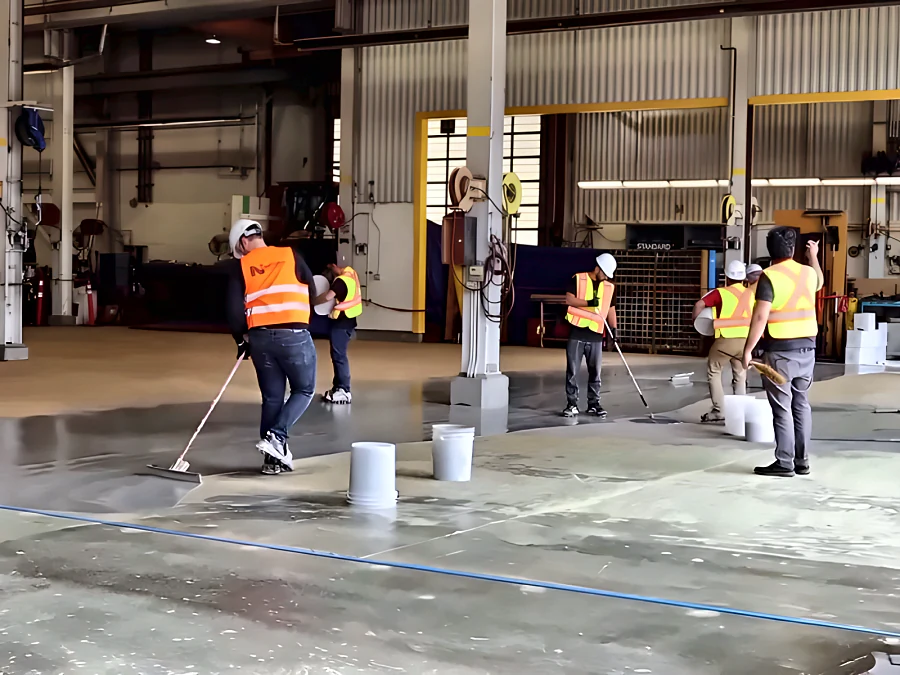


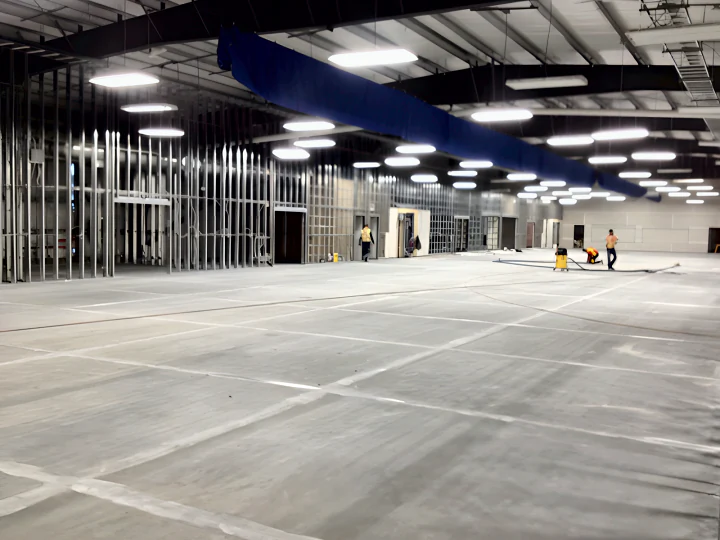
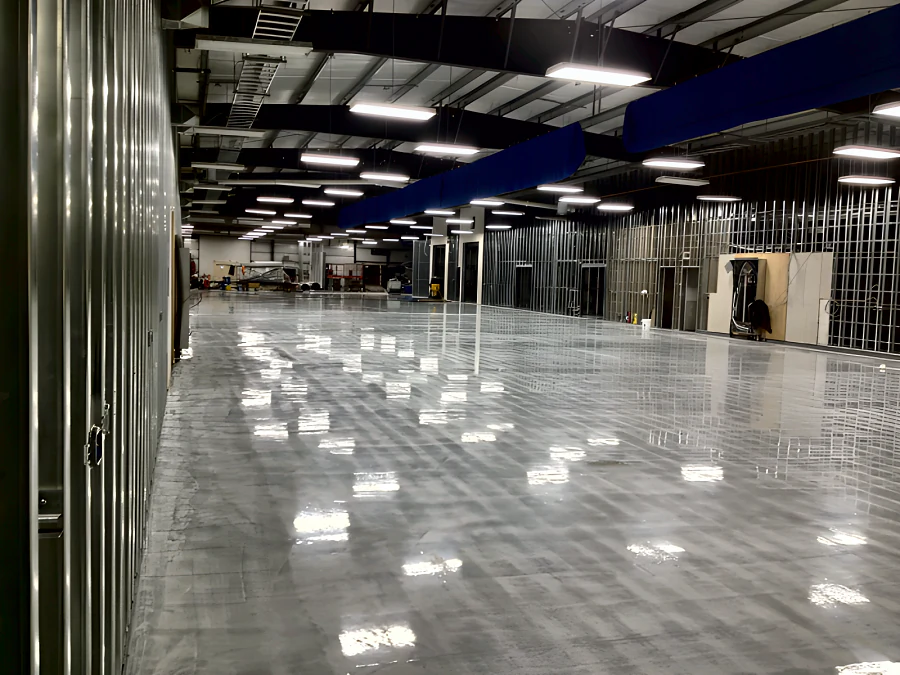
MTU Canada in Richmond, 2011: the crew preparing the slab, with a dust extraction vacuum on the floor, while the fit-out was under way (left), and the finished high-gloss epoxy and urethane floor down the length of the building (right). More on our Richmond page.
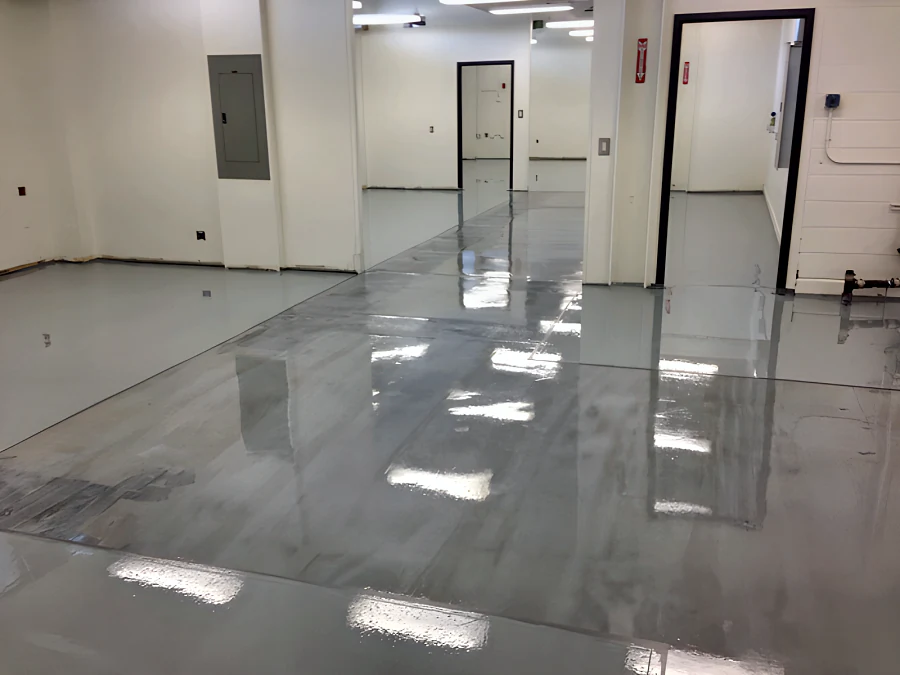
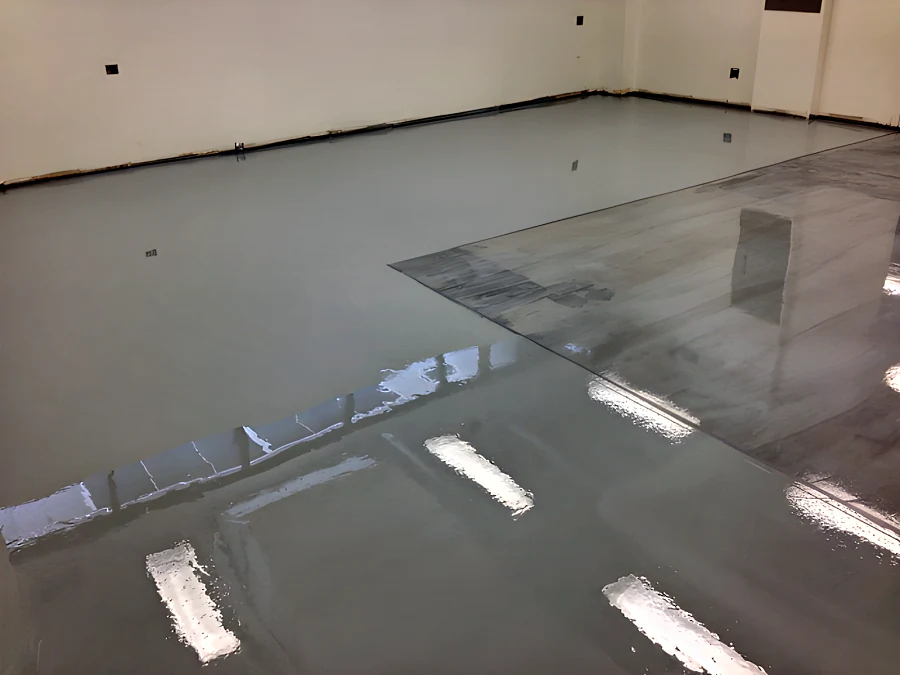
BC Hydro: an electrostatic discharge floor, installed to protect electronics from static, through the rooms and down the corridor (left), and the grey coat meeting the corridor at a clean edge (right). More on our ESD flooring page.
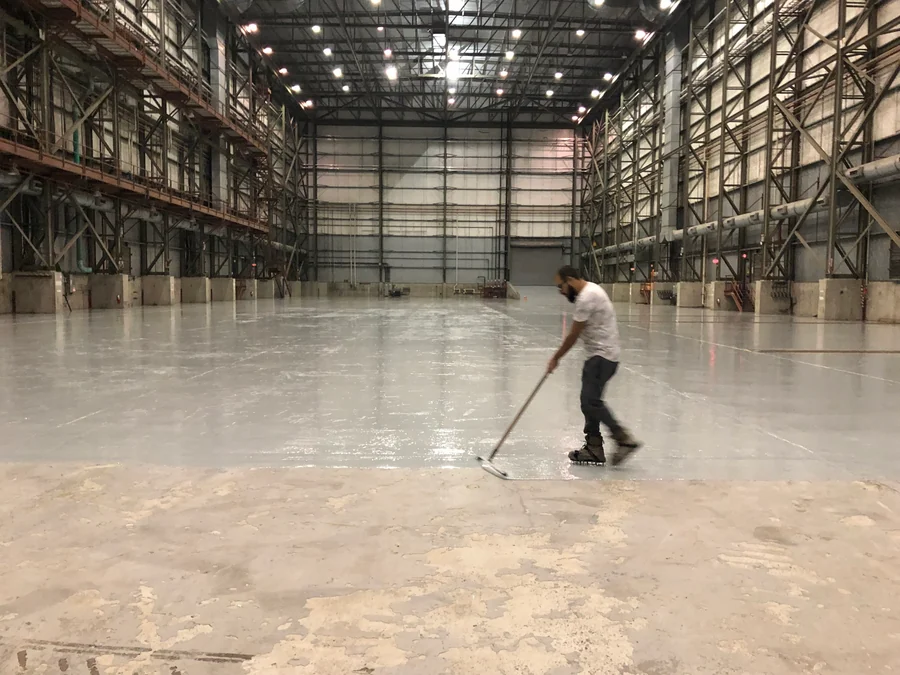
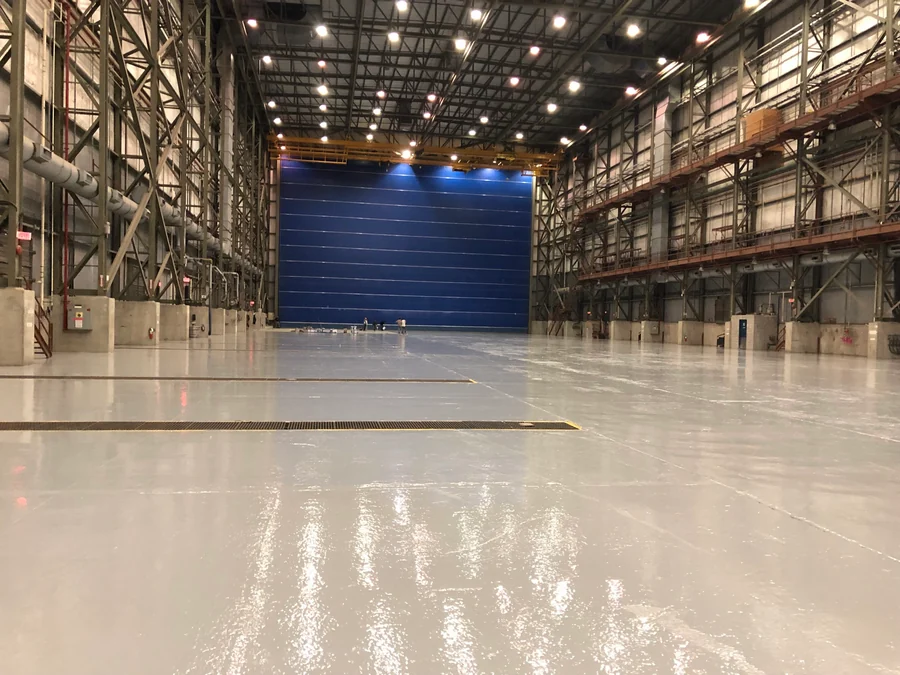
Seaspan, North Vancouver, 2018: the epoxy squeegeed across the 60,000 square foot slab of the hall, the bare concrete still ahead of the coat (left), and the finished grey floor to the hall’s door (right). More on the projects page.
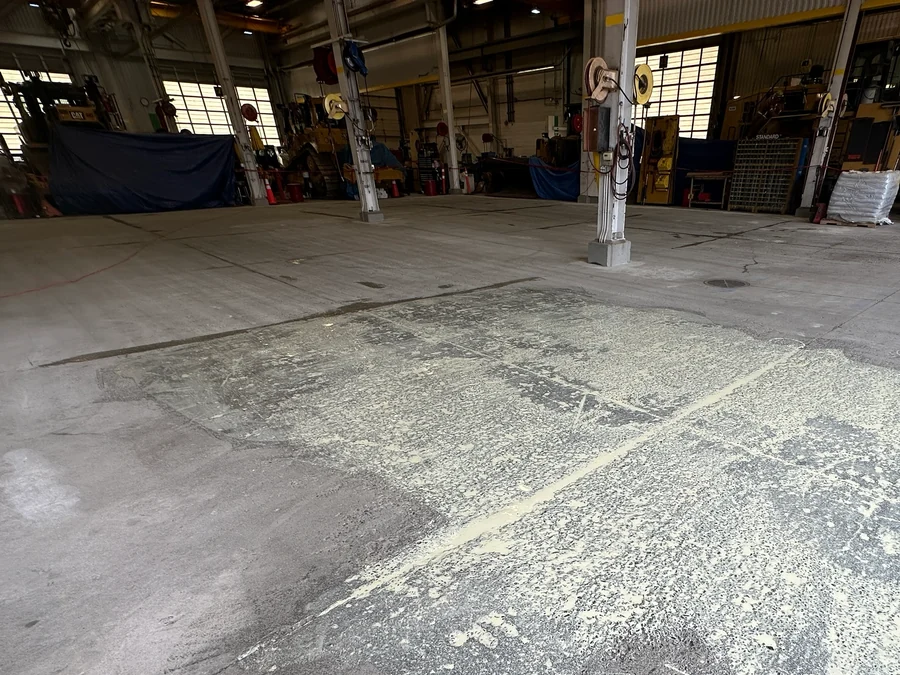
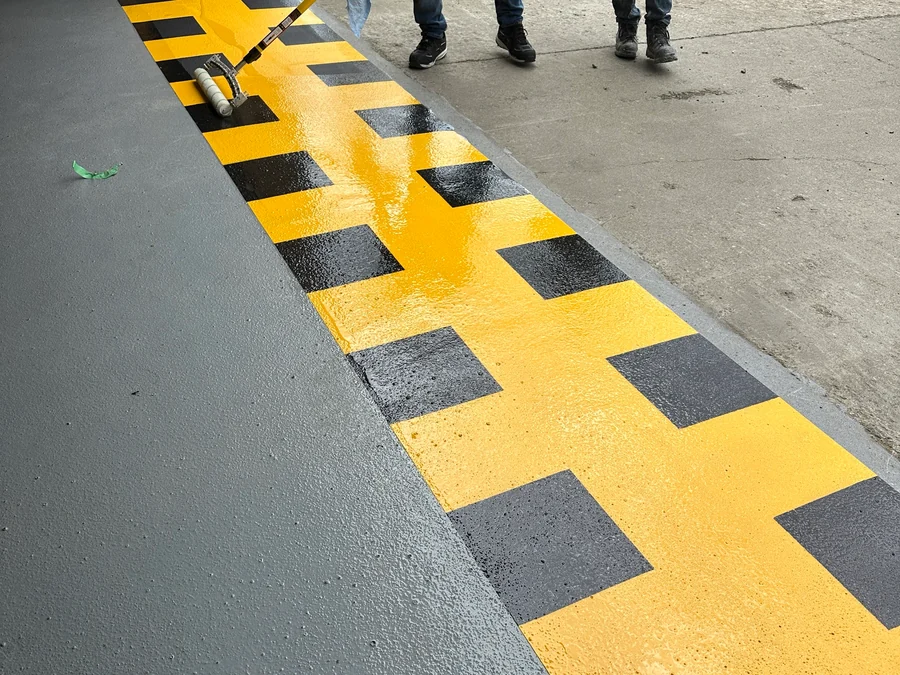
Finning’s heavy-equipment workshop, 7,000 square feet of ResinTech EWS: the old coating stripped back to the concrete before the new floor (left), and a yellow and black hazard stripe rolled at the roller door threshold on the finished floor (right). More on the projects page.
Related
You may also need:
Polished concrete
When the slab is sound and the look matters more than chemical resistance.
Learn more →Site assessments
Send us the slab. We'll tell you what it actually needs.
Photographs and a rough area are enough to start. We'll come out, test moisture, and scope it properly.
Main (604) 968-2040
Second (604) 230-0256
estimating@westpacificcoatings.com