Vancouver · Since 2001
Epoxy and industrial floor coatings in Vancouver.
Downtown towers, older East Van industrial stock and a lot of residential parkades built between the seventies and the nineties — which is exactly the vintage now reaching the end of its original membrane life.
Vancouver
The pattern we see in Vancouver
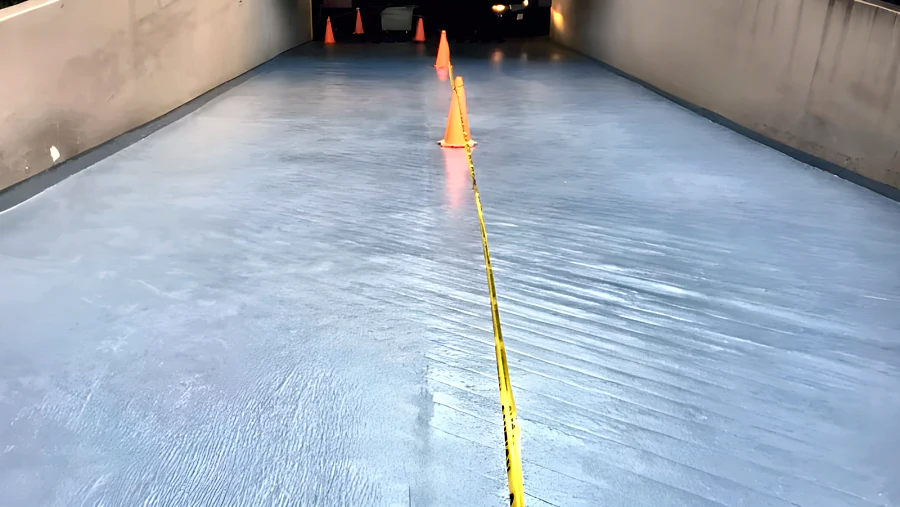
Downtown, the recurring job is a ramp or an entry deck that has been taking de-icing salt and traffic for thirty years, on a building that cannot close. Most of our downtown work is scheduled at night for that reason — hotels, office towers and mixed-use buildings where losing the ramp during the day is not an option.
East of Main, it is older industrial slabs on grade, frequently with no vapour barrier under them. Those floors need moisture testing before anything is specified, because the reading routinely comes back above what a standard primer will tolerate.
In the residential towers, the driver is usually a depreciation report finally putting a number on the parkade. If yours has, bring that section to the site visit — we can write the scope to match how the report framed it.
- Common systems
- TUE-FC · EWS
- Typical work window
- Nights and weekends
- Phasing
- By level or by bay
Services
What we install in Vancouver
Parkade waterproofing
Traffic-bearing membranes for Vancouver parkades, ramps and roof decks.
Learn more →Industrial floor coatings
Epoxy and urethane systems for Vancouver warehouses and plants.
Learn more →Local conditions
What Vancouver does to concrete
Vancouver's concrete problem is water with a salt habit. The city's parkades spend November to March receiving vehicles that carry road brine in on every tyre, and the older the building, the longer that chloride has had to work on the reinforcing steel. Downtown and the West End run on suspended parkade slabs under towers from every decade since the sixties; Yaletown and Coal Harbour added deep multi-level parkades through the condo booms; and the strata corporations that own them are now working through depreciation reports that flag membranes by name. It is the single most consequential coating decision most Vancouver buildings ever make.
The commercial and industrial side concentrates east and south — the Mount Pleasant and False Creek Flats employment lands, the Grandview industrial pockets off Clark, and the Marine Drive corridor toward the river. Buildings there mix heritage slab-on-grade with tilt-up from the eighties onward, which means moisture conditions vary building to building and the slab, not the postcode, decides the system. Restaurant density from Gastown through Main Street keeps commercial kitchens failing at their usual rate, and the answer there is chemistry, not paint.
Work in the city core comes with city-core logistics: permits and lane access, loading windows, noise bylaws with real teeth, and buildings that never fully empty. Phasing is not an accommodation here — it is the specification, whether that is a parkade recoated level by level or a restaurant floor replaced between close and prep.
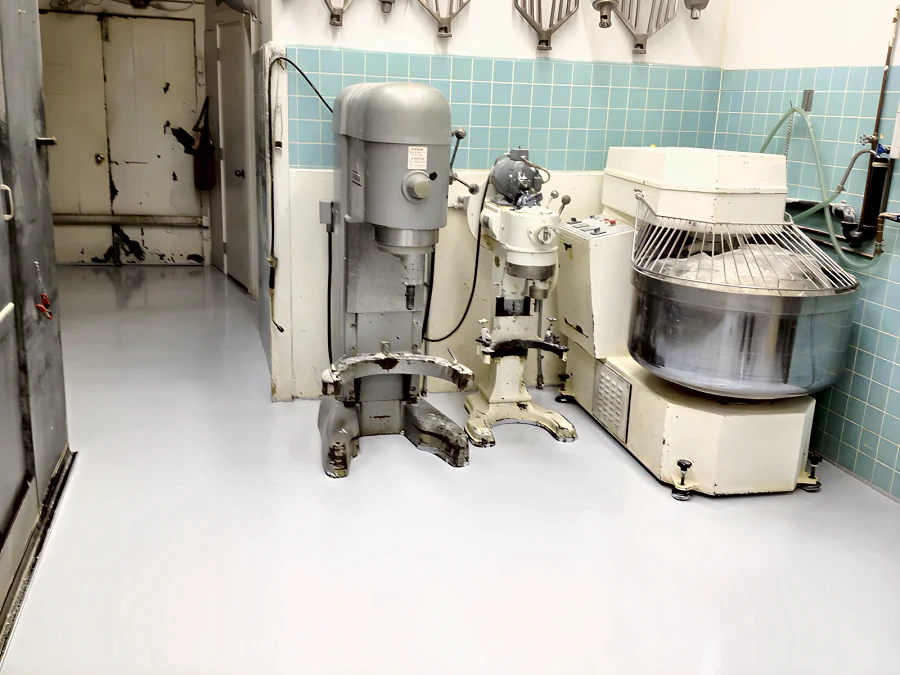
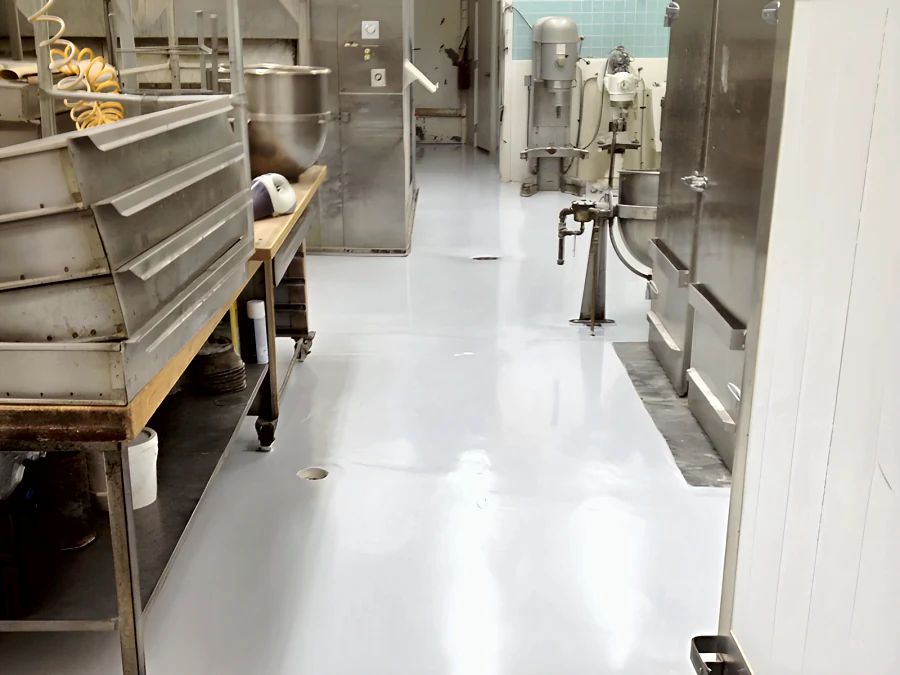
A bakery in Vancouver: the mixing room, with the new light grey floor laid right up to the bases of the dough mixers (left), and the high-gloss production aisle around the floor drains (right). More on our food and beverage floors page.
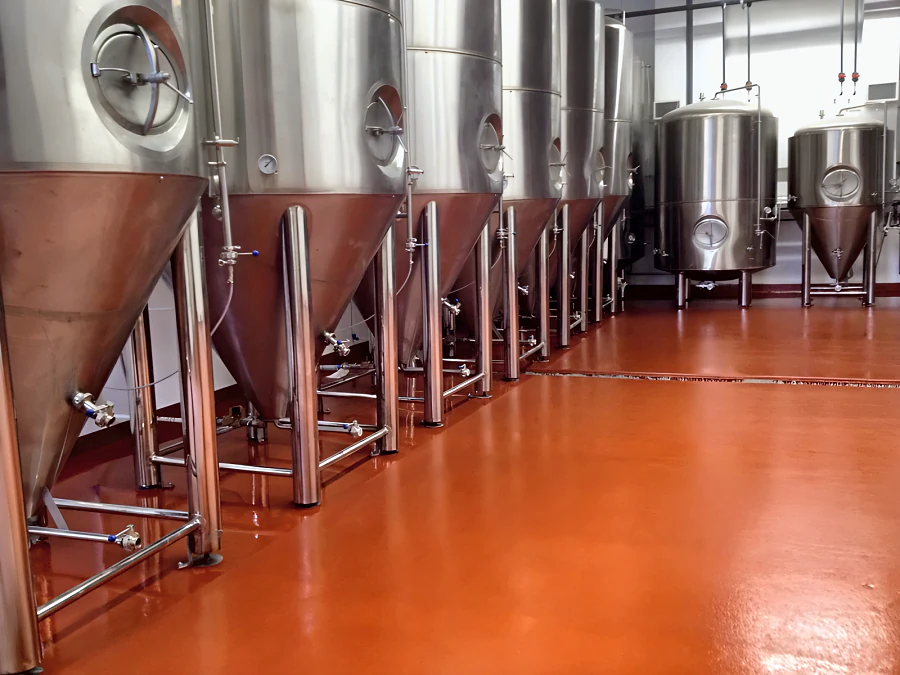
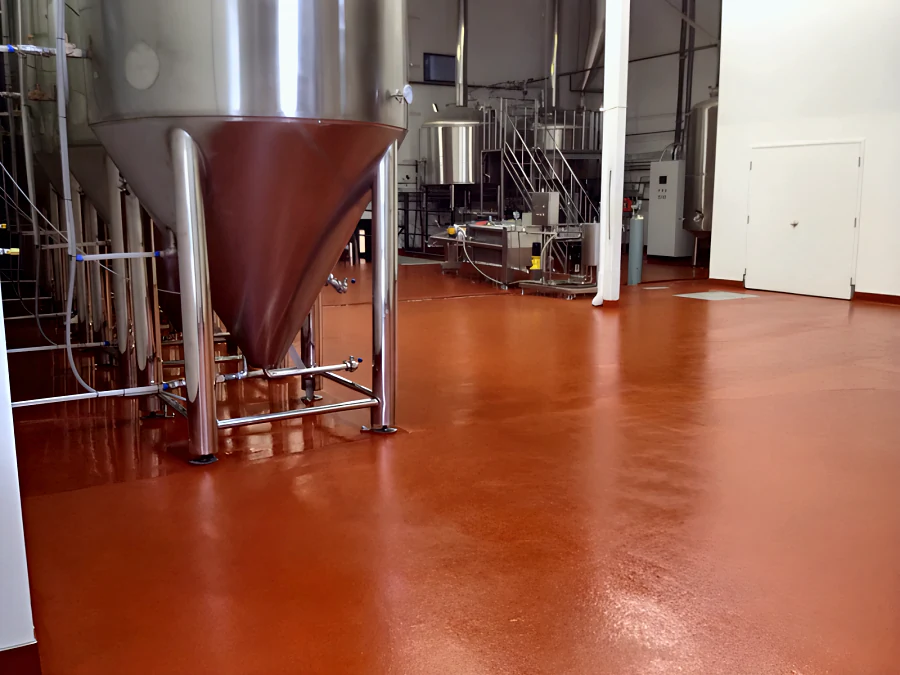
Parallel 49 Brewing Company in East Vancouver, 2012: Eco Shop Floor in red under the row of conical fermenters (left) and through to the brewhouse (right). More on our brewery floors page.
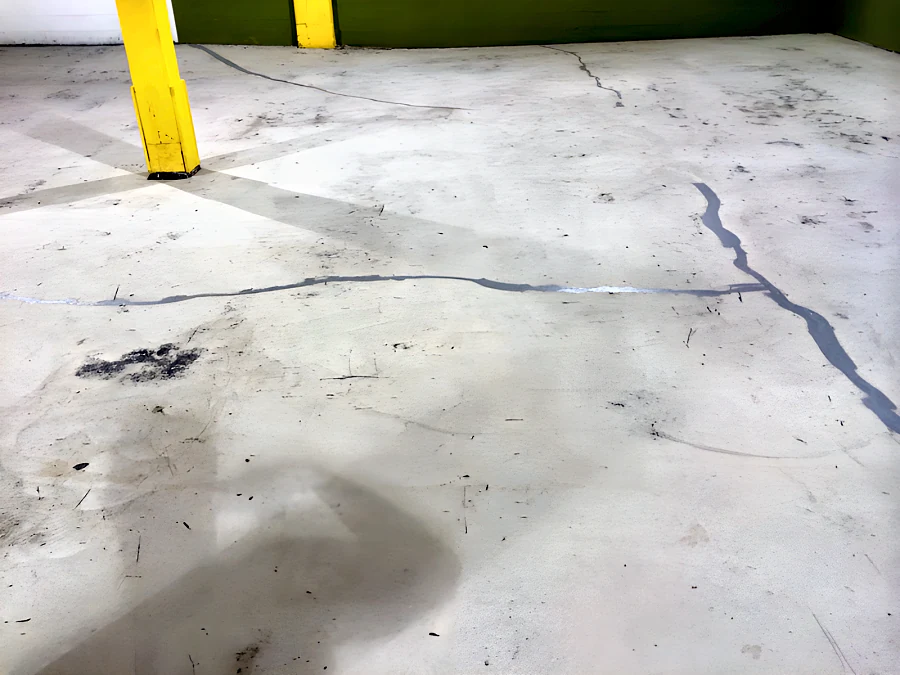
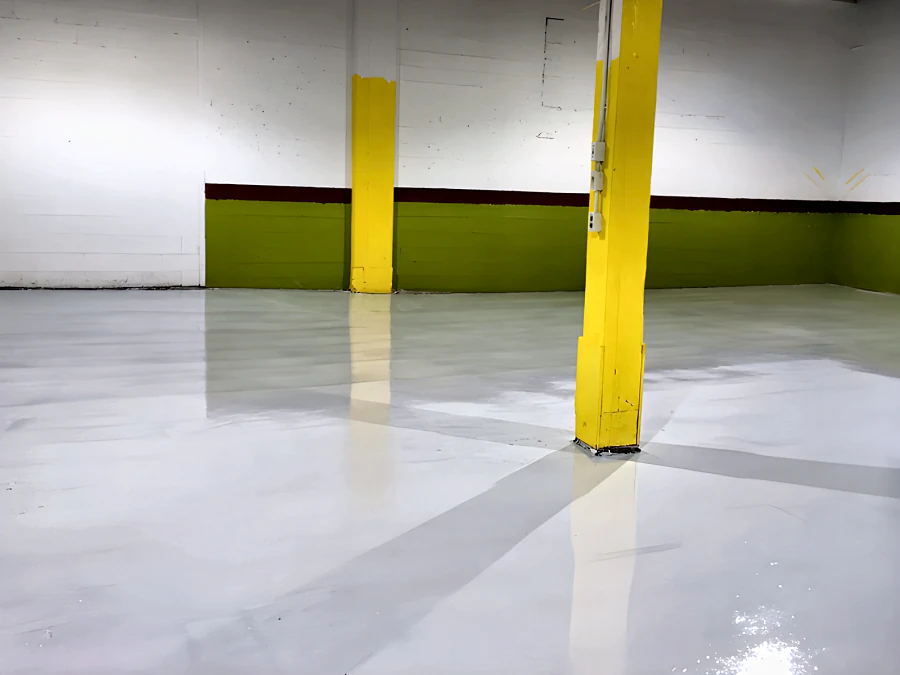
Adventure Den, the Vancouver dog daycare, 2014: the old warehouse slab with its cracks filled (left), and the finished epoxy and urethane floor (right). More on our commercial flooring page.
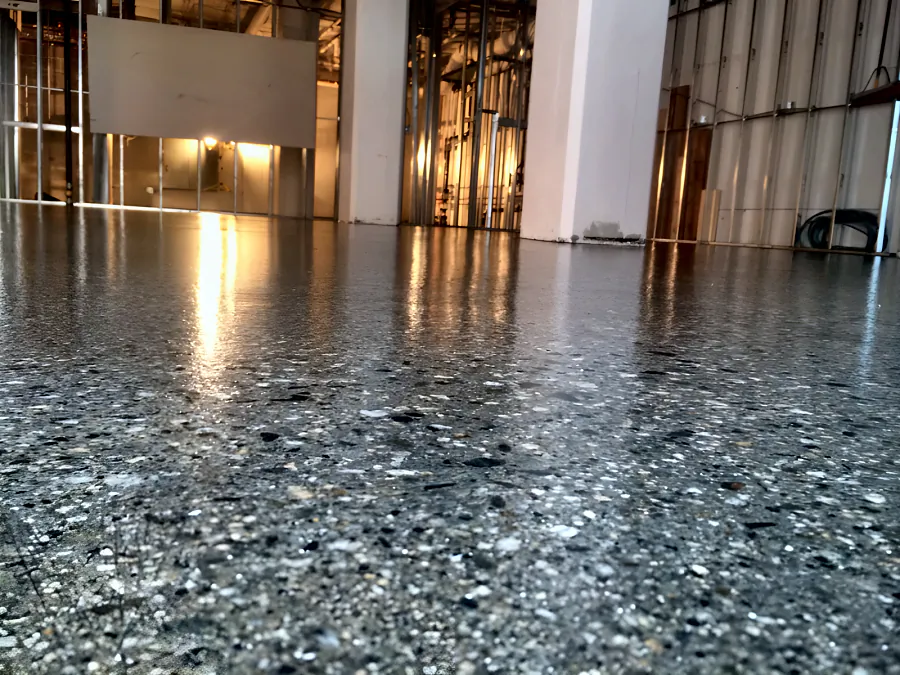
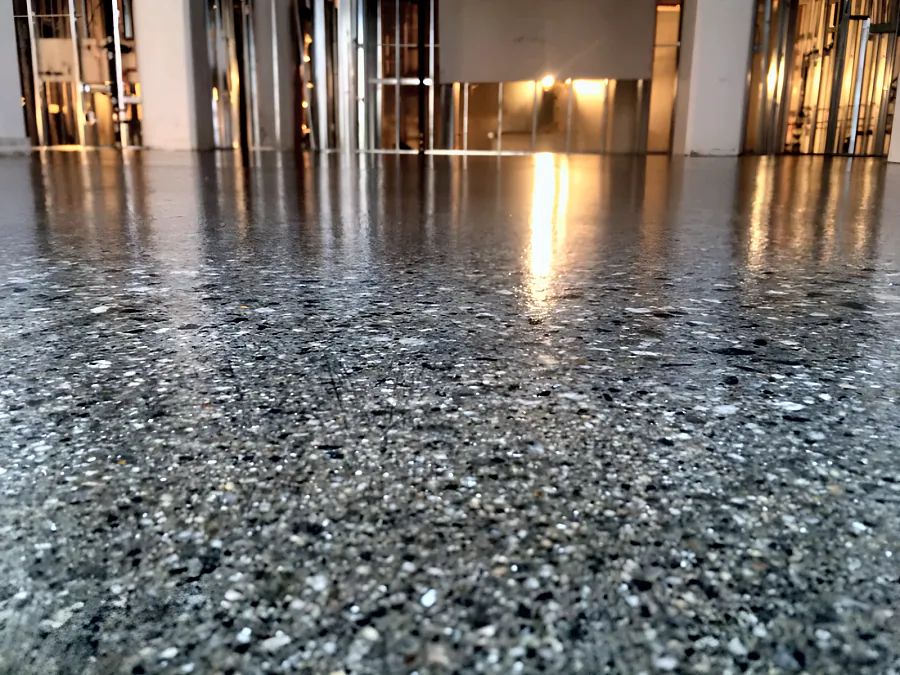
A Downtown Vancouver restaurant, 2014: the concrete finished in a clear epoxy and urethane coating before the walls were closed in (left), with the work lights reflected across the gloss (right). More on our commercial flooring page.
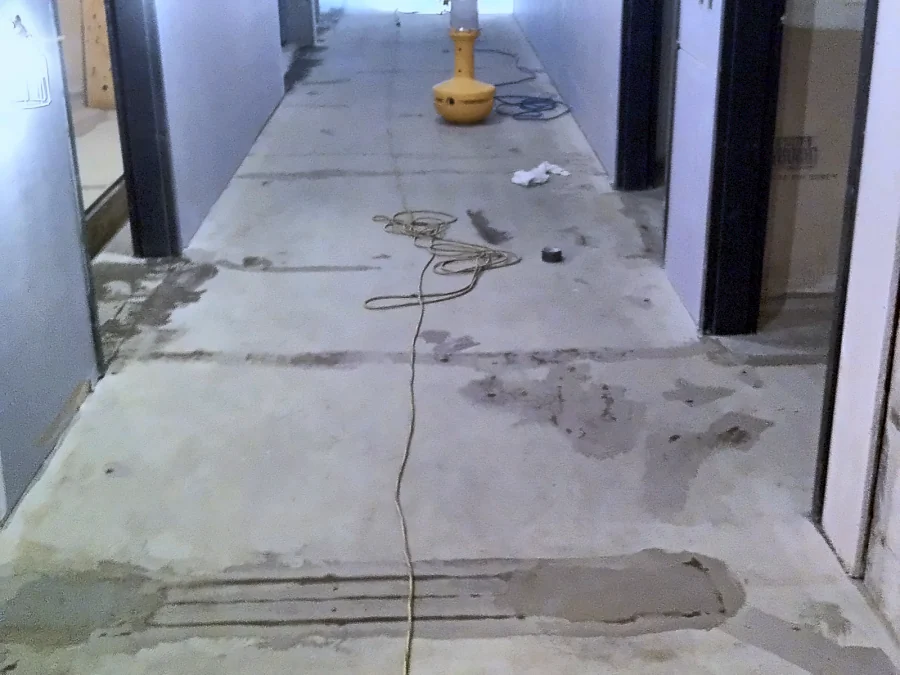
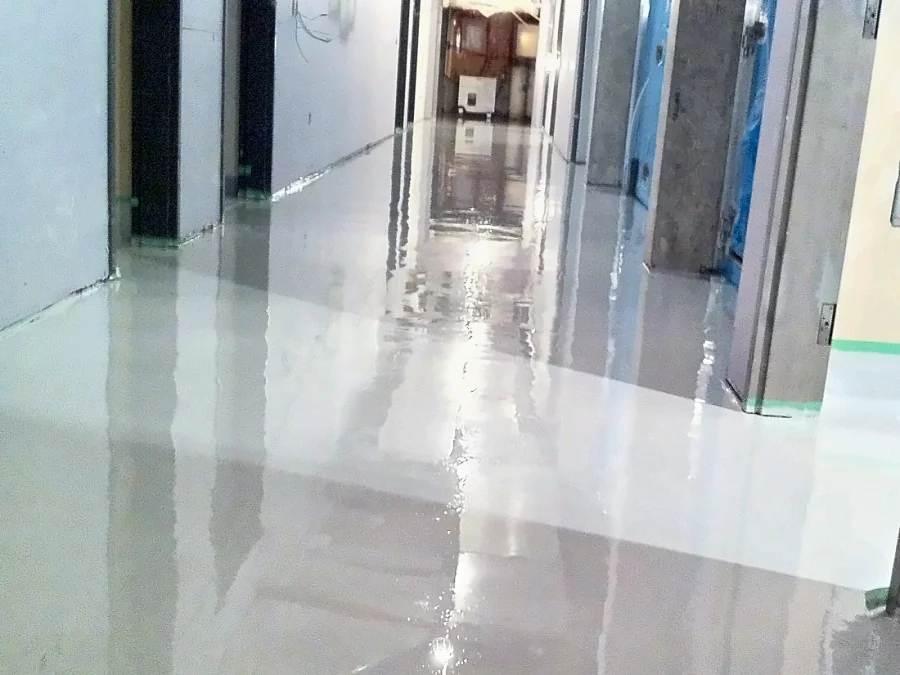
The UBC Biological Sciences Building, 2010, for Scott Construction: a corridor with its joints and cracks patched (left), and a corridor finished in the Tennant coating system (right). More on the projects page.
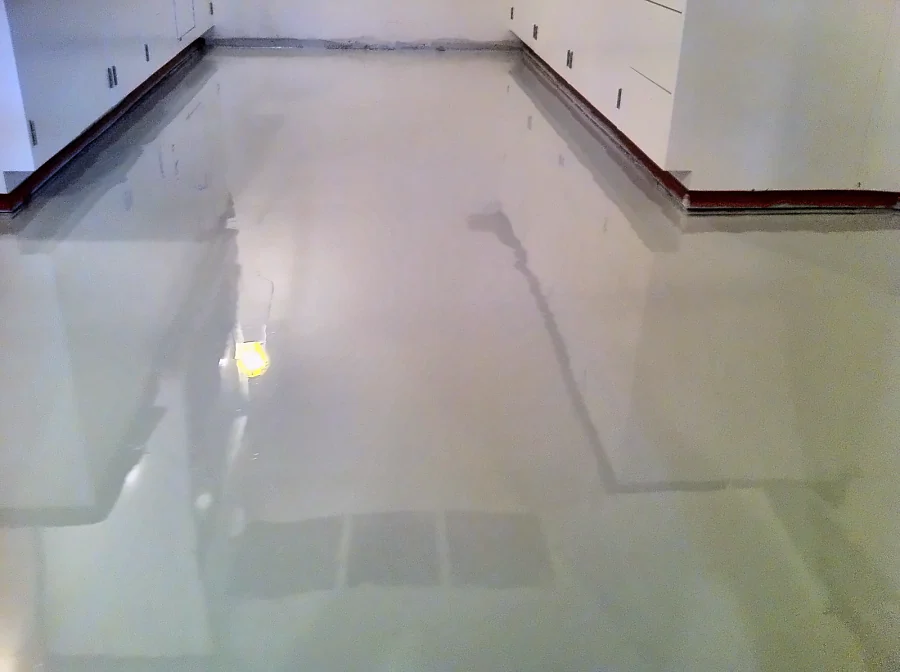
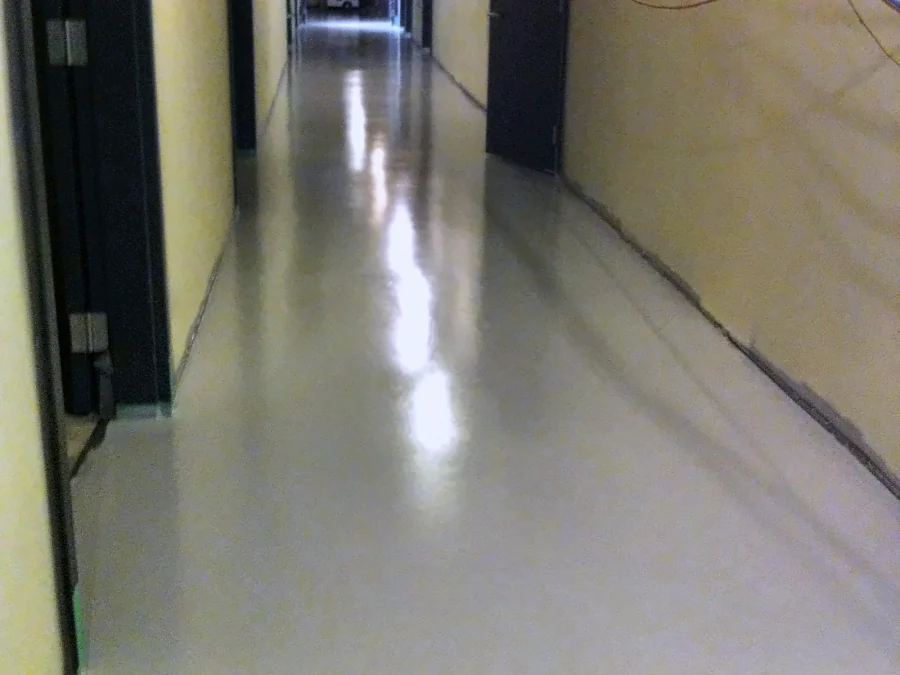
The same building: the light grey floor laid between the lab casework (left), and down another corridor (right), part of 20,000 square feet.
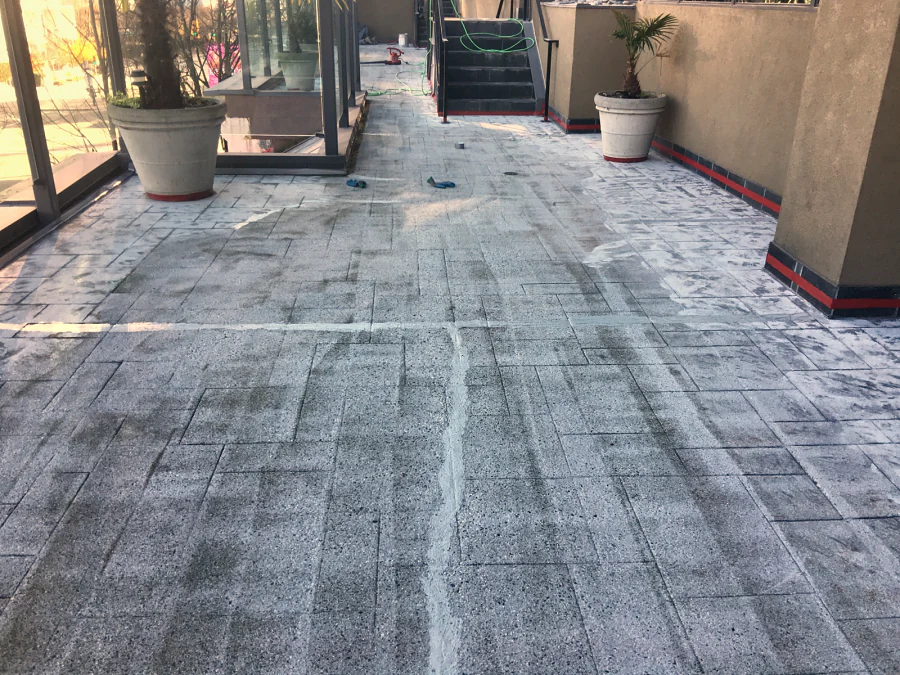
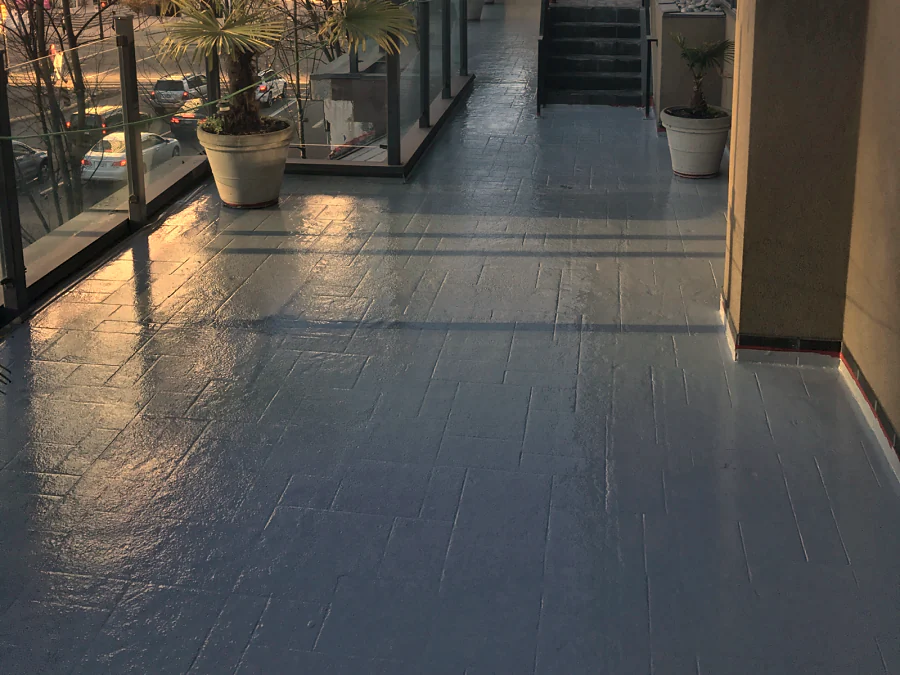
A restaurant patio above West Georgia Street, 2015: the deck at the Sandman Hotel cleaned and its cracks and joints filled (left), and the traffic coating carried along the patio to the stairs (right). More on the projects page.
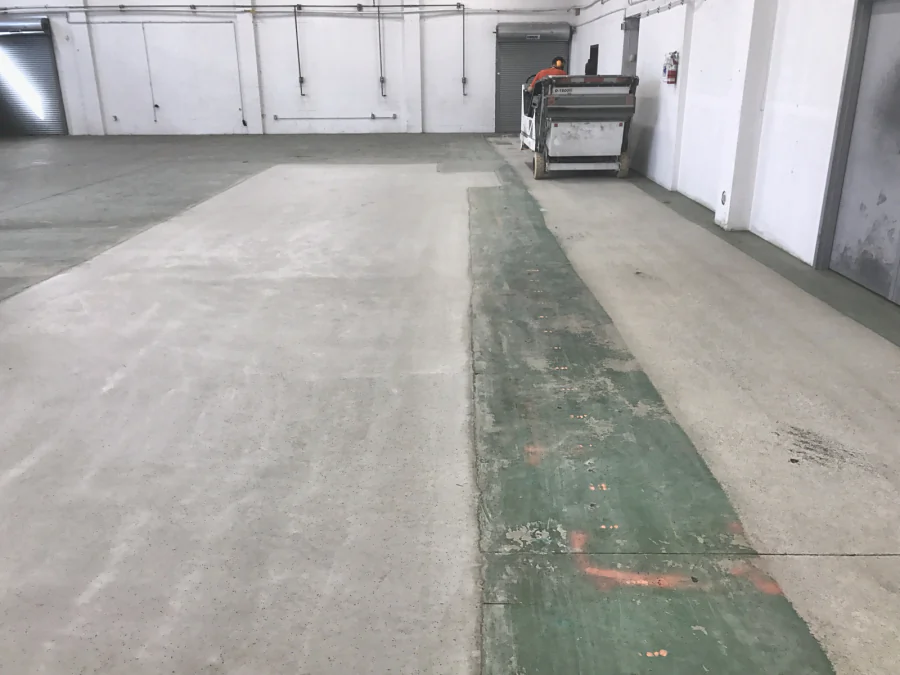
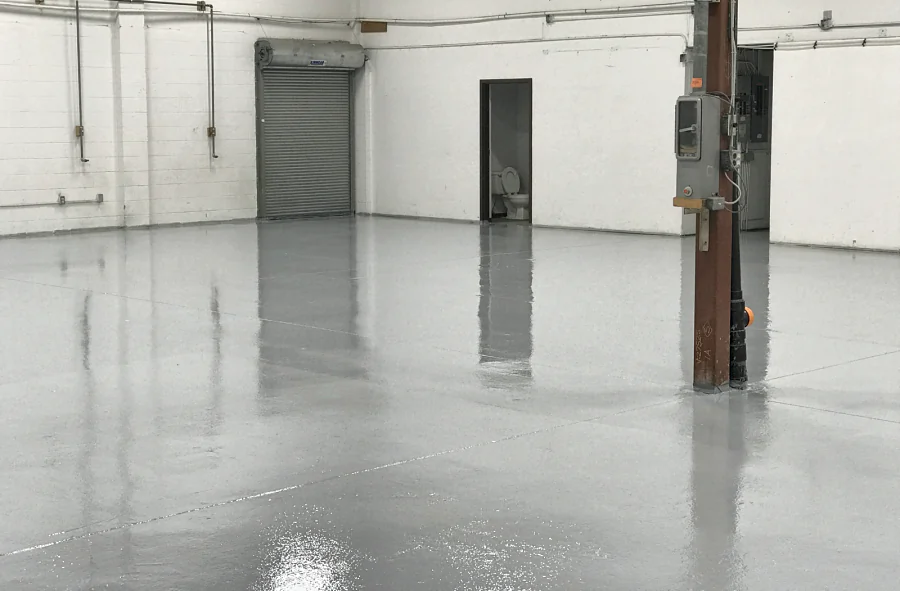
A commercial space in Grandview, Vancouver, 2017: the old green coating being shot blasted off the slab (left), and the floor finished in a grey epoxy, to the roll-up door and round the steel column (right). More on the projects page.
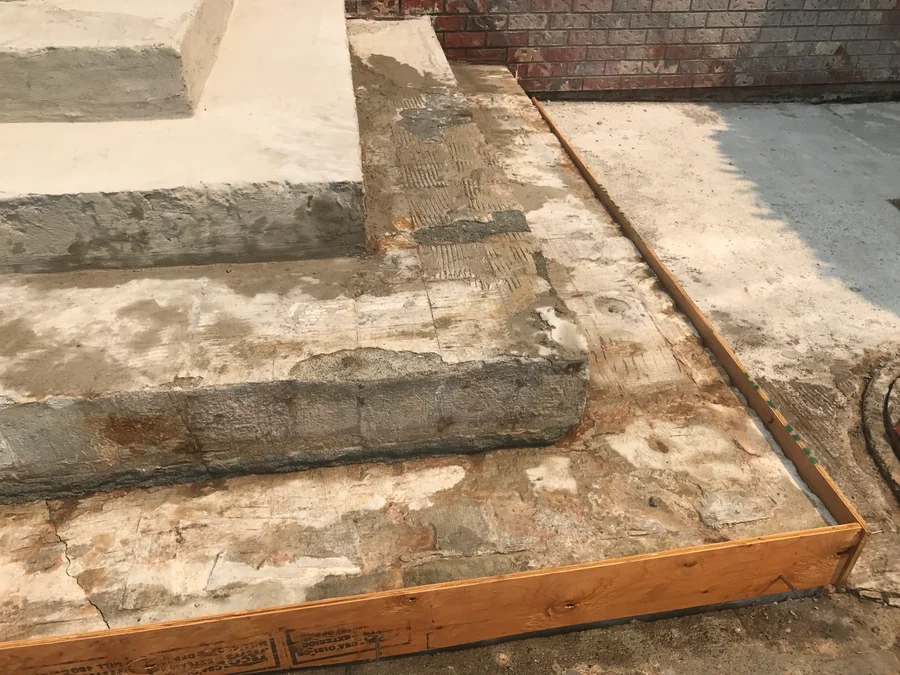
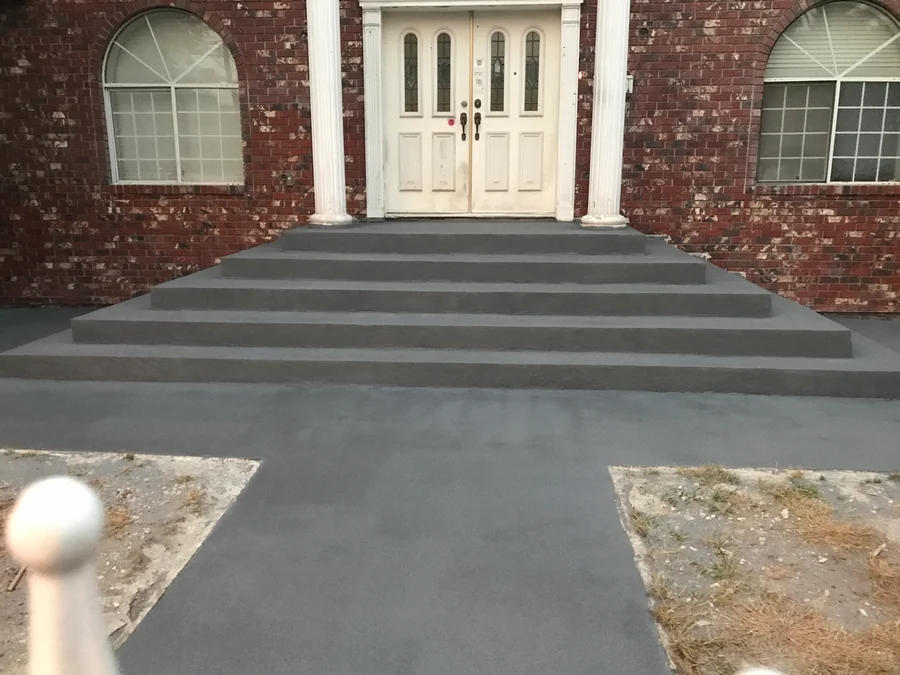
A house in Kerrisdale: the broken front steps formed up for repair (left), and the rebuilt stairs and walkway finished in a dark grey ResinTech EWS quartz floor (right). More on the projects page.
Where the work is
From tower parkades to the Flats
The pattern of Vancouver work: strata parkade membranes and traffic coatings under residential towers; ramp and porte-cochère systems for hotels that cannot close, including a documented 8,400 square foot downtown hotel ramp completed entirely as night work; commercial kitchens and back-of-house floors through the hospitality core; and industrial builds in the Flats and along Marine Drive. Exposed amenity decks and plaza slabs add a UV-stable membrane specification the North Shore knows well — salt air included, closer to the water.
The systems come from the manufacturer lines we install everywhere — traffic membranes for the parkades, urethane cement where heat and washing rule, epoxy builds for the industrial floors — detailed in the systems library, with the parkade decision itself walked through in our depreciation report guide.
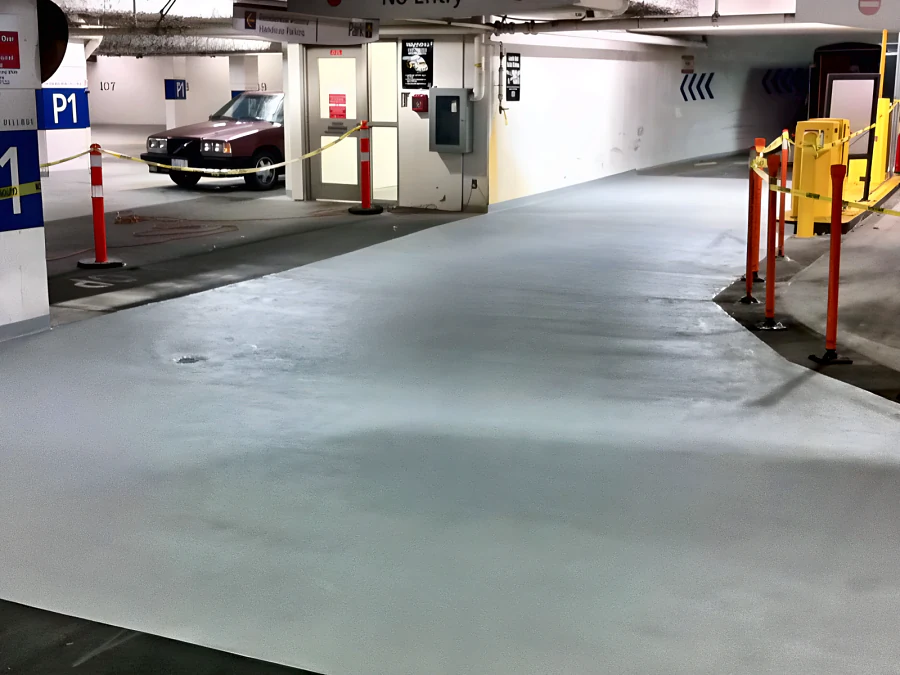
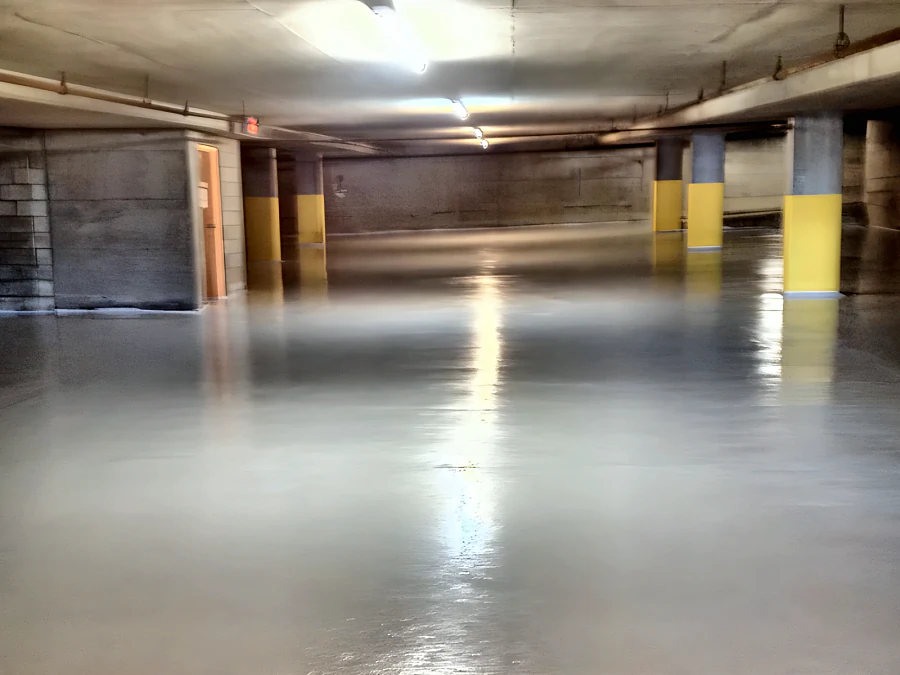
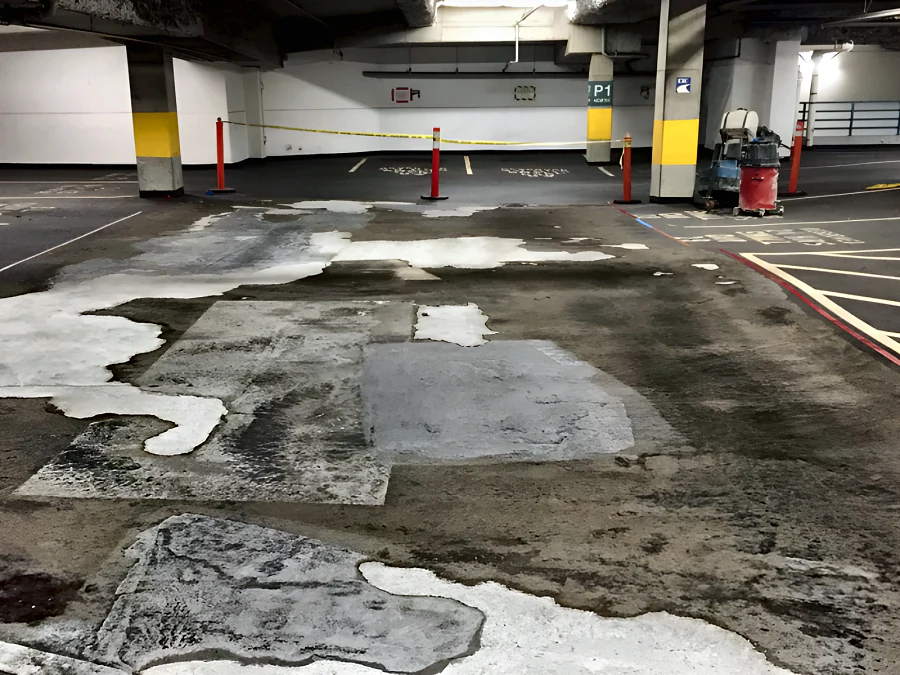
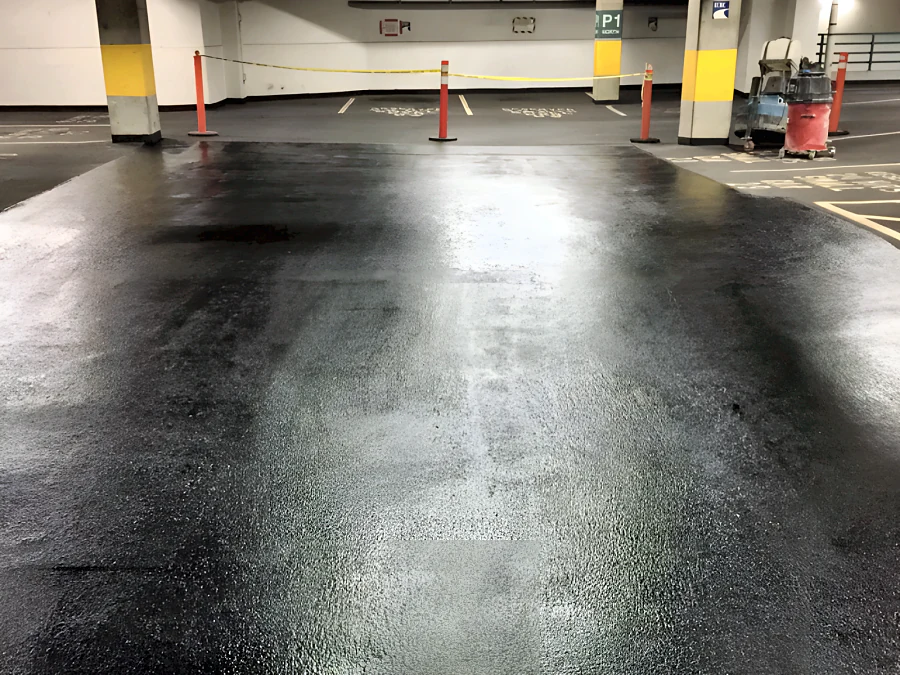
The Vancouver RCPM/ICBC parkade before and after resurfacing with traffic coatings, photographed through the same bay.
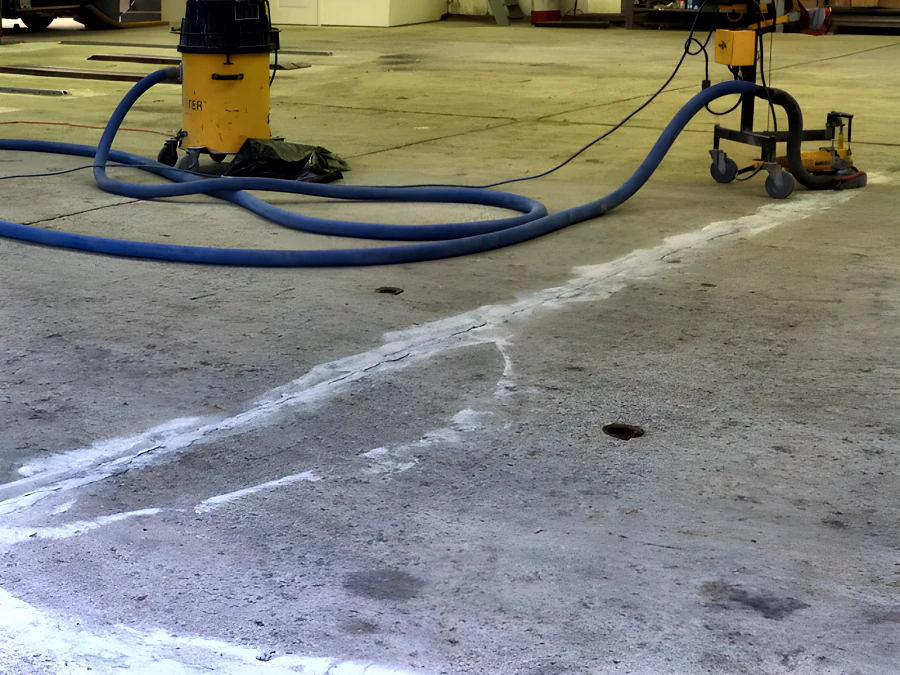
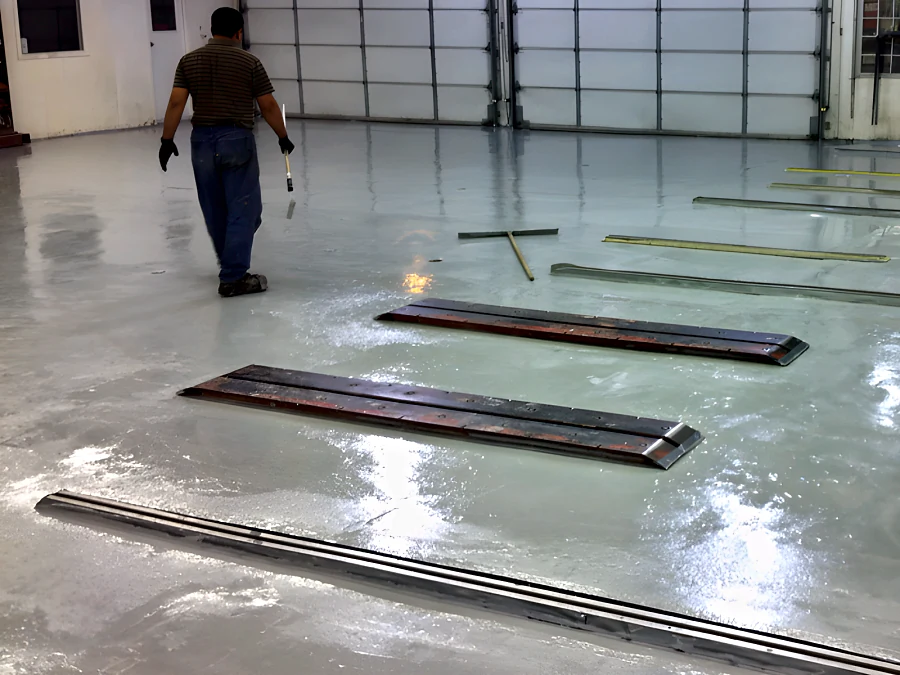
A Main Street auto body shop in 2011: the floor with its cracks ground out before coating (left), and the new coating being rolled out around the frame-machine rails (right). More on our automotive floors page.
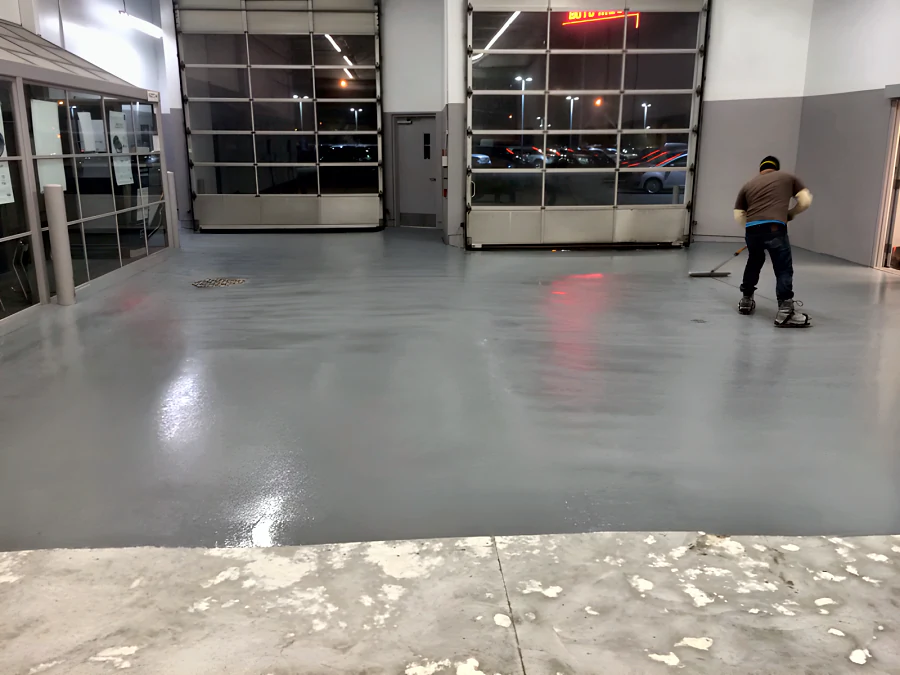
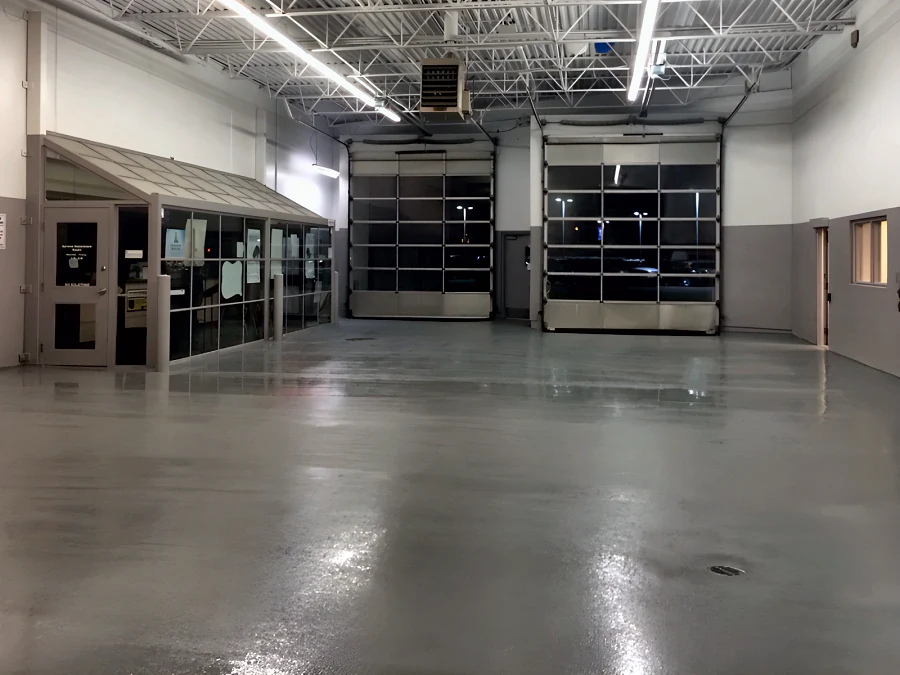
A Toyota dealership’s old shop in Vancouver, 2014: the grey traffic coating going down over the prepared slab (left), and the finished service drive, from the service office to the roll-up doors (right). More on the projects page.
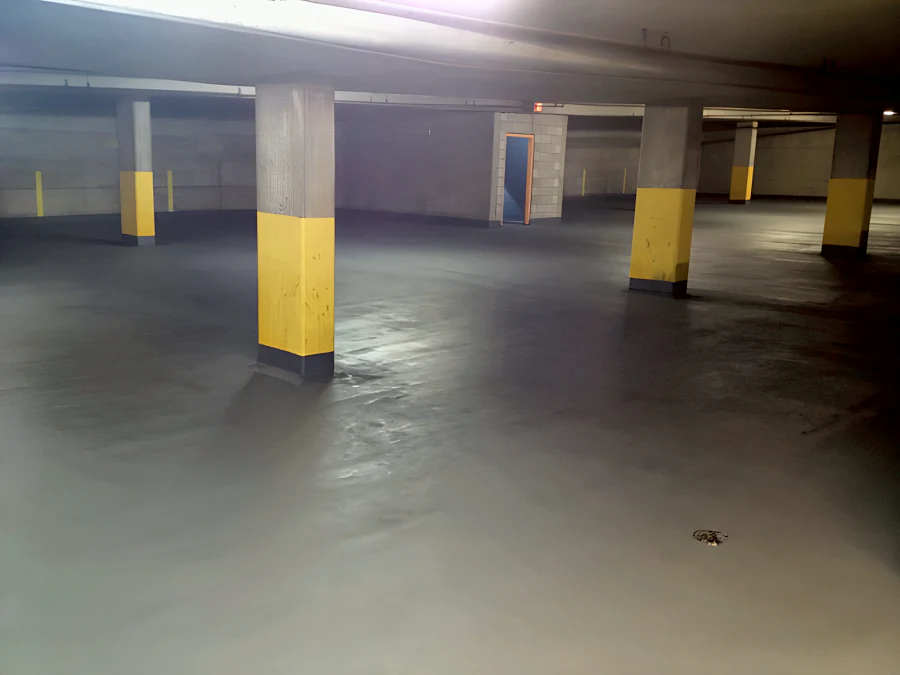
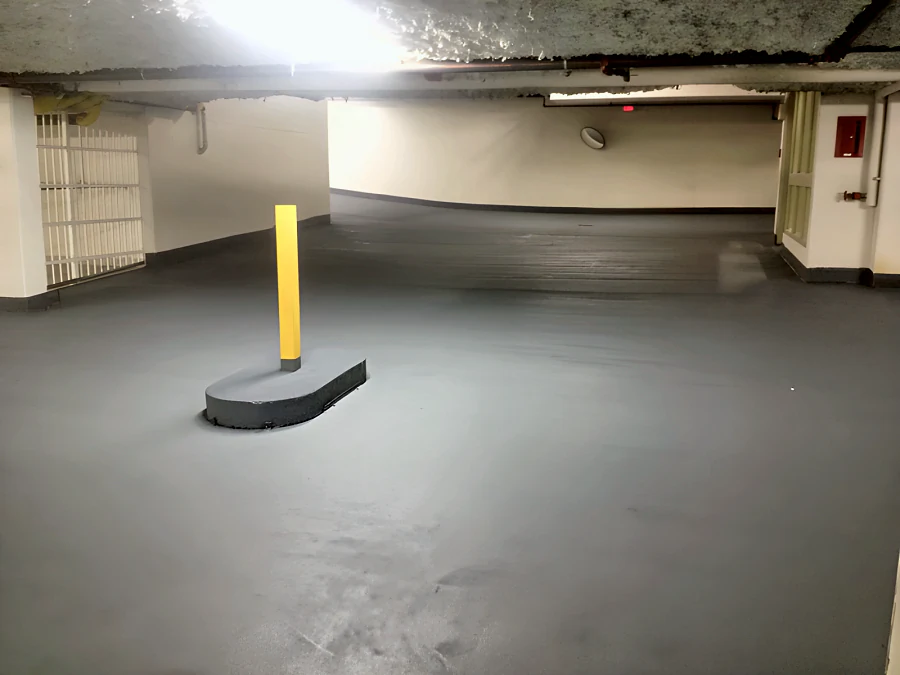
The Beach Avenue apartments parkade, 2012: the Kelmar FWC III traffic coating across a parking level (left) and carried over the bollard curb by the ramp (right), installed for Jacob Bros Construction. More on the projects page.
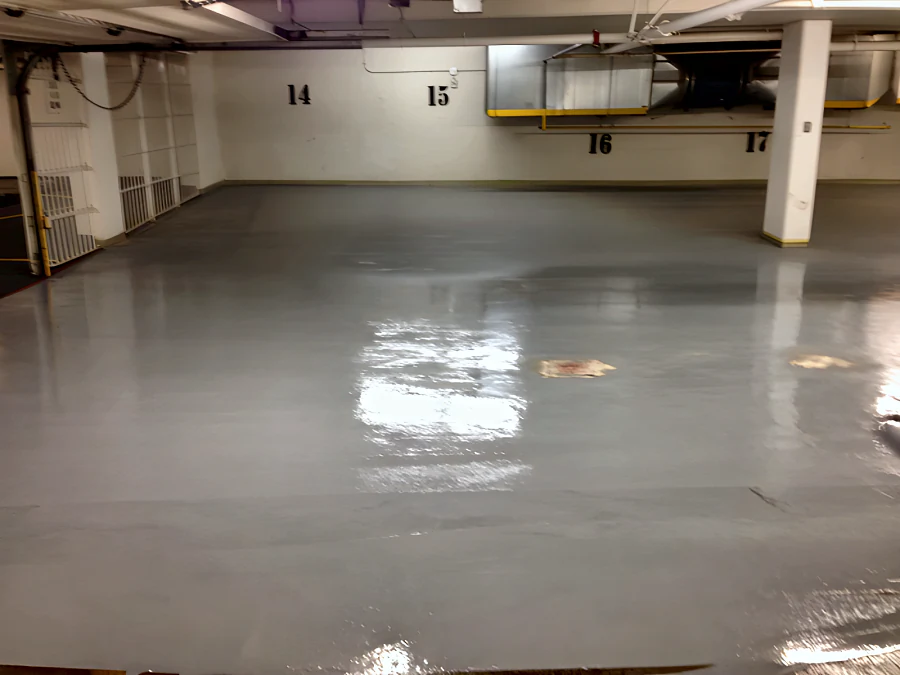
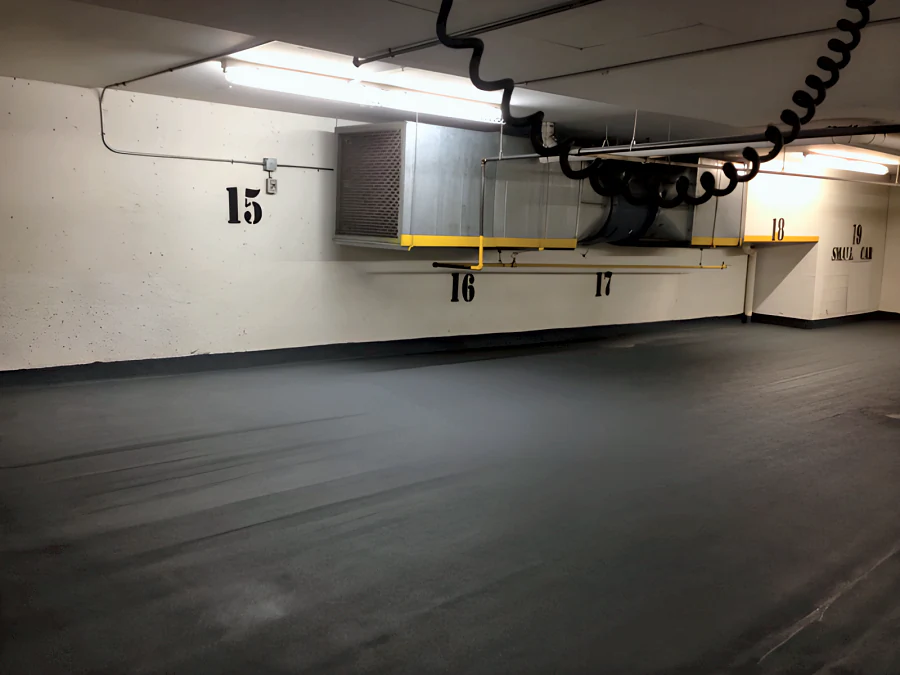
The Hampton Inn & Suites parkade on Robson Street, 2013: a fresh coat, still wet, across the stalls (left), and the finished Kelmar traffic coating turned up the wall base below the stall numbers (right). More on our hotel flooring page.
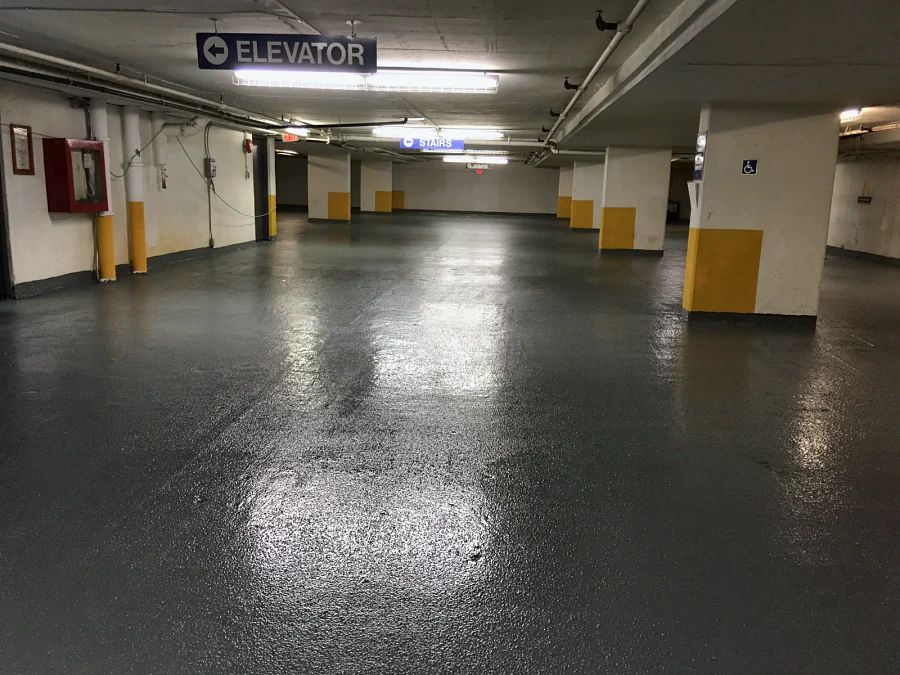
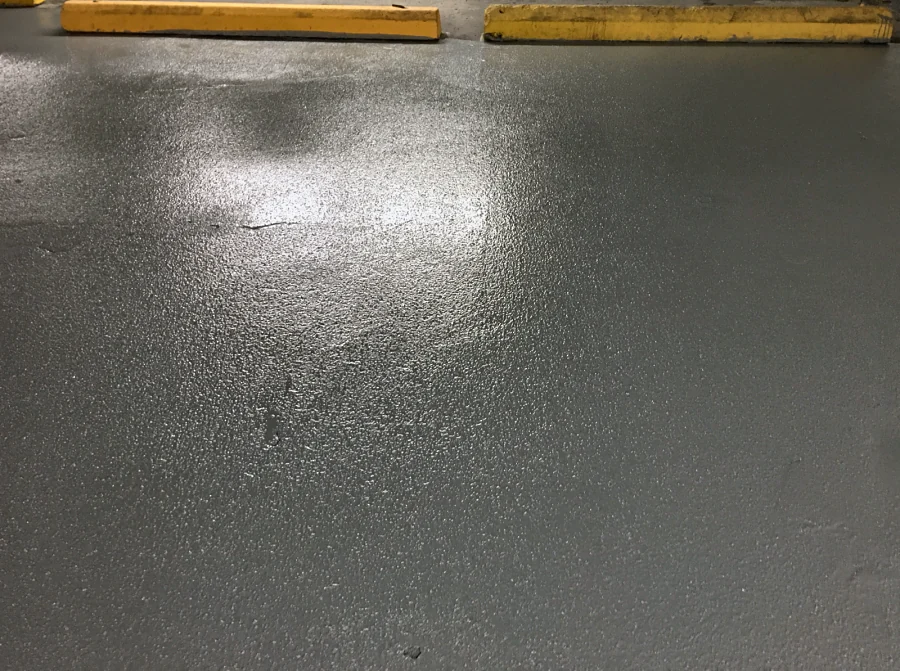
A Sandman Hotel parkade in Downtown Vancouver, 2017: the grey textured traffic coating down the drive aisle towards the elevator and stairs (left), and laid up to the wheel stops (right). More on the projects page.
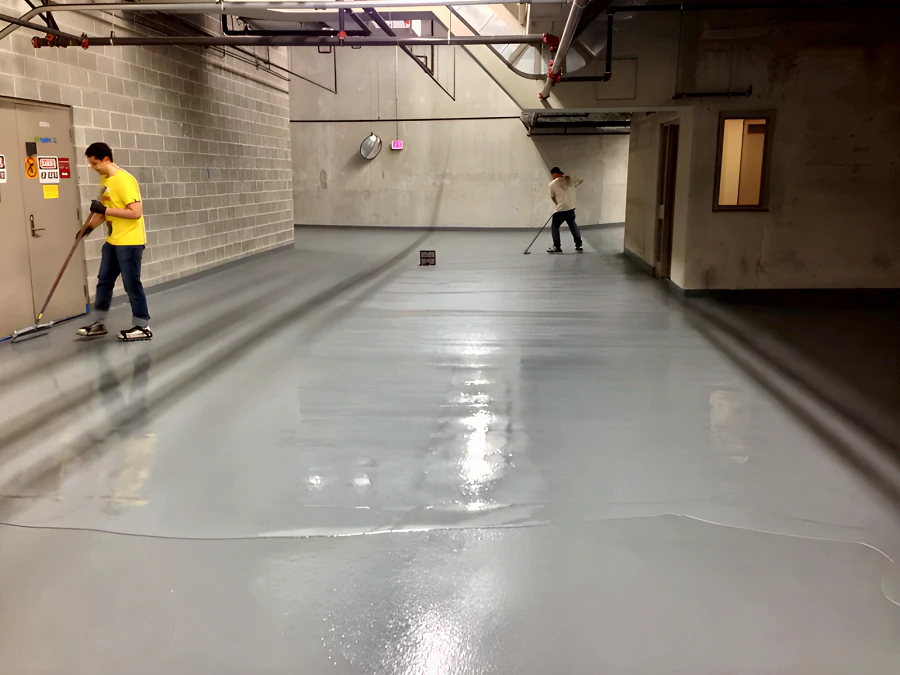
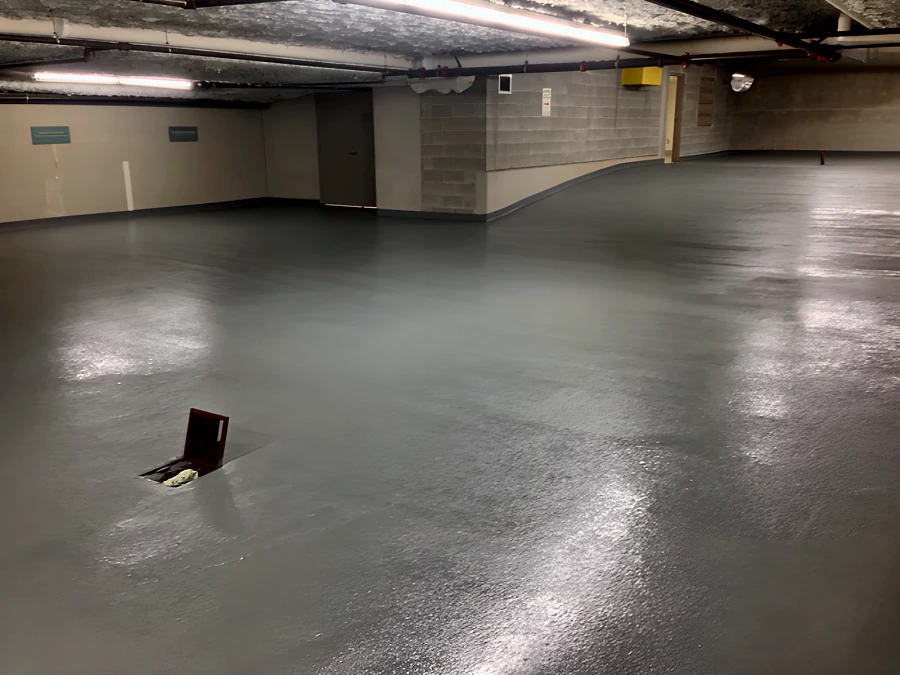
A Downtown Vancouver parkade recoated in 2013: the crew laying the new coat by squeegee and roller (left), and a finished parking level round the floor drain (right). More on the projects page.
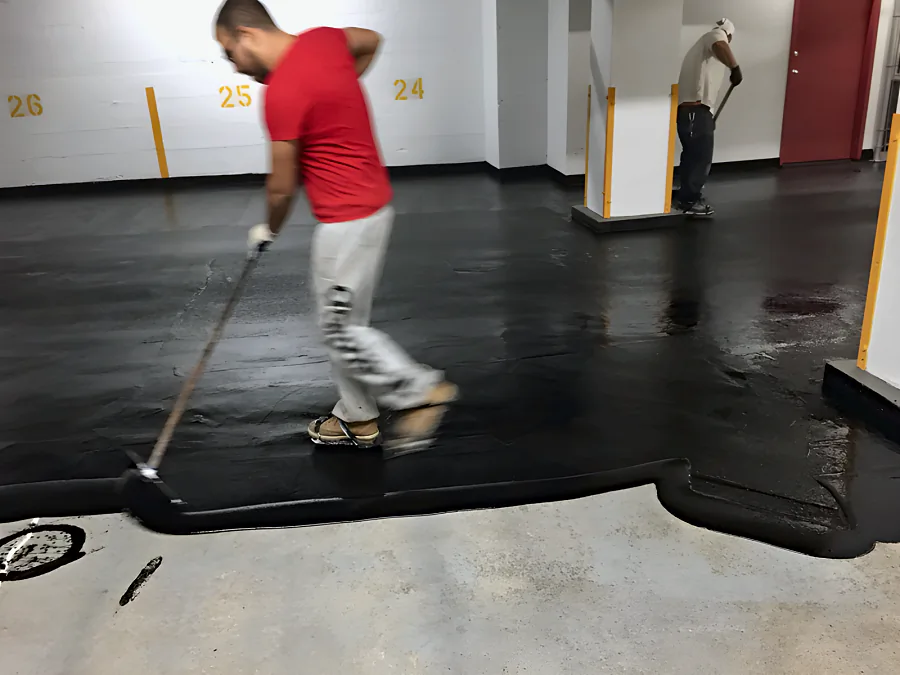
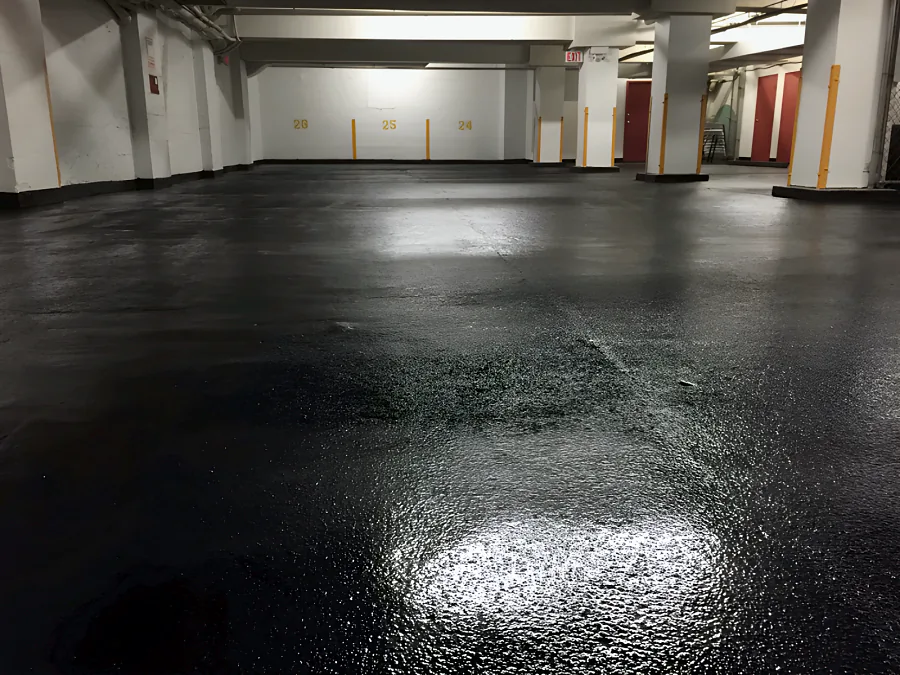
A Downtown Vancouver parkade coated in black, 2014: the crew spreading the traffic coating by squeegee over the prepared slab (left), and the finished textured coat under the lights (right). More on the projects page.
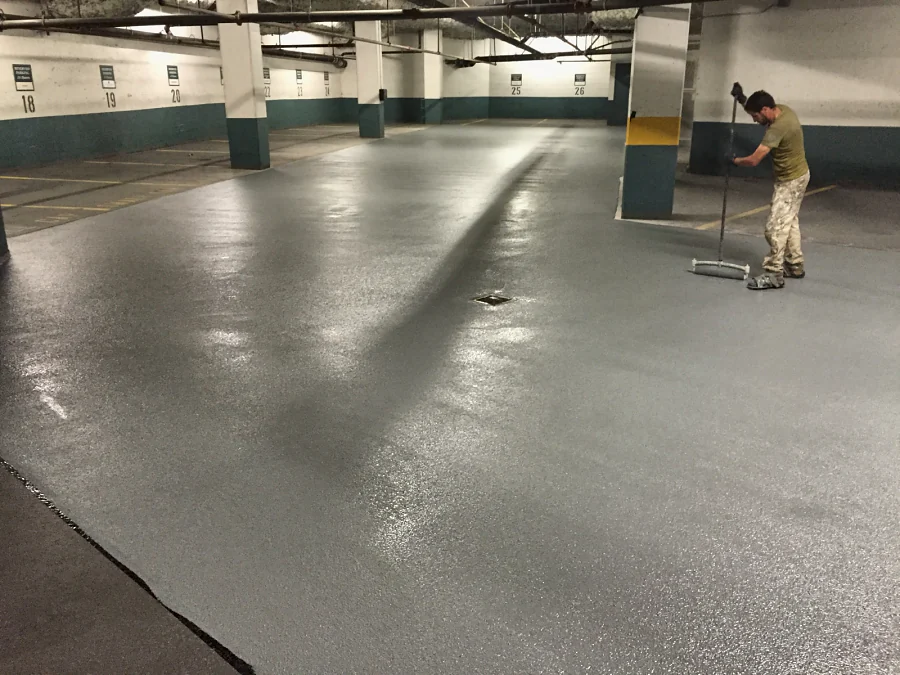
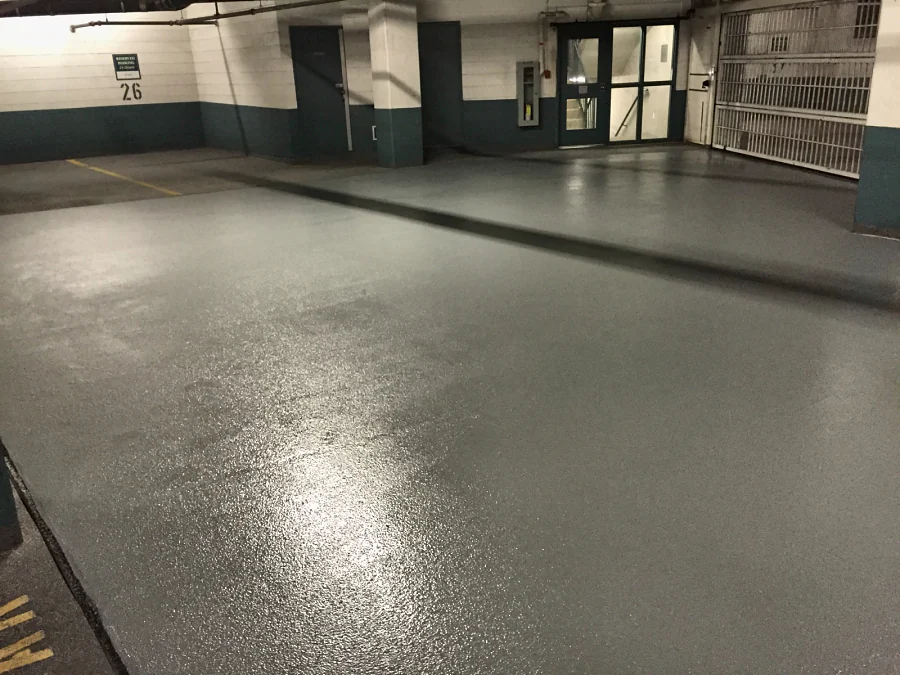
A Downtown Vancouver parkade coated in 2015: the grey traffic coating being rolled out down the drive aisle past the numbered stalls (left), and finished, textured, by the lobby doors and the parking gate (right). More on the projects page.
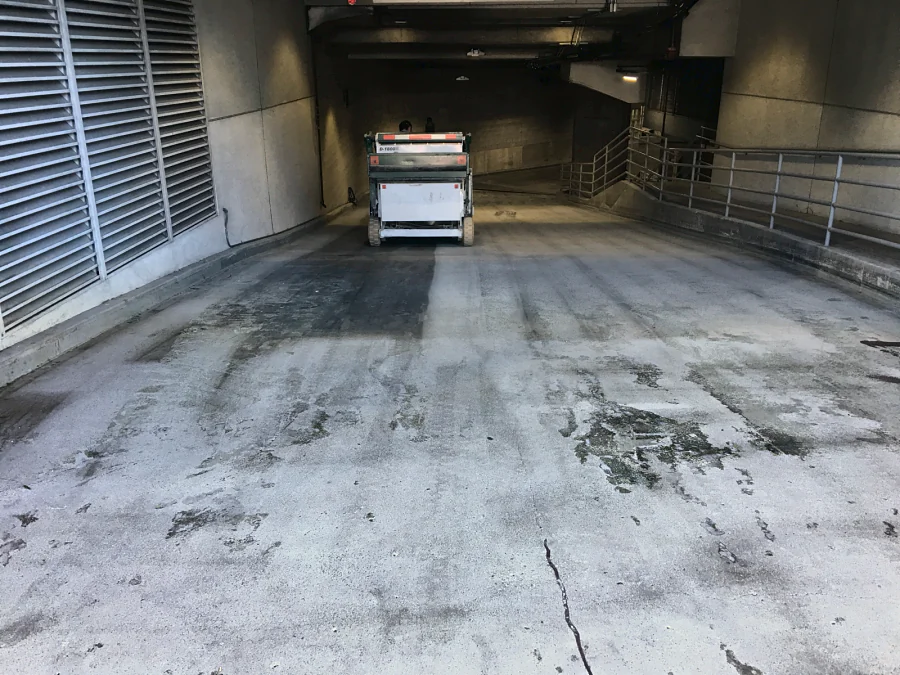
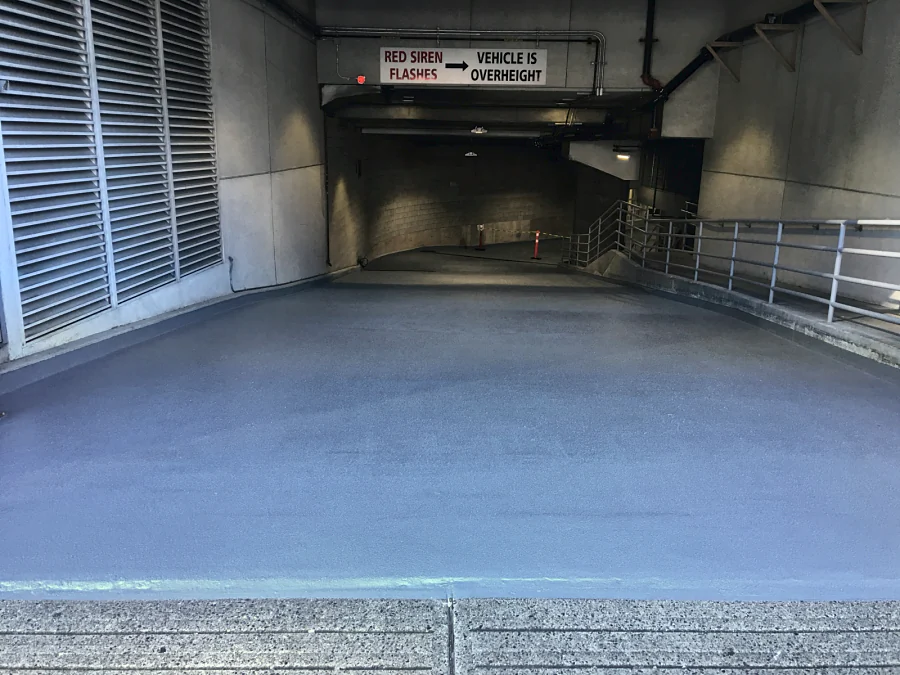
A commercial building’s parkade in Downtown Vancouver, 2016: the entrance ramp during surface preparation (left), and the same ramp coated, under the overheight sign (right). More on the projects page.
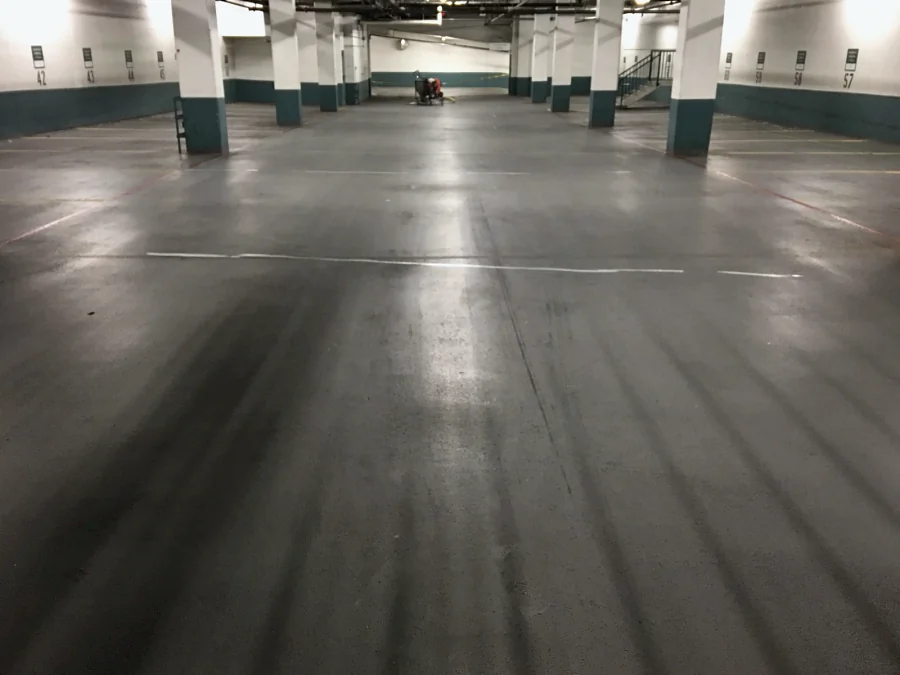
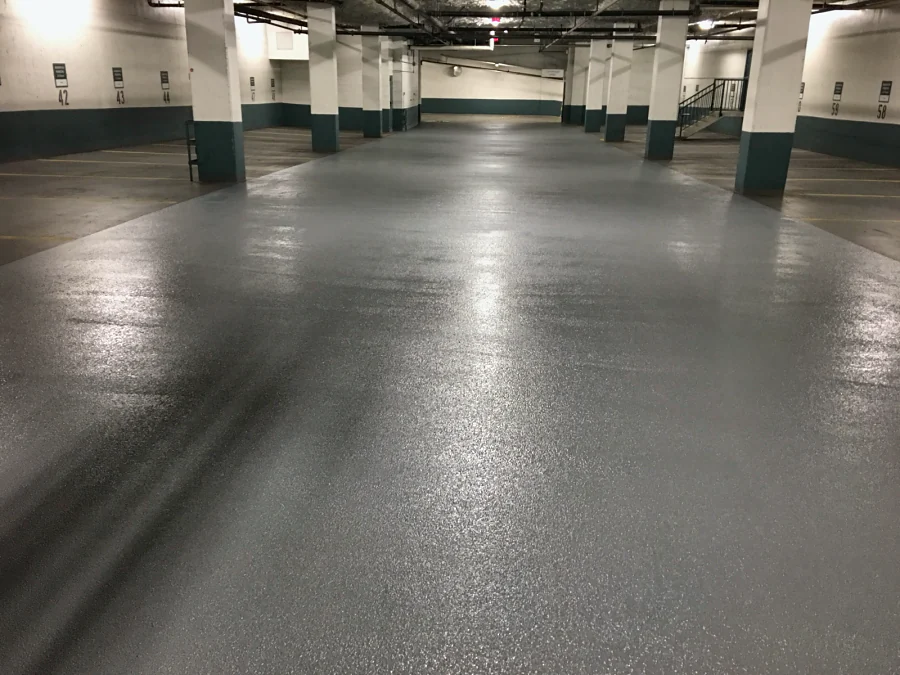
A parkade recoat in a Vancouver residential building, 2016: the drive aisle after shot blasting (left), and the same view recoated in a grey textured top coat over the existing membrane (right). More on the projects page.
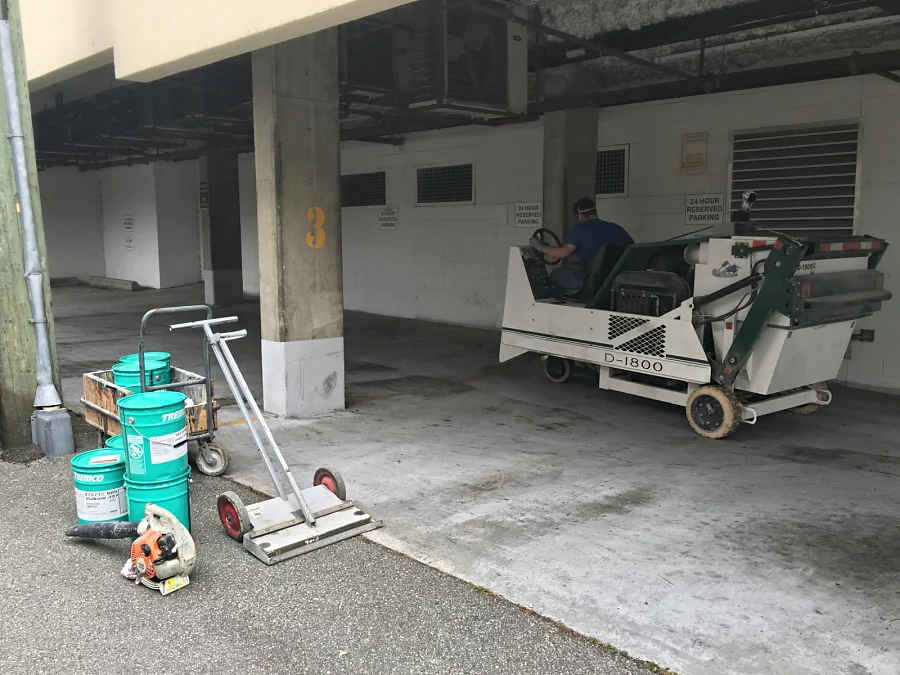
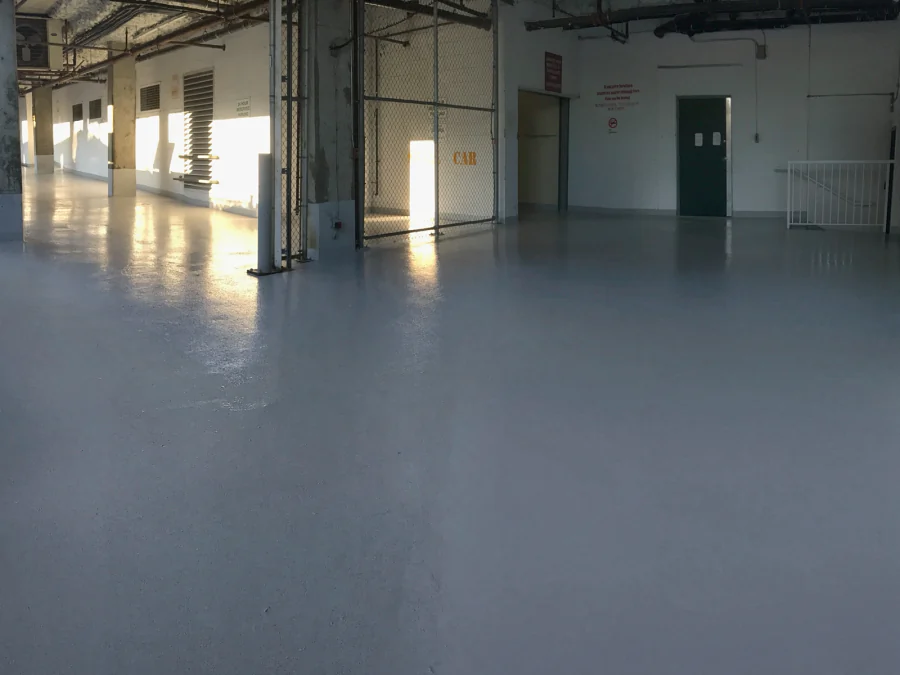
A loading bay and garbage area off a Vancouver lane: the covered bay being shot blasted, the Tremco materials staged (left), and finished in the Tremco Vulkem 350NF/346 traffic coating, back to the garbage enclosure gate and the service door (right). More on the projects page.
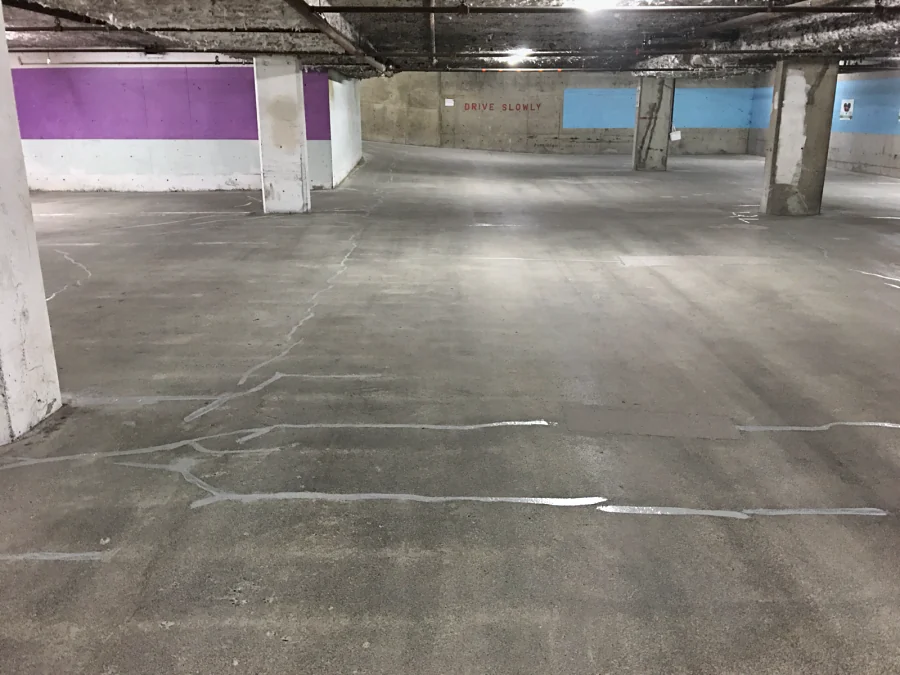
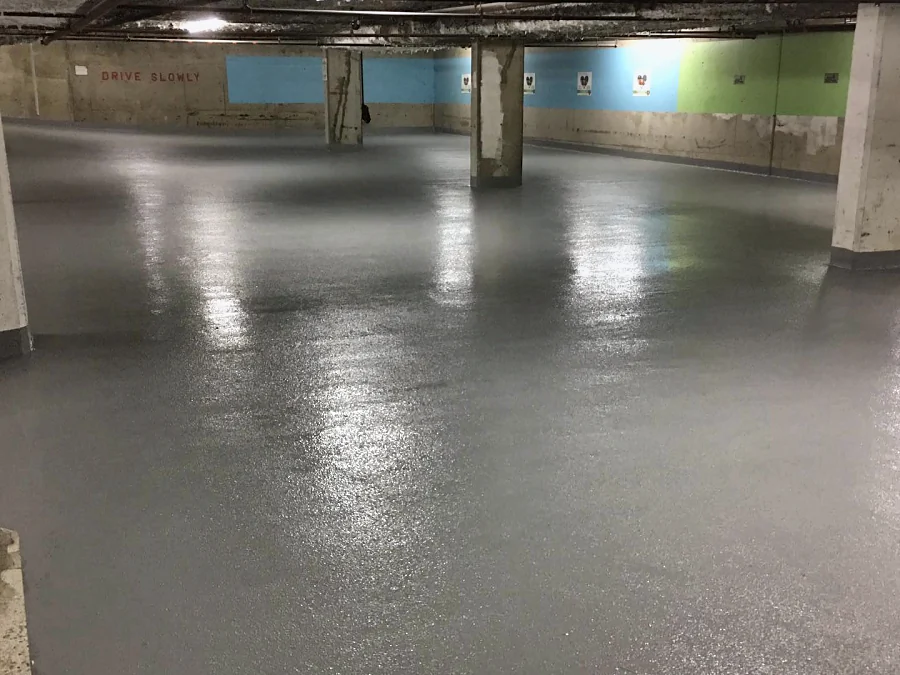
A residential parkade on West Broadway, 2016: the slab with its cracks treated (left), and finished in a grey Mapei traffic coating (right). More on the projects page.
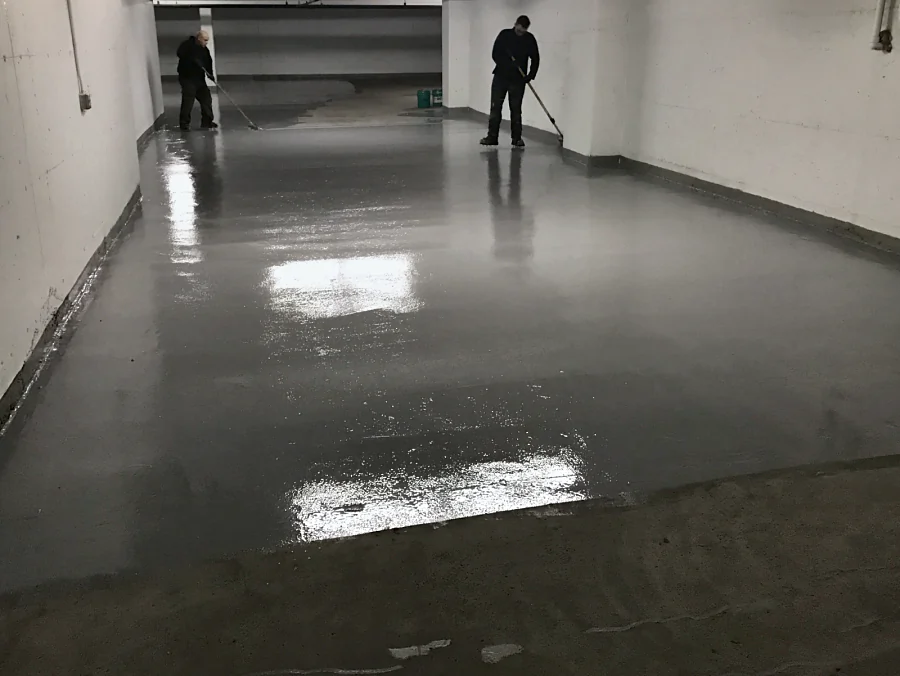
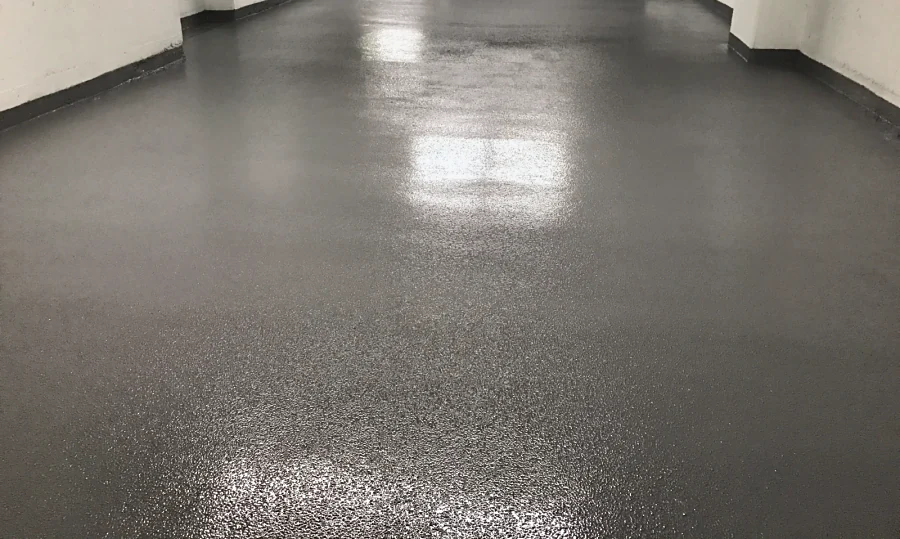
A 30,000 square foot parkade in Vancouver for Lark Group, in Tremco Vulkem 350NF/950NF/950NF: the crew spreading the grey coat by squeegee along a drive aisle (left), and a finished aisle, textured and glossy, the coat turned up the wall bases (right). More on the projects page.
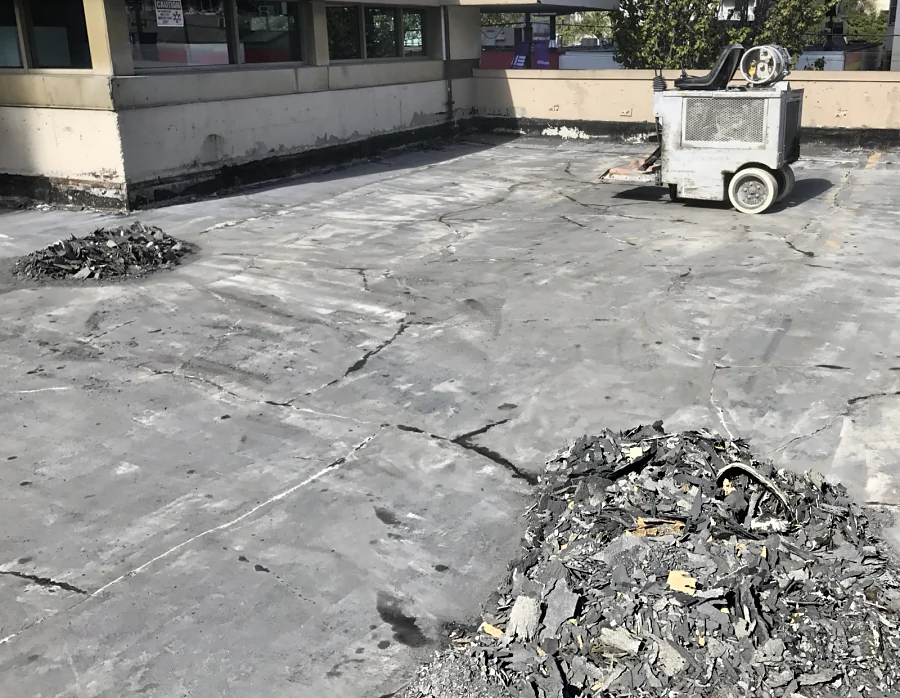
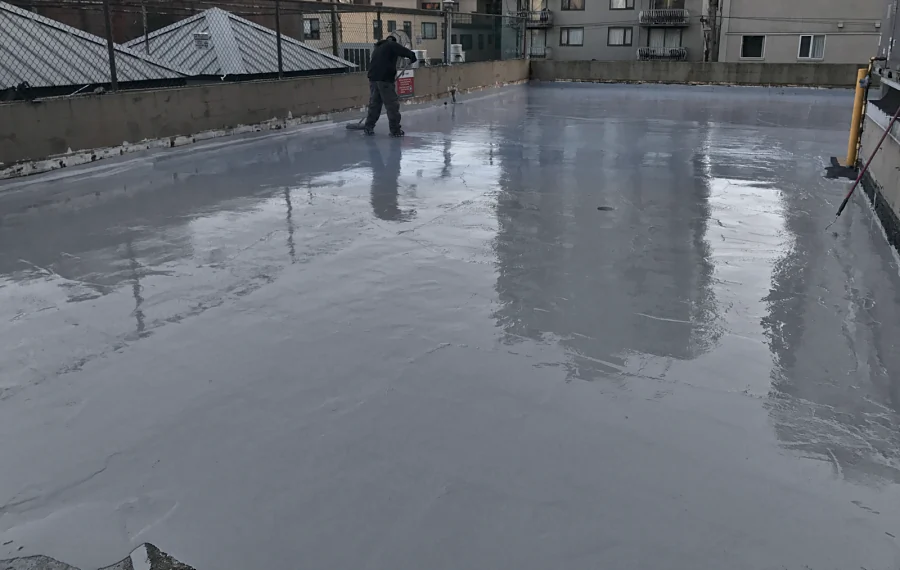
A hotel’s exterior parkade deck in the West End, Vancouver: the old membrane scraped off, the removed membrane piled on the concrete (left), and the Tremco Vulkem 360NF/346 coat being squeegeed across the deck after shot blasting and crack repair (right). More on the projects page.
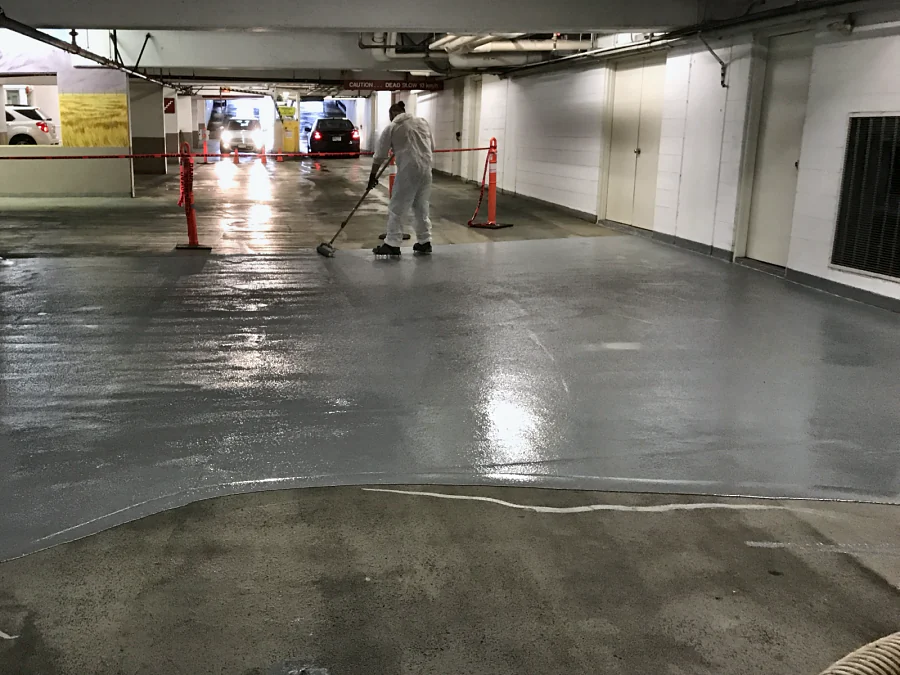
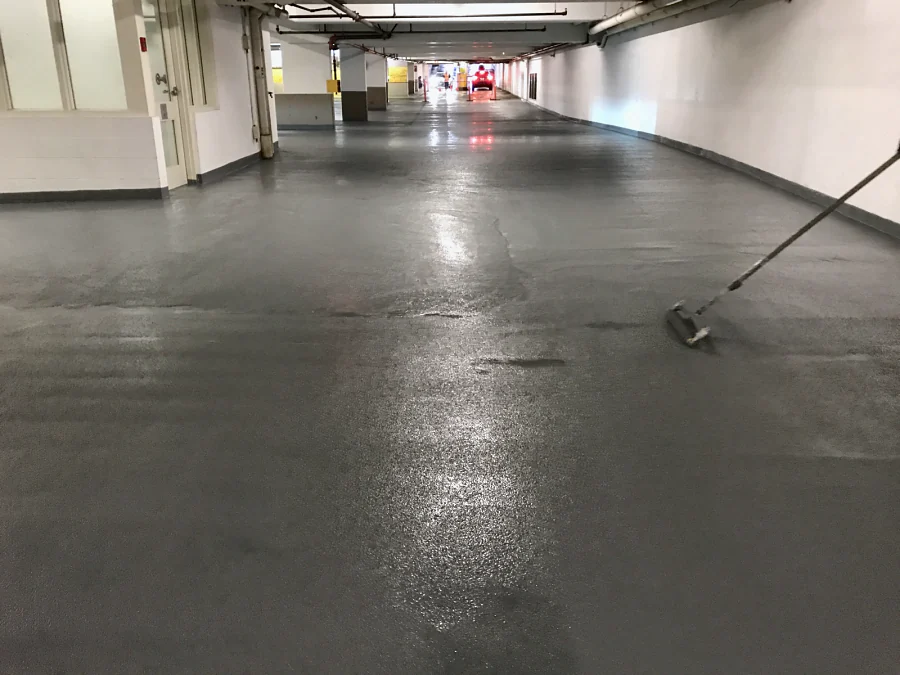
The parkade at a Whole Foods in Vancouver, recoated: the new grey coat going down over the prepared deck, the work taped off from the entrance (left), and the drive aisle in its new coat (right). More on the projects page.
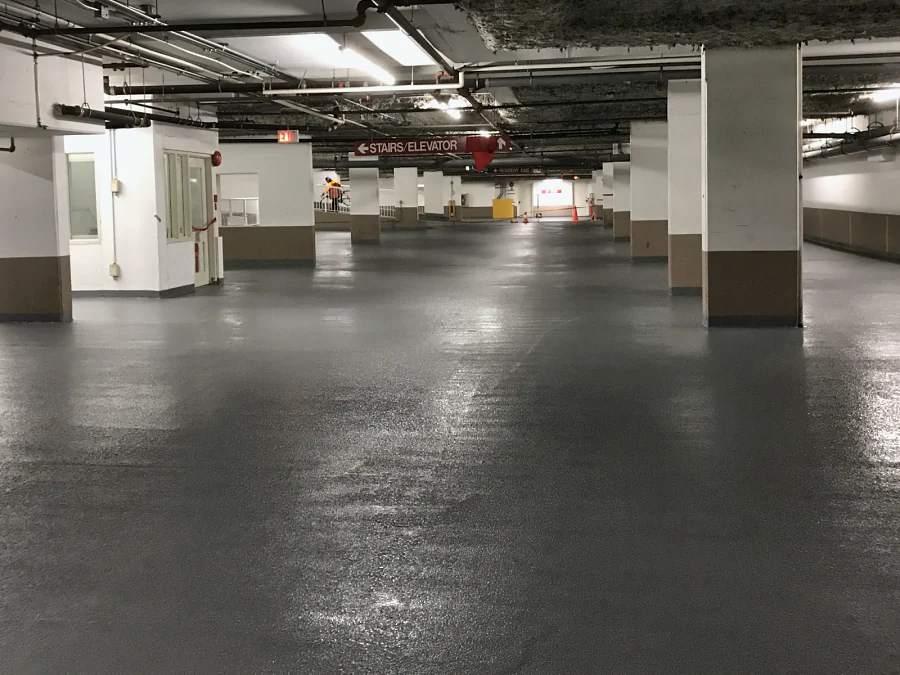
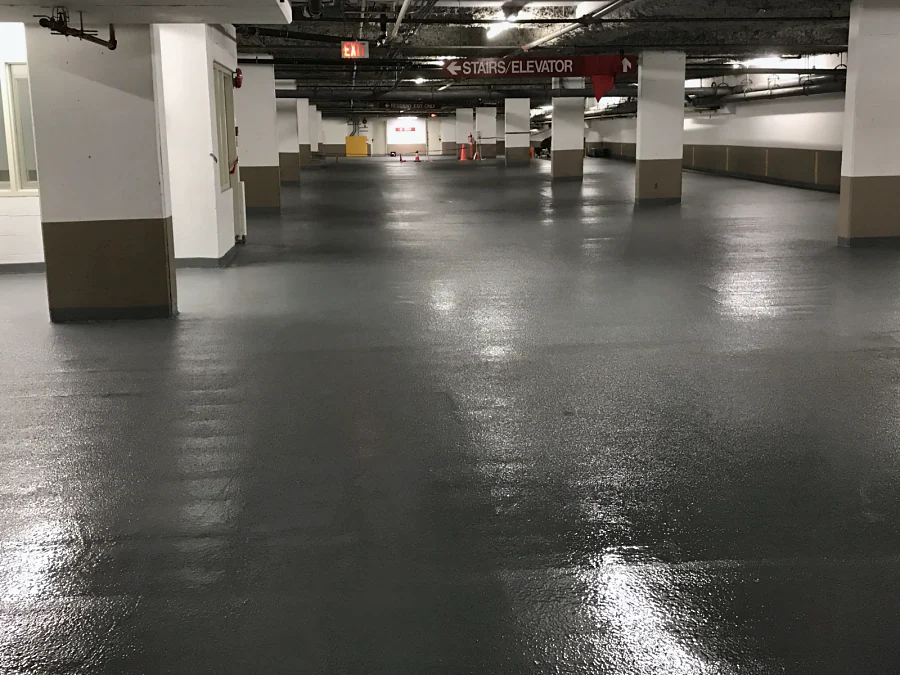
The same Whole Foods parkade finished: the recoated parking level down the rows of columns (left), and the new grey coat round the columns, glossy under the lights (right).
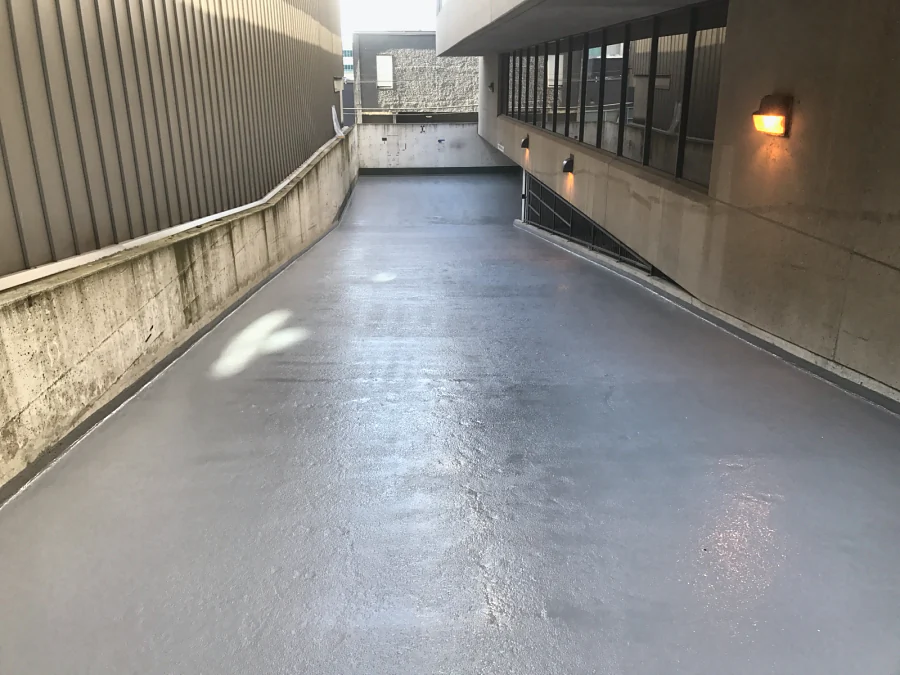
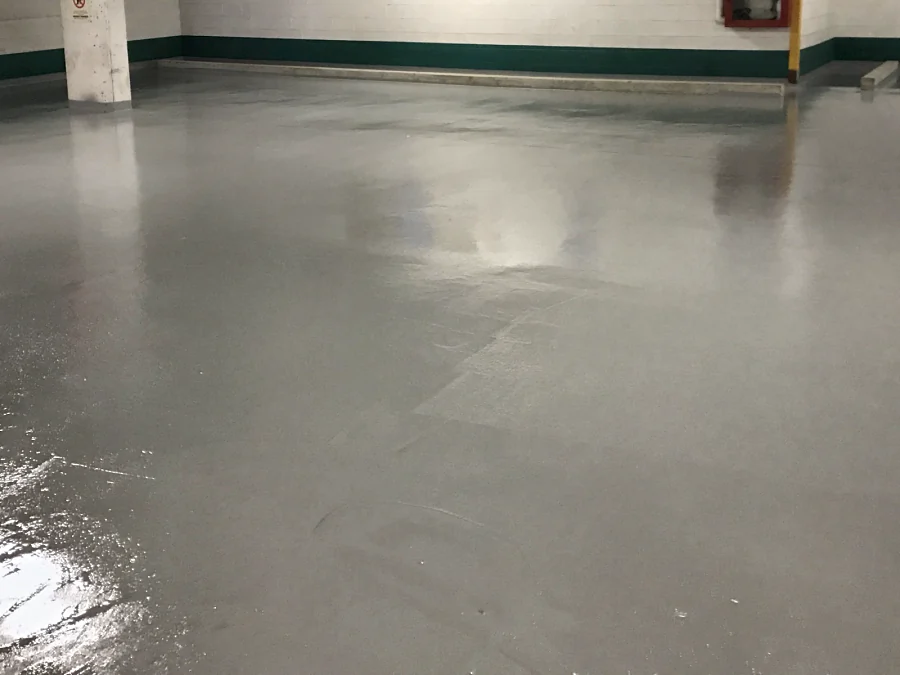
The Vancity parkade in Vancouver, coated for SBW in 2017: the entrance ramp finished in the grey coat (left), and a parking level finished glossy up to the wall base (right). More on the projects page.
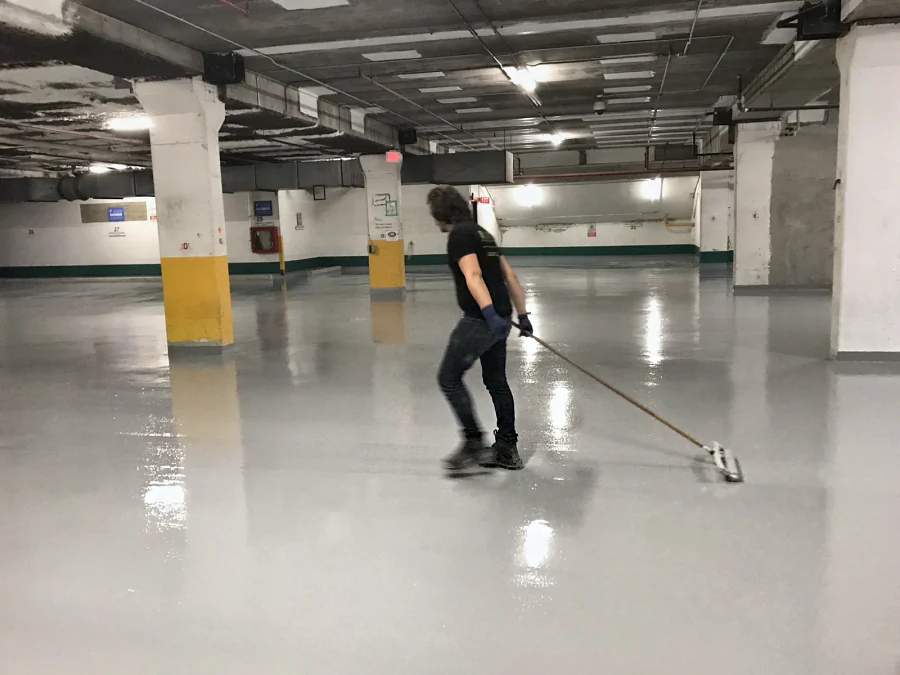
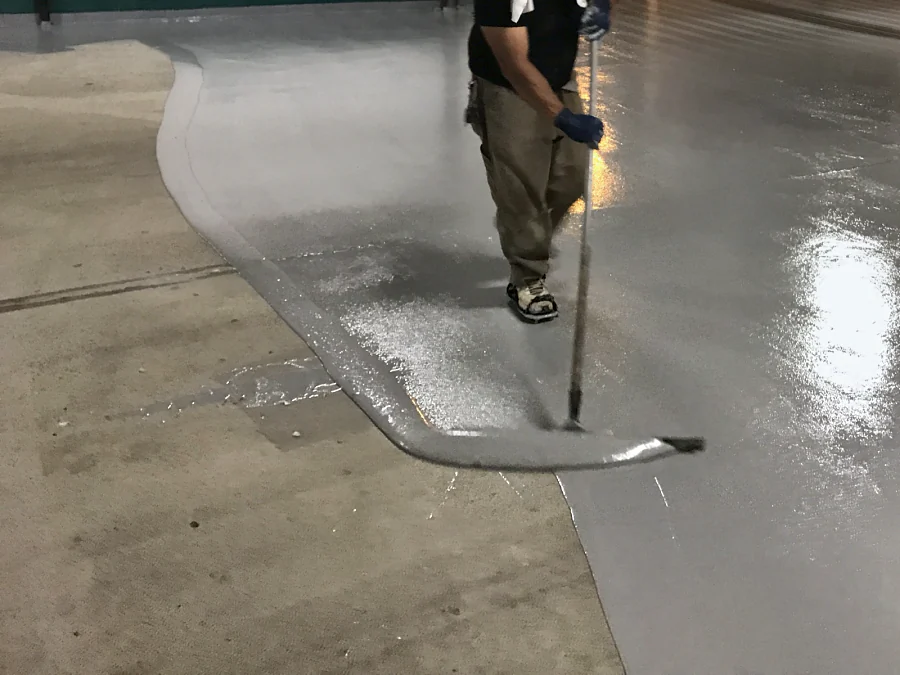
The same parkade: a crew member spreading the coat by squeegee across a parking level (left), and the coat pushed out over the bare slab (right).
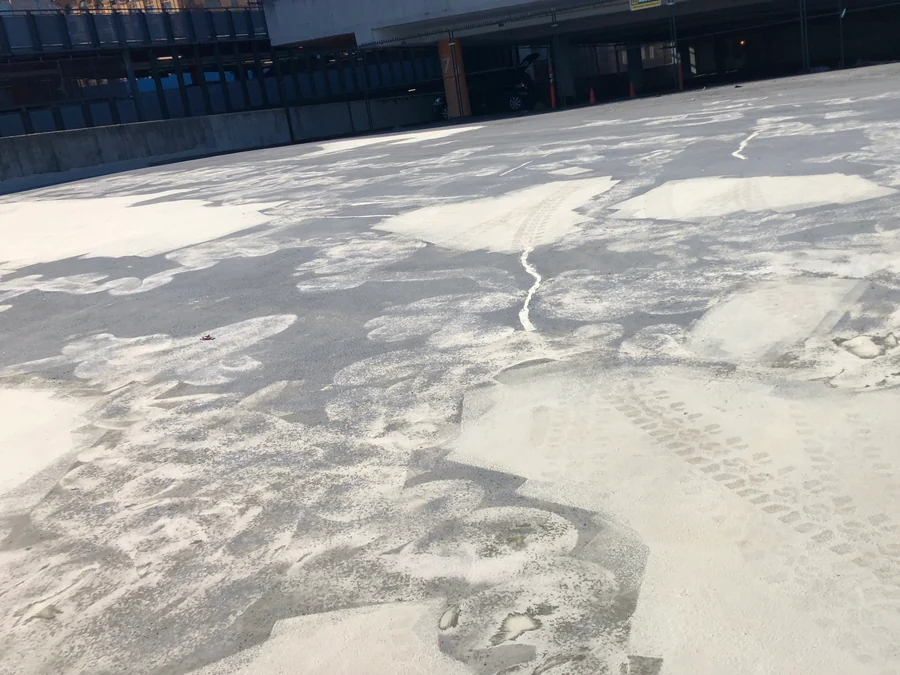
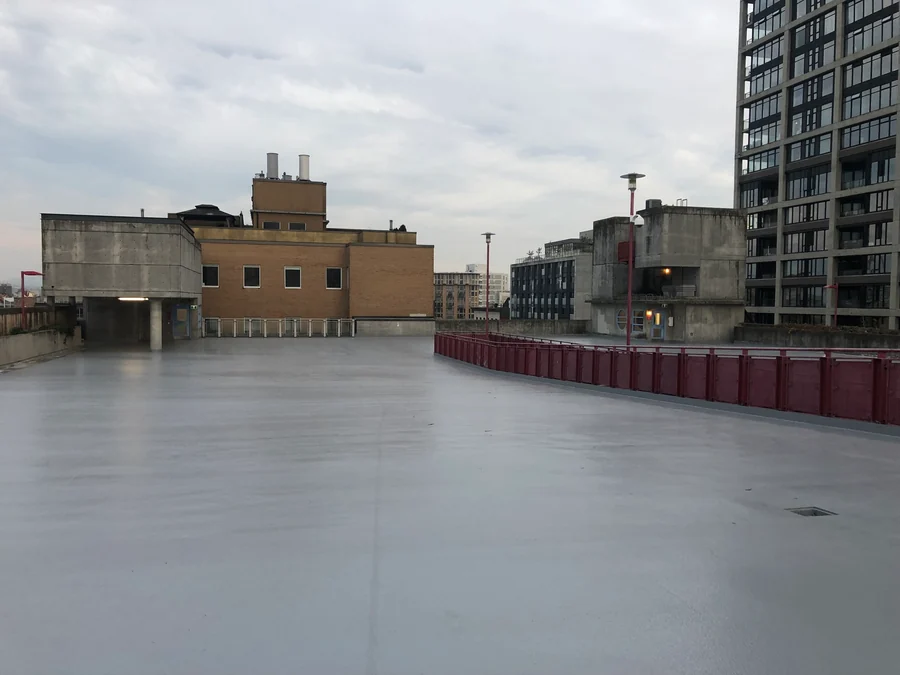
A 50,000 square foot roof deck on the Gastown parkade that carries the daycare, for Heatherbrae Builders: the old coating coming off down to the concrete (left), and the deck recoated in Tremco Vulkem 350NF/950NF/951NF, along the railing to the stair tower (right). More on the projects page.
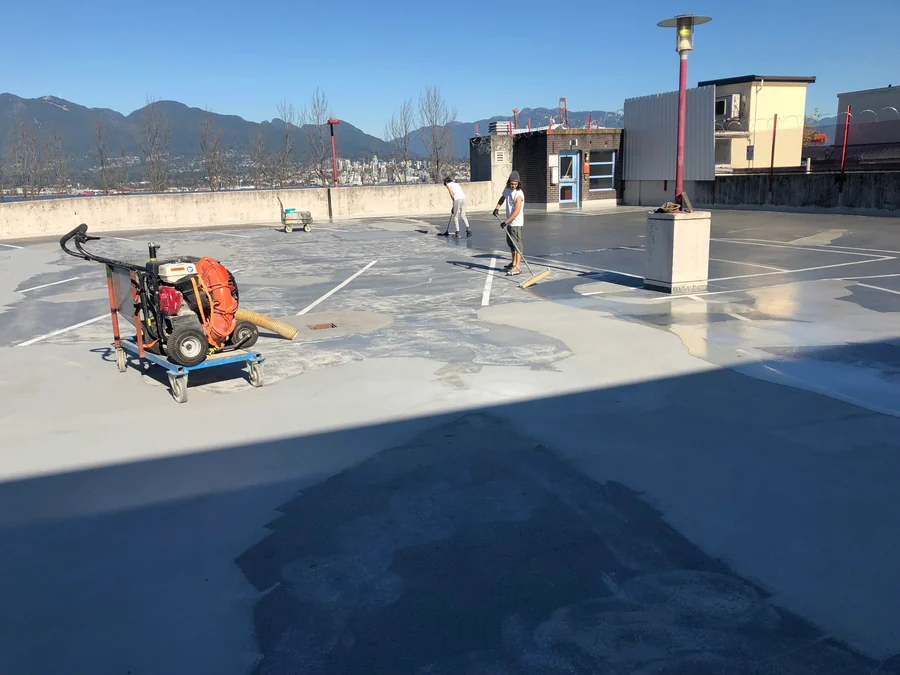
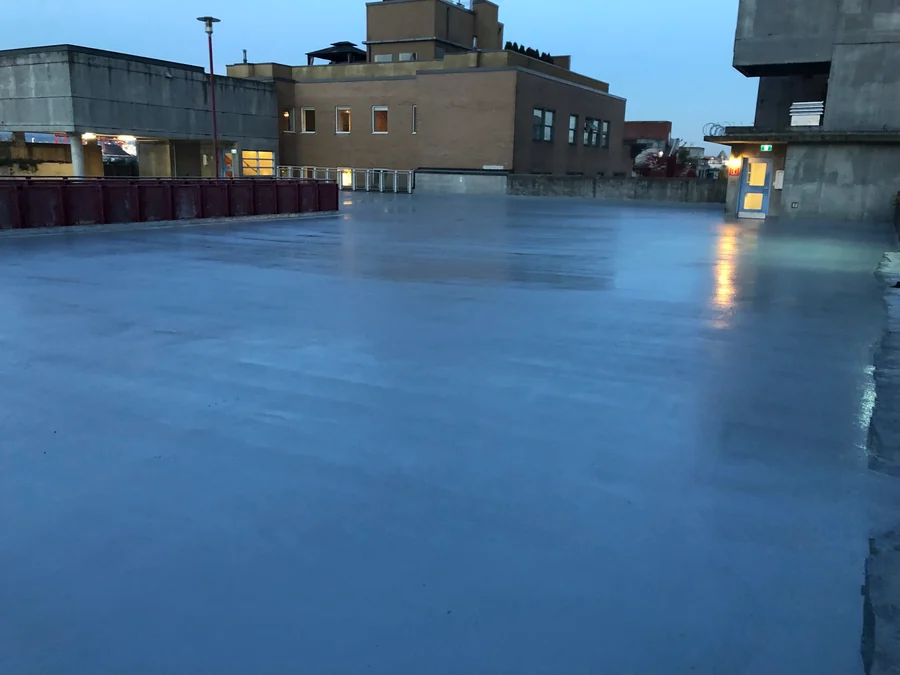
The same deck: the crew sweeping the prepared slab ahead of the coat, the North Shore beyond the parapet (left), and the finished deck at dusk (right).
Downtown Vancouver
980 Howe Street: 100,000 square feet of parkade
The underground parkade at 980 Howe Street in Downtown Vancouver, 100,000 square feet, in a Kelmar traffic coating in 2015. The system went down section by section behind tape lines, the black coat spread across the prepared slab and turned up the walls and column bases as a cove, finished in dark grey across the whole parkade.
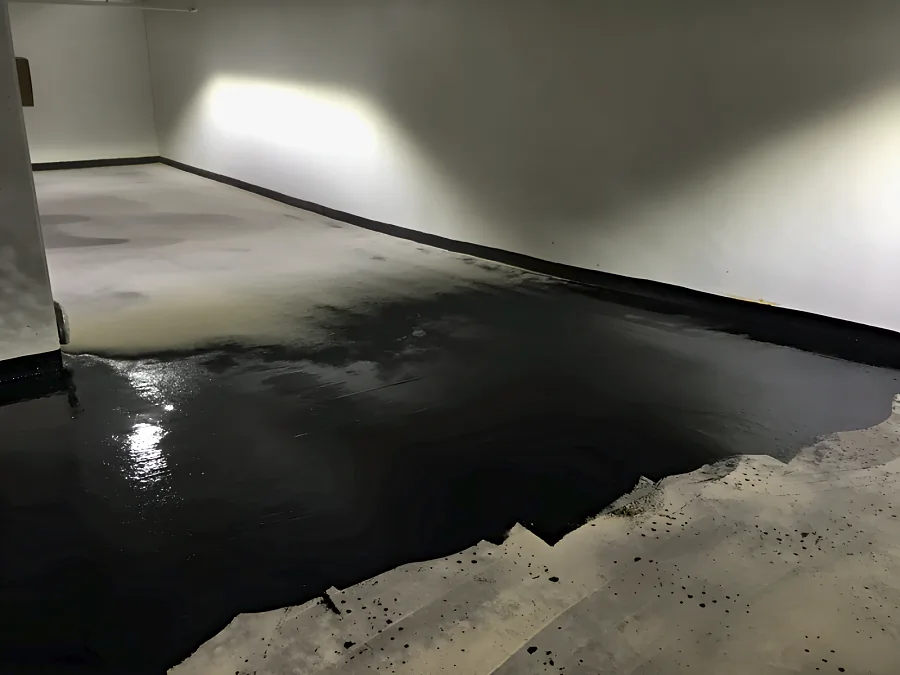
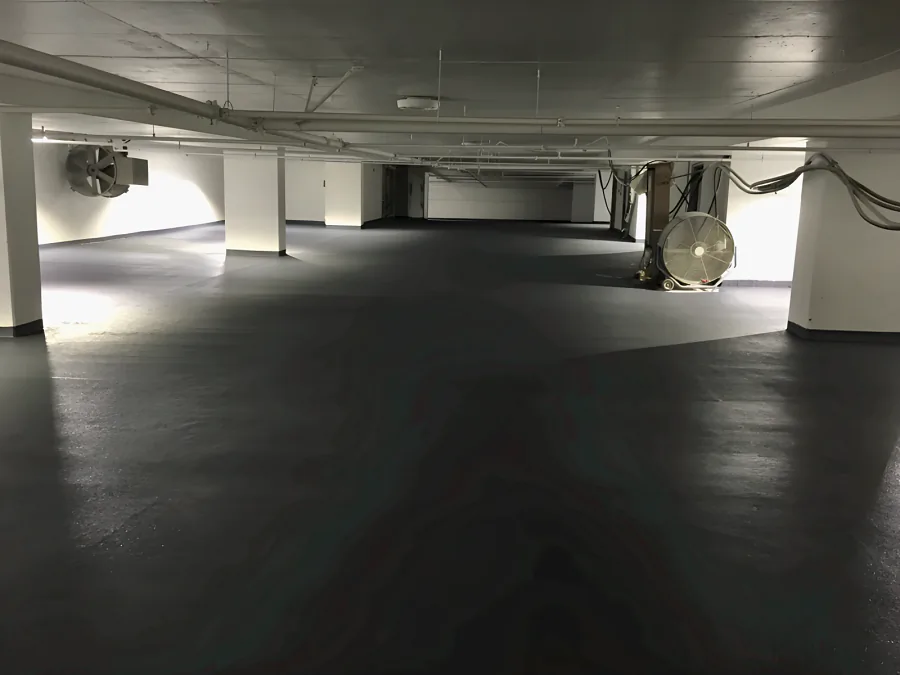
980 Howe Street, 2015: the black coat of the Kelmar system spread across the prepared slab and coved at the wall (left), and the finished parkade in dark grey (right). More on our Kelmar traffic coating page.
- Building
- 980 Howe Street
- Area
- 100,000 ft²
- System
- Kelmar traffic coating
- Completed
- 2015
Questions
What Vancouver clients ask us.
How do you work on a downtown Vancouver parkade with no lay-down space?
Downtown sites usually have no room for material storage, so we stage deliveries to arrive per phase rather than dropping the whole job on site. Equipment goes in through the parkade itself where the ramp clearance allows it, and waste leaves the same night. On tower sites we also have to work around loading bay bookings, which we arrange with building management before the schedule is fixed rather than on the morning of.
Our building is from the 1970s. Is the parkade slab likely to need concrete repair?
Often, yes. Vancouver's older concrete stock predates modern chloride protection, and after decades of road salt tracked in from the streets the reinforcing steel in suspended slabs is commonly corroding somewhere. We sound the slab and take cores before quoting, because on a building of that vintage the repair quantity is the number that decides the budget, not the membrane area.
Can you work in a heritage or mixed-use building with tenants above?
Yes. The constraints are odour, noise and vibration reaching the units above, so we use low-odour systems where the schedule allows, run negative-air containment, and confine grinding and shot blasting to agreed hours. In mixed-use buildings with retail at grade, the retail hours usually govern the noisy work more tightly than the residential ones do.
How does Vancouver rain affect the schedule?
On an enclosed parkade, barely at all — the deck is protected and we control the ambient conditions inside. On exposed top levels and roof decks it matters a great deal, because these systems need a dry substrate and a dry cure window. We build weather contingency into exposed-deck phases and we will stop rather than install a membrane onto a substrate that is not dry. A membrane installed in the wrong conditions fails, and it fails on your dime and our reputation.
Site assessments
Have a slab in Vancouver you're worried about?
Photographs and a rough area are enough to start. We'll come out, test moisture, and scope it properly.
Main (604) 968-2040
Second (604) 230-0256
estimating@westpacificcoatings.com