Surface preparation
Nothing bonds to a dirty slab.
Shot blasting, diamond grinding and documented moisture testing to a measured concrete surface profile — the least visible part of the job and the one that decides the outcome.
The work
Profile is a specification with a number.
Coating manufacturers specify the concrete surface profile their product needs, on a scale from CSP 1 (almost smooth) to CSP 9 (heavily scarified). A thin sealer wants a light profile; a high-build epoxy wants CSP 3 to 4; a mortar system wants more. Producing the wrong profile voids the warranty just as surely as using the wrong product.
We produce it mechanically. Shot blasting is the workhorse for open floor area — it is fast, dust-contained and gives a consistent, repeatable profile. Diamond grinding handles edges, coating removal and anywhere a flatter result is wanted. Scarifying is for heavy removal only.
Acid etching is not surface preparation. It produces an inconsistent profile, leaves reaction products on the surface that interfere with bond, and drives moisture into the slab. If a quote proposes it, that is a meaningful signal about the rest of the work.
- Profile range
- CSP 1–6
- Methods
- Shot blast · Diamond grind · Scarify
- Moisture
- ASTM F2170 RH probes
- Dust
- HEPA-contained
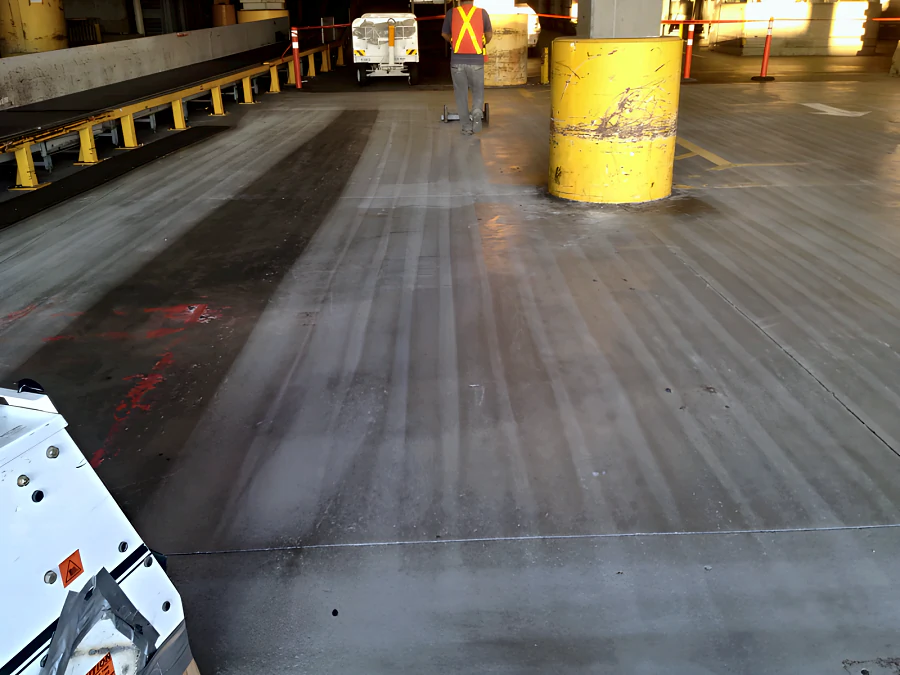
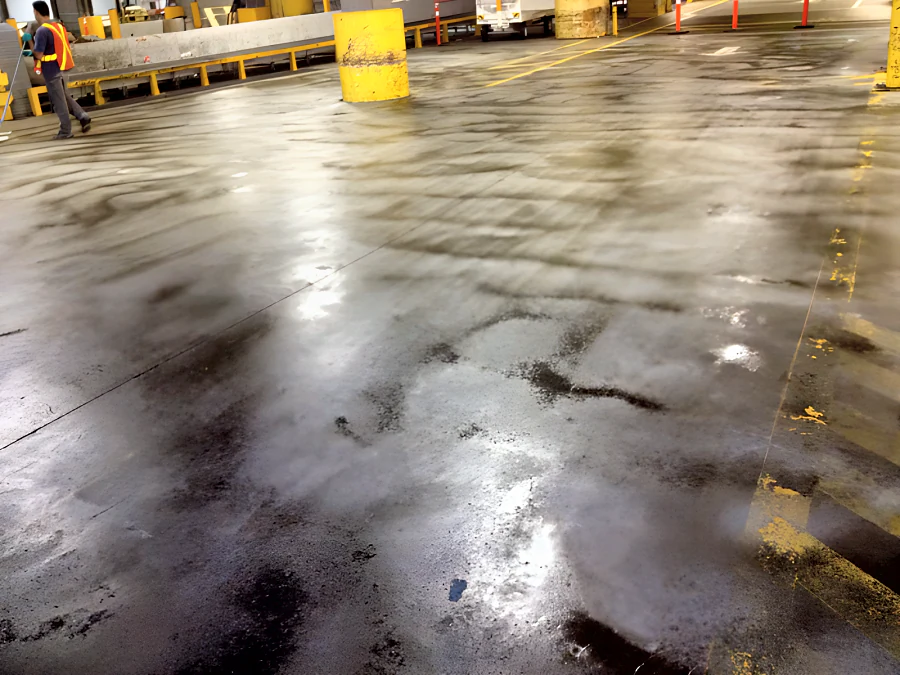
Shot blasting as the finish, not only the preparation, at Vancouver International Airport (YVR). The blaster working across a slippery baggage-hall slab, with the blasted lanes lighter than the untouched strip on the left (left), then the sealer going on over the blasted concrete (right). The texture the blasting leaves is what makes the floor non-slip. More on the Richmond page.
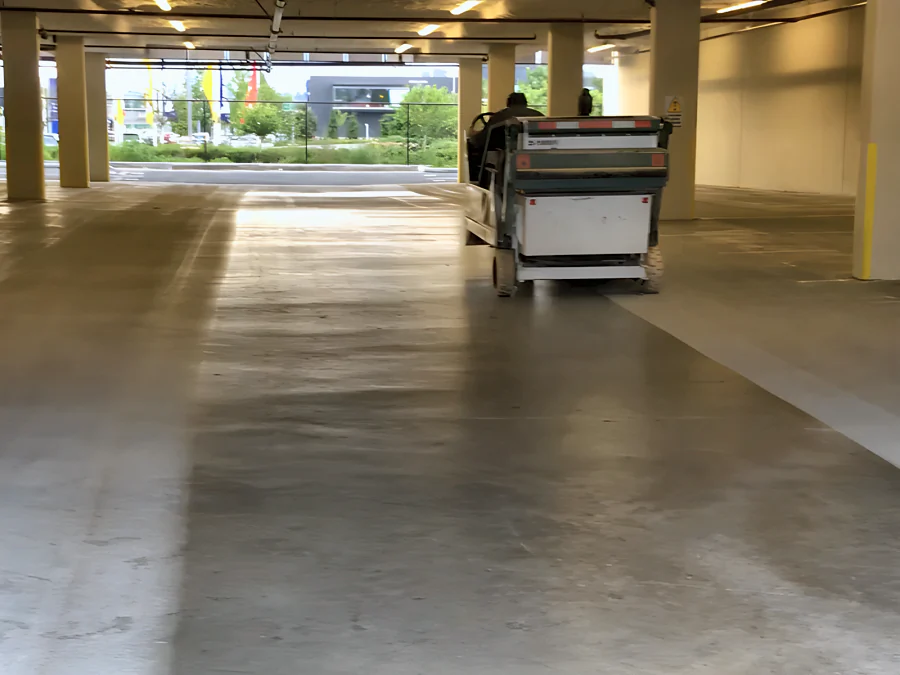
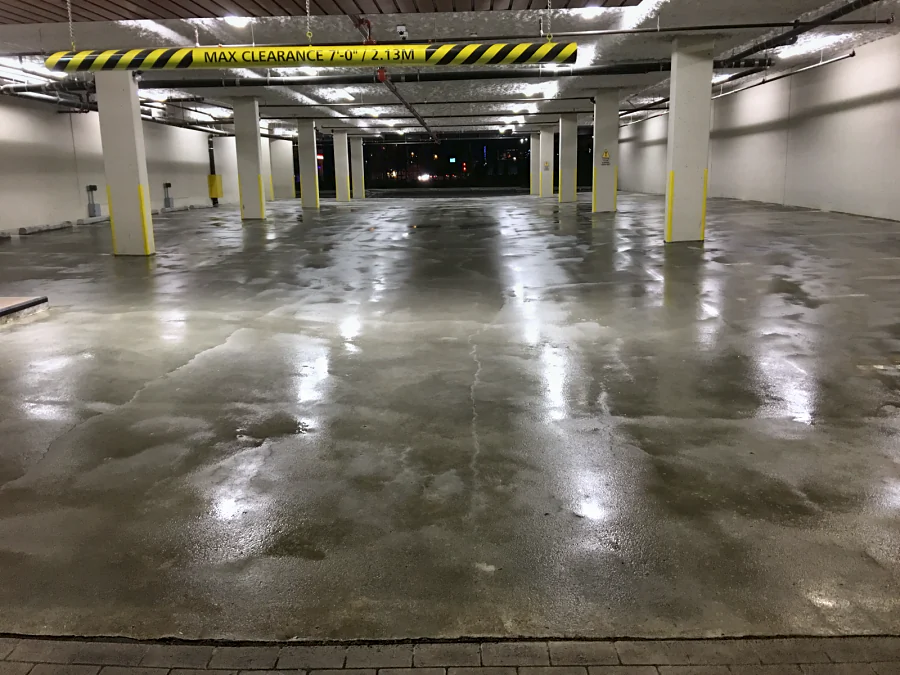
Shot blasting and a densifier for an anti-slip parkade floor at Trail Appliances in Richmond, 2016: the ride-on shot blaster working through the parkade, the blasted lanes lighter than the untouched concrete (left), and the floor that night, wet under the lights (right). More on the projects page.
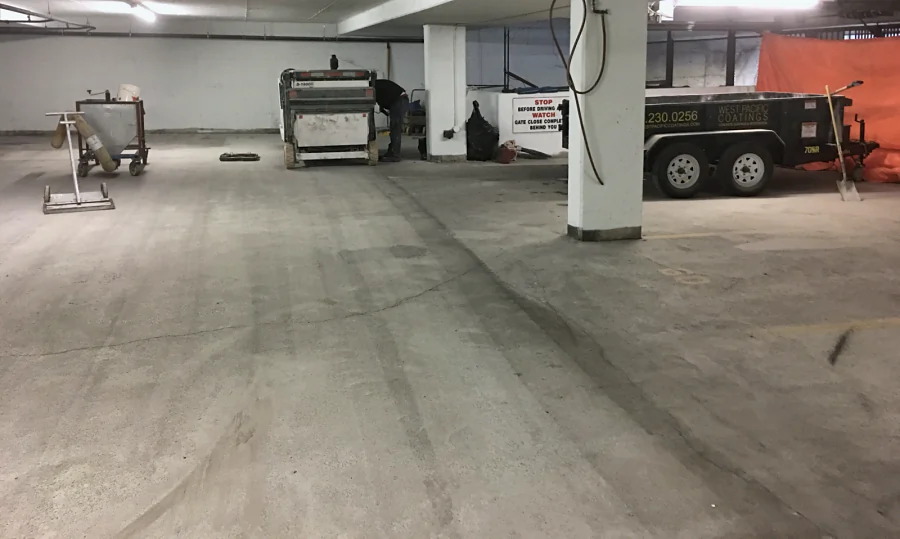
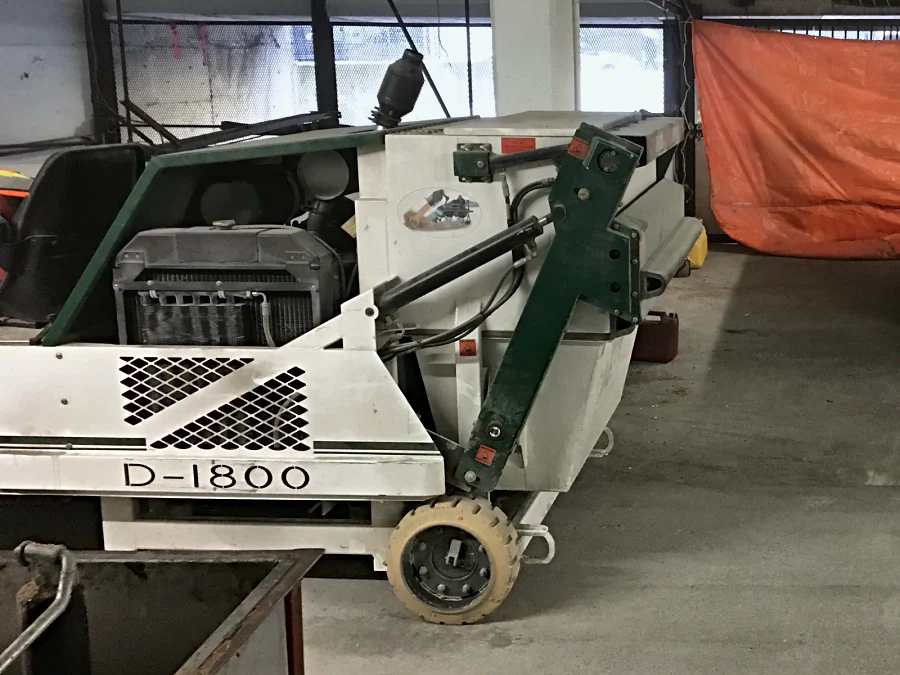
Shot blasting before a traffic coating, in a 30,000 square foot Vancouver parkade for Lark Group: the slab after blasting, the lanes showing (left), and the ride-on shot blaster that did it (right). The parkade was then coated in Tremco Vulkem 350NF/950NF/950NF. More on the projects page.
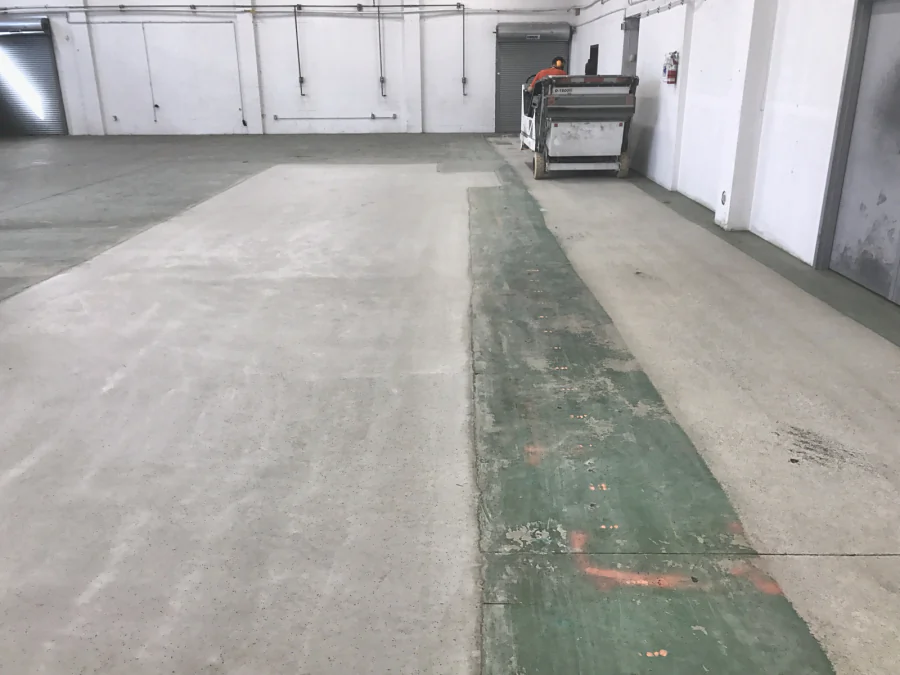
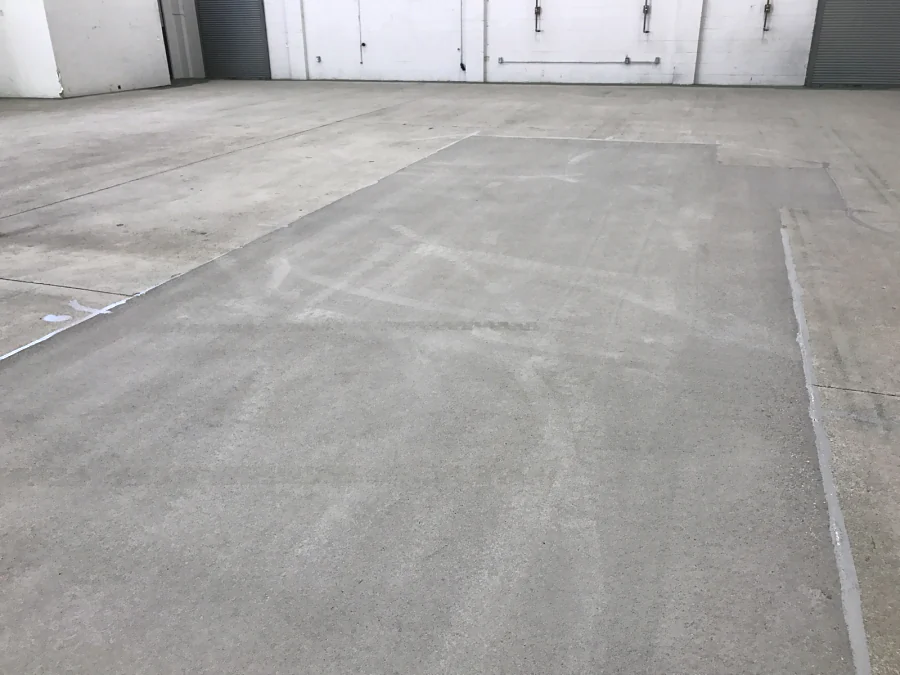
Shot blasting an old coating off before an epoxy, a commercial space in Grandview, Vancouver, 2017: the green coating coming off in lanes (left), and the blasted slab, its joints and cracks filled (right). More on the projects page.
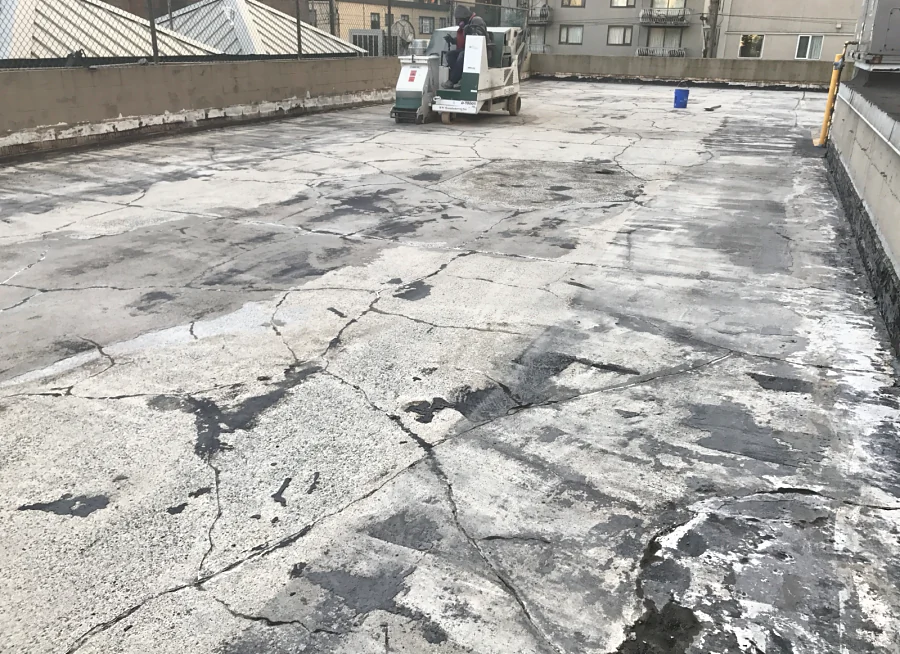
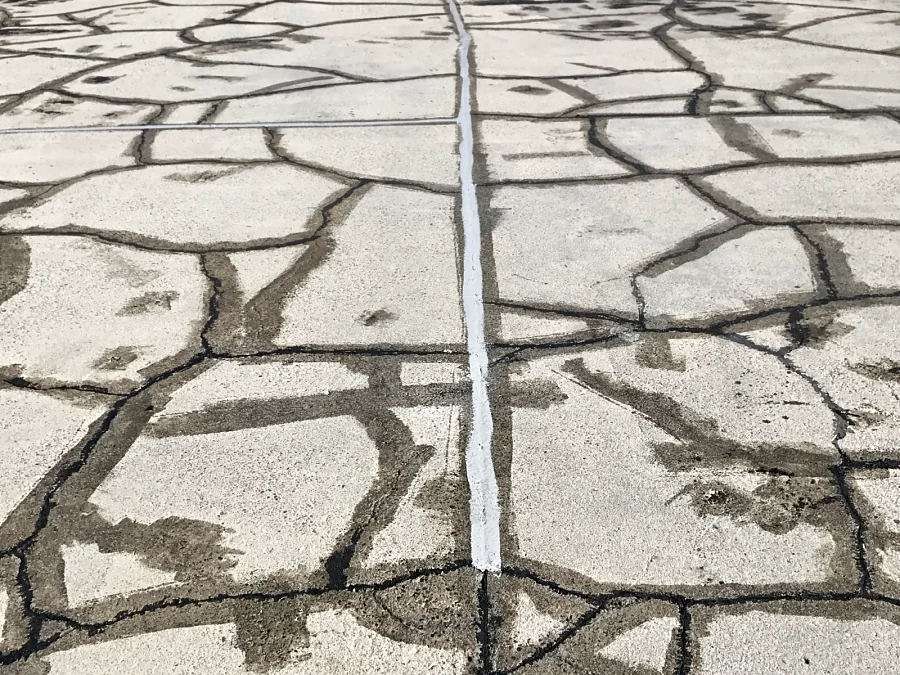
An exterior parkade deck in the West End, Vancouver, once the old membrane was scraped and ground off: the concrete being shot blasted (left), and the cracks across the deck repaired before the Tremco Vulkem 360NF/346 membrane went down (right). More on the projects page.
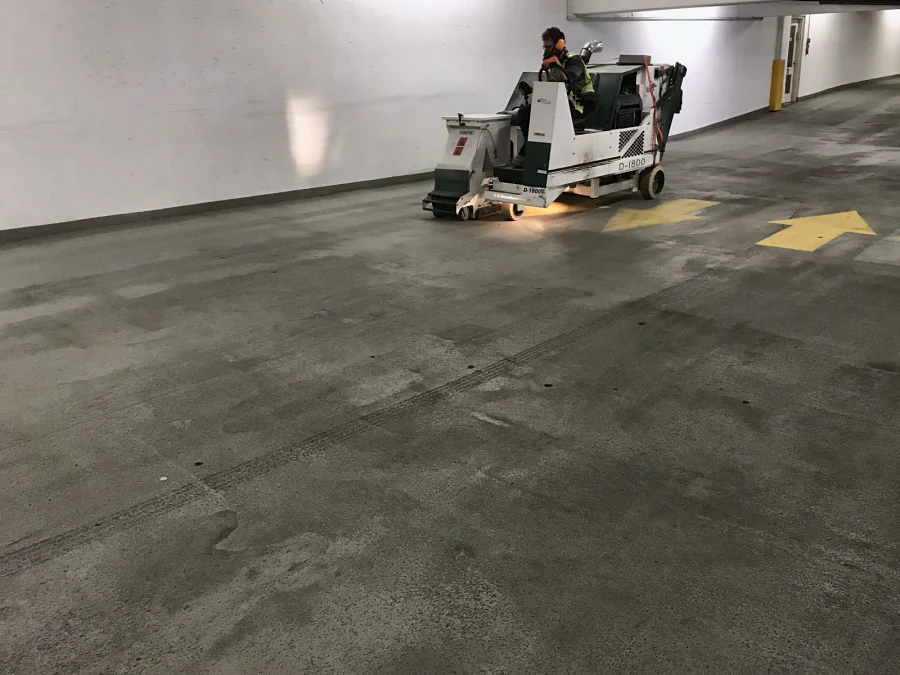
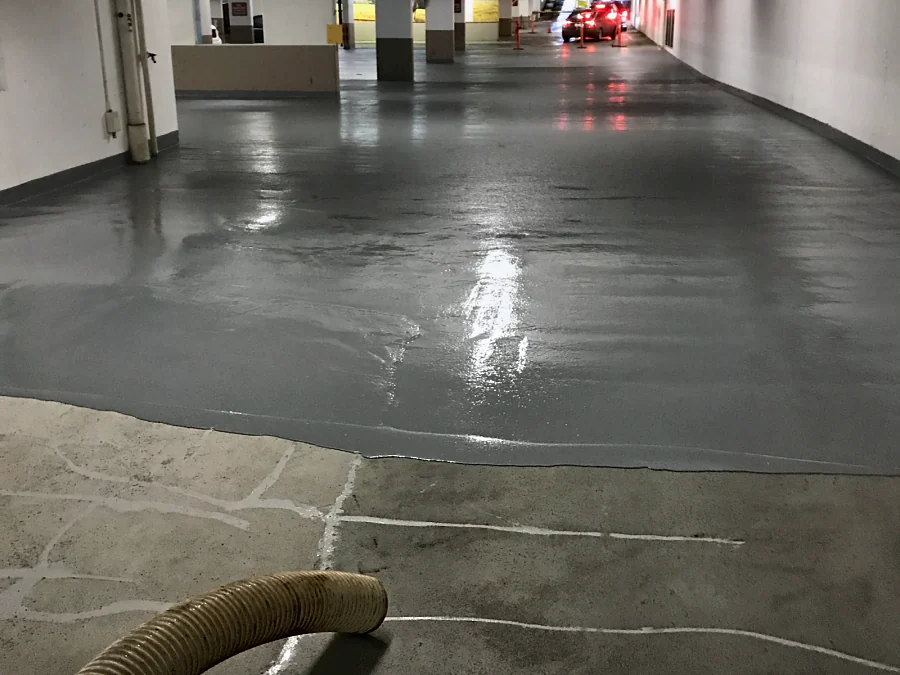
Shot blasting before a parkade recoat at a Whole Foods in Vancouver: the ride-on shot blaster working across the deck (left), and the new coat going on over the blasted concrete, its cracks filled in white ahead of it (right). More on the projects page.
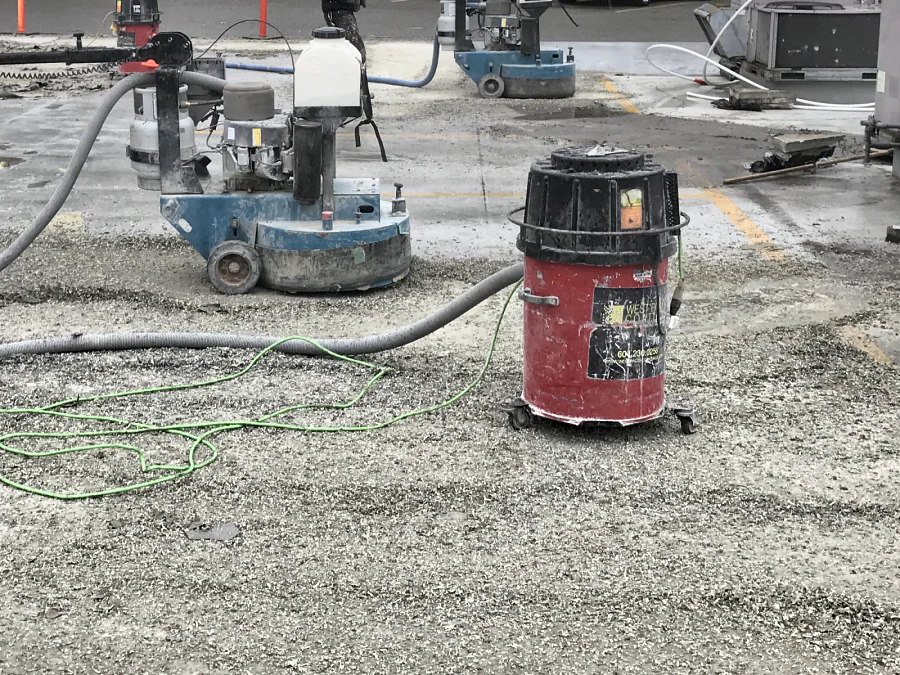
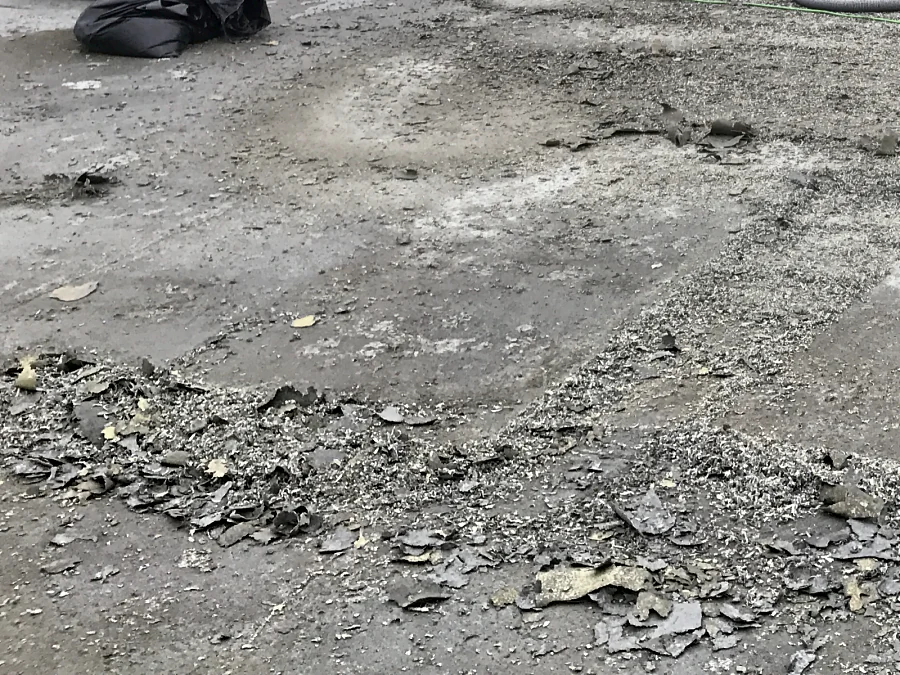
Removing an old traffic coating with PCD grinding tools, on the rooftop parkade of a Staples store in Burnaby, 2017: the grinder working under dust extraction (left), and the old coating ground off to the concrete, its flakes still on the deck (right), before the new Tremco Vulkem 350NF/950NF/951NF coat. More on the projects page.
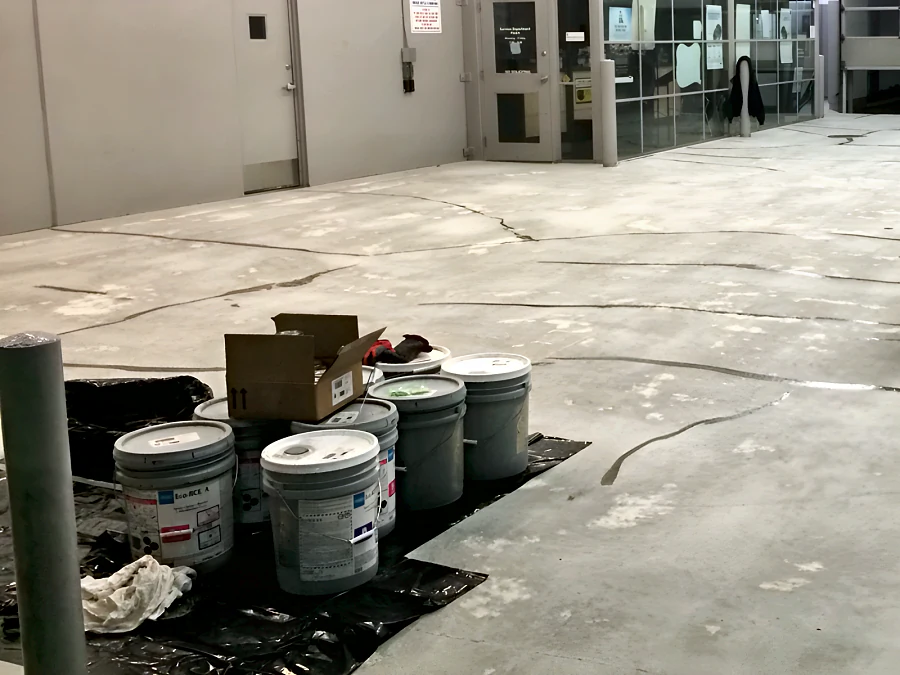
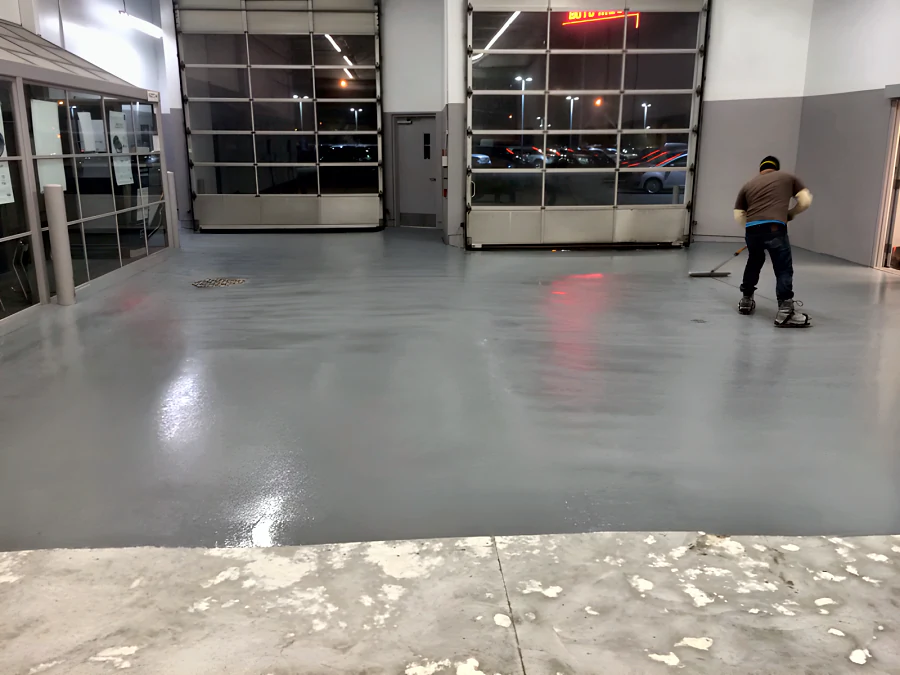
The service drive at a Toyota dealership’s old shop in Vancouver, 2014: the slab prepared and its cracks filled before coating (left), and the traffic coating going down over it (right). More on our automotive flooring page.
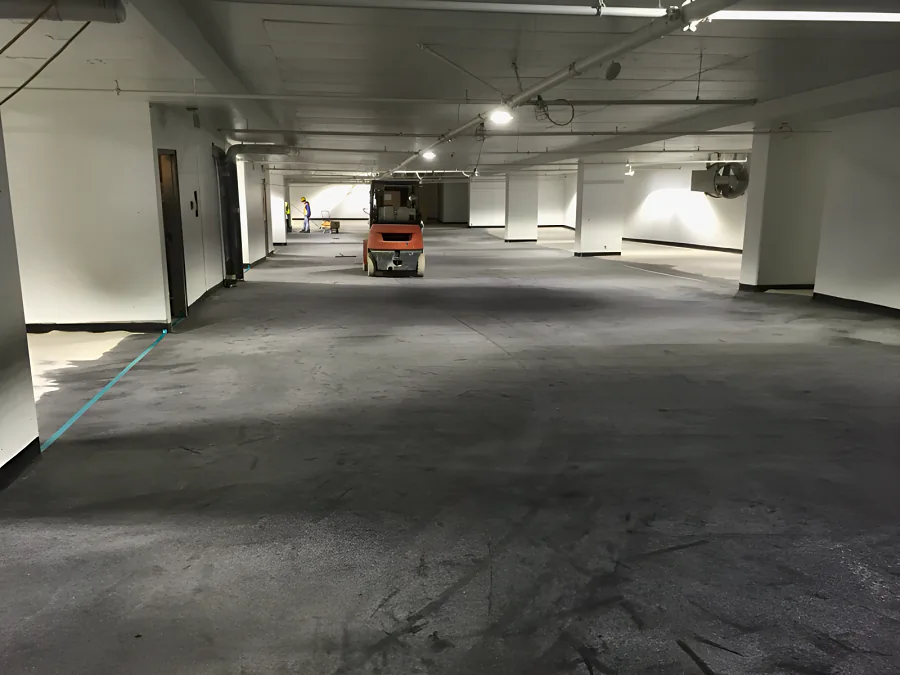
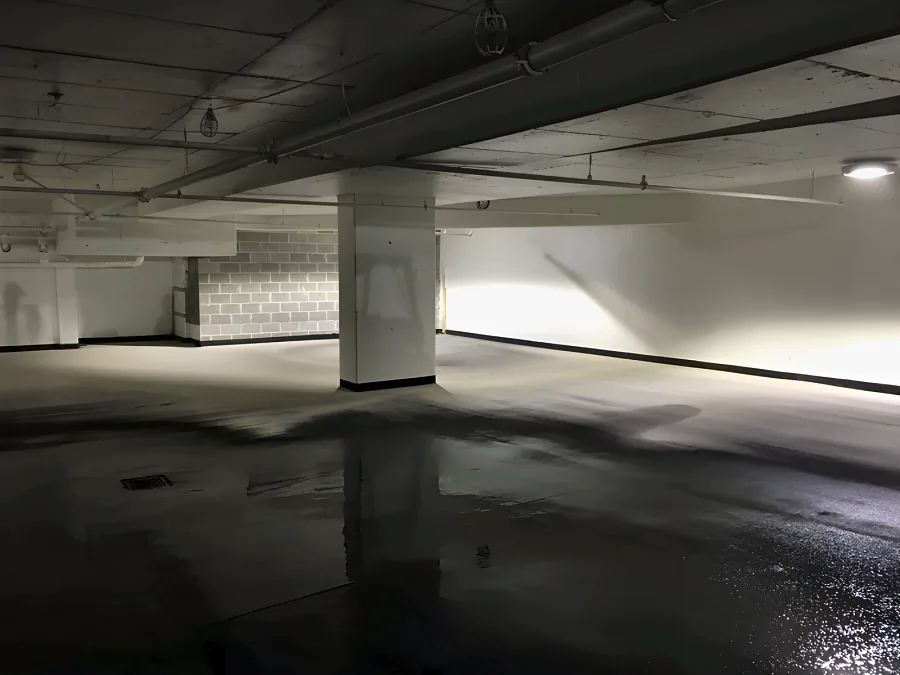
A 100,000 square foot parkade at 980 Howe Street, Downtown Vancouver, 2015: the Kelmar system going down section by section behind a tape line, the next bay still bare (left), and the fresh coat under the work lights (right). More on our Vancouver page.
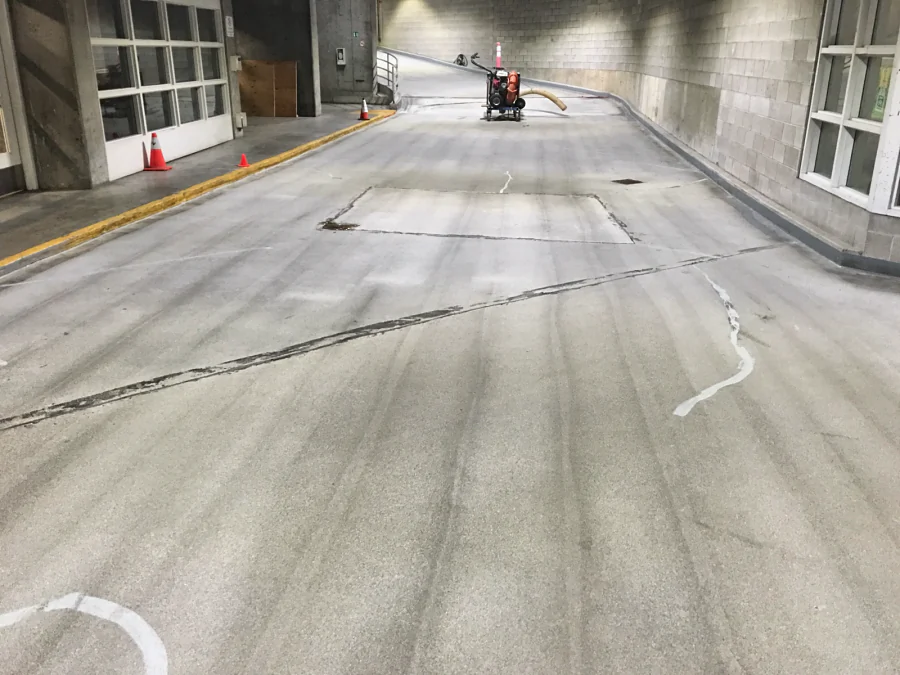
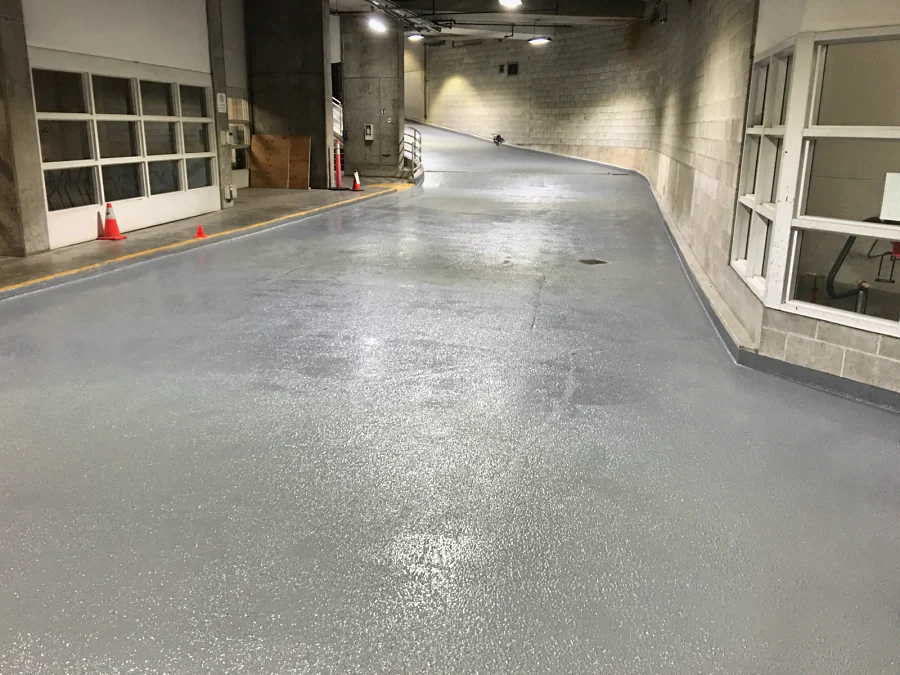
A commercial building’s parkade ramp in Downtown Vancouver, 2016: prepared, with its cracks and a patched section showing on the bare concrete (left), and the same stretch finished in a grey textured traffic coating (right). More on the projects page.
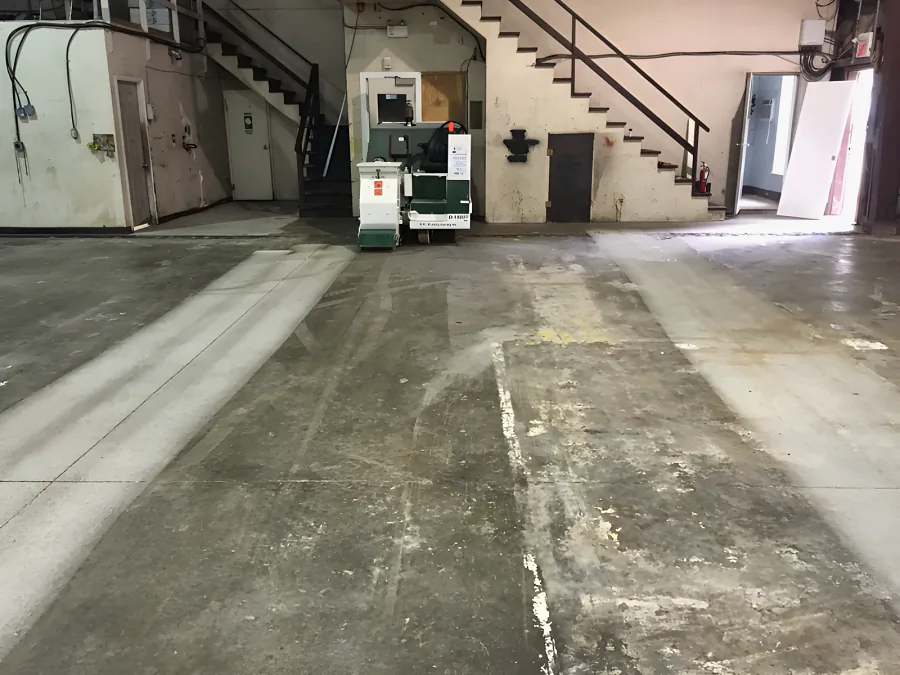
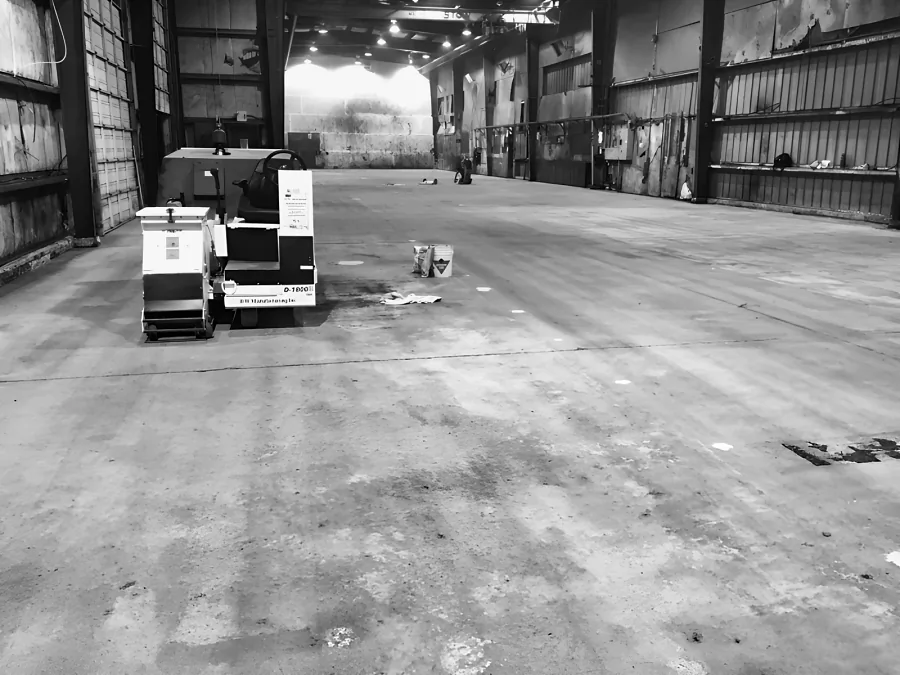
Concrete patching and shot blasting for Sumas Environmental Services Inc. in 2015, before an epoxy and urethane floor: blasted lanes cut through the stains and paint to clean concrete (left), and the ride-on shot blaster working the length of the building (right). More on the projects page and our warehouse floors page.
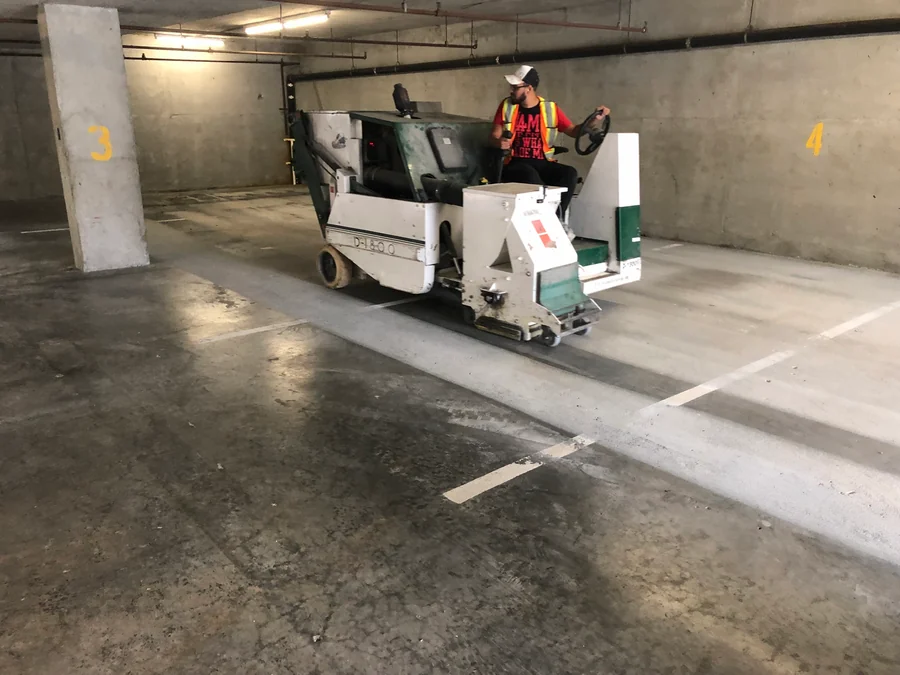
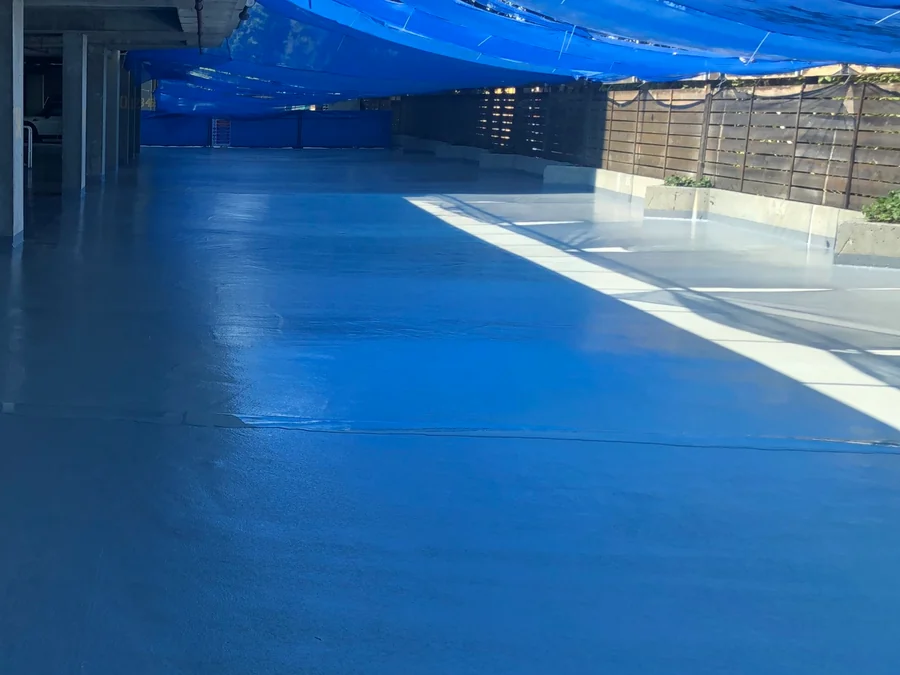
Shot blasting a residential tower’s parkade in New Westminster for PMC Construction, the ride-on blaster leaving clean concrete behind it (left), and the Tremco Vulkem 350NF/950NF/951NF traffic coating that followed, across the deck under the curing tarps (right). More on the projects page.
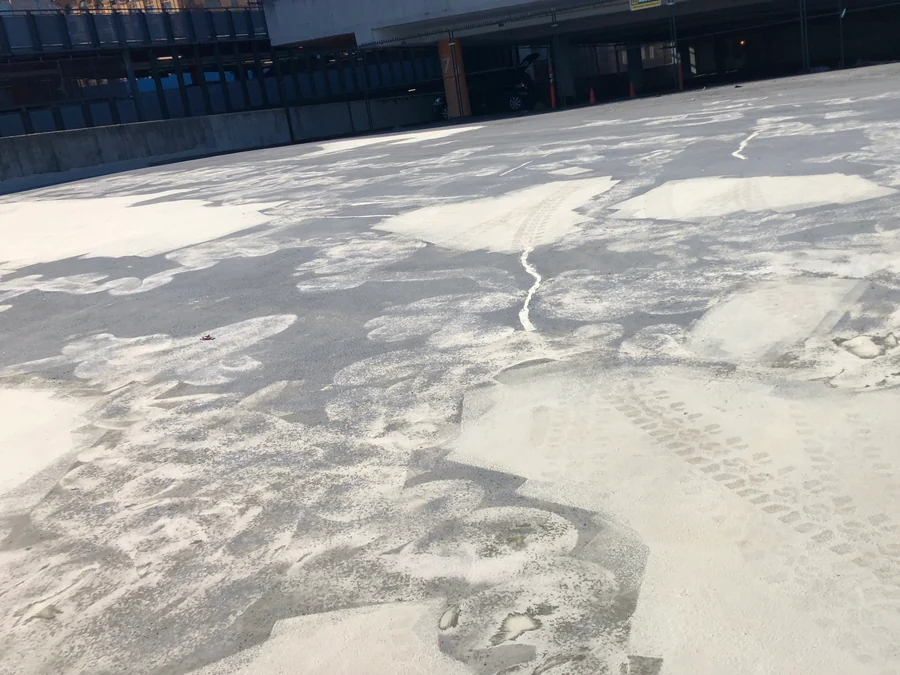
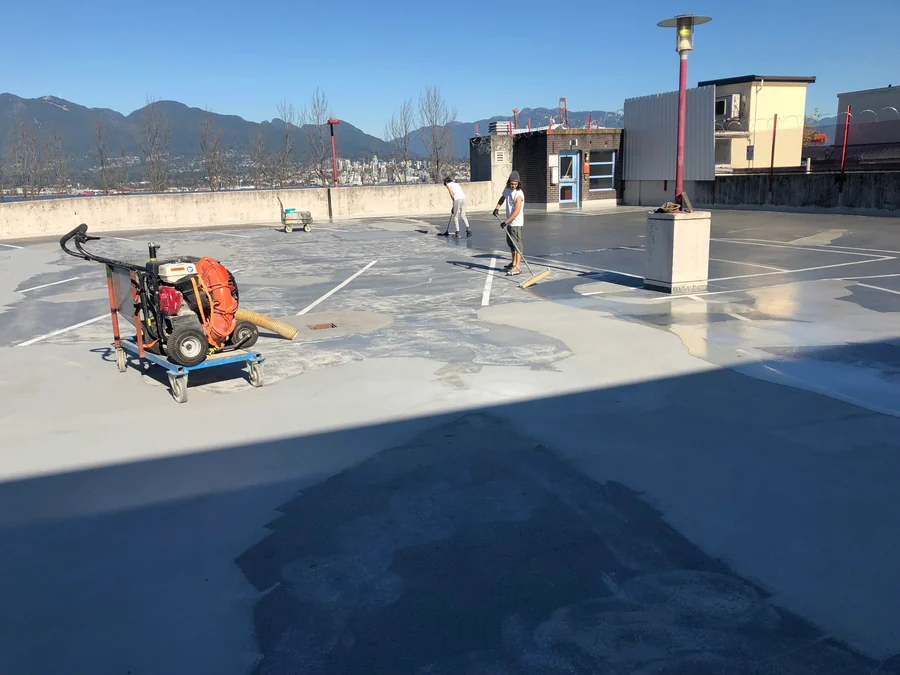
Coating removal on a 50,000 square foot parkade roof deck in Gastown, Vancouver, for Heatherbrae Builders: the old coating taken off down to the concrete (left), and the prepared deck swept clean ahead of the new Tremco Vulkem traffic coating (right). More on the projects page.
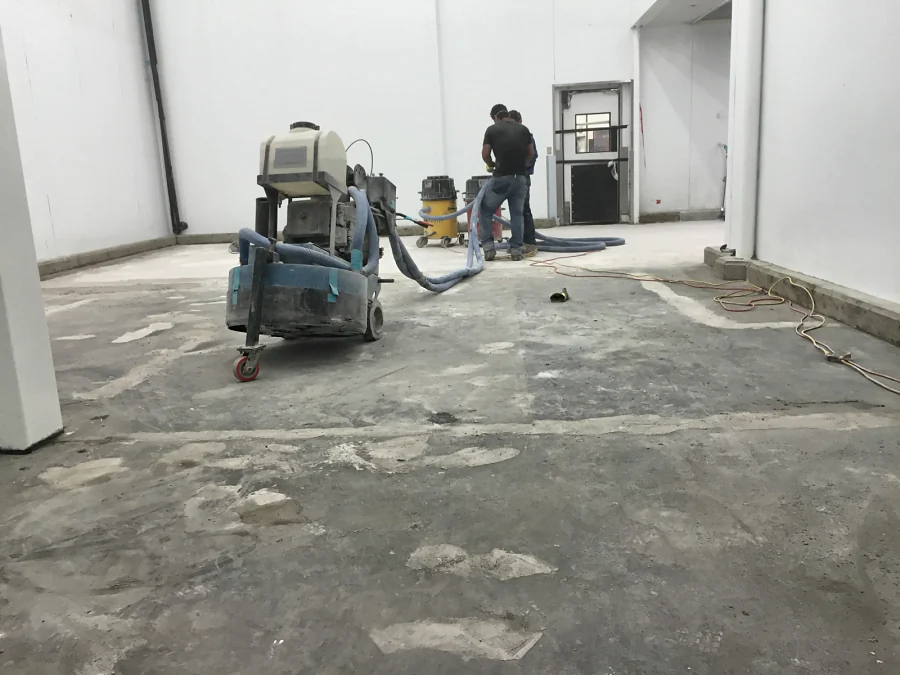
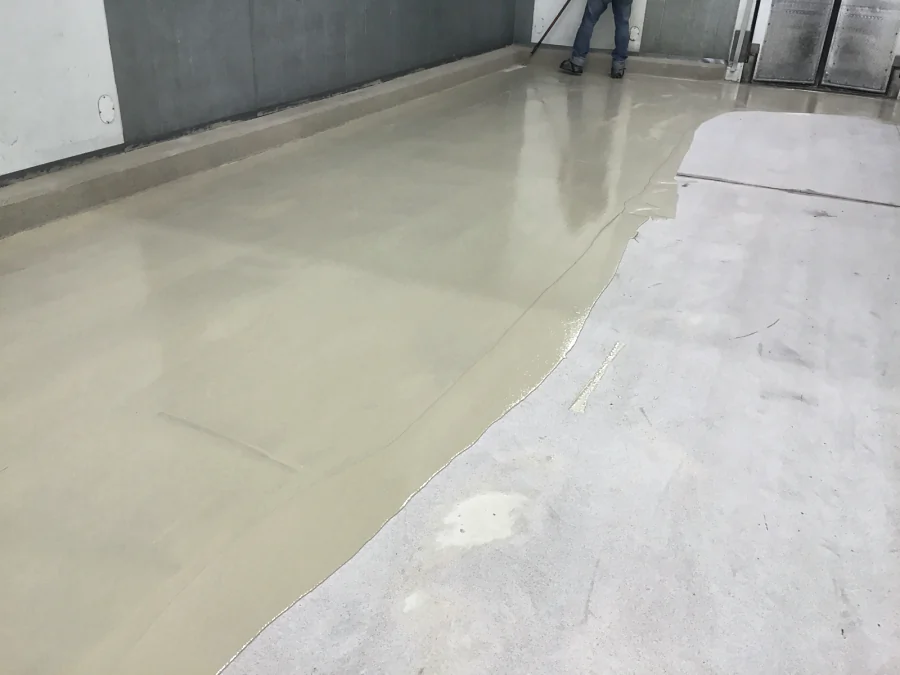
Costco, Prince George: the slab ground under dust extraction before the decorative quartz floor, the patched areas showing pale (left), and the first coat going down over the prepared concrete (right). More on the projects page.
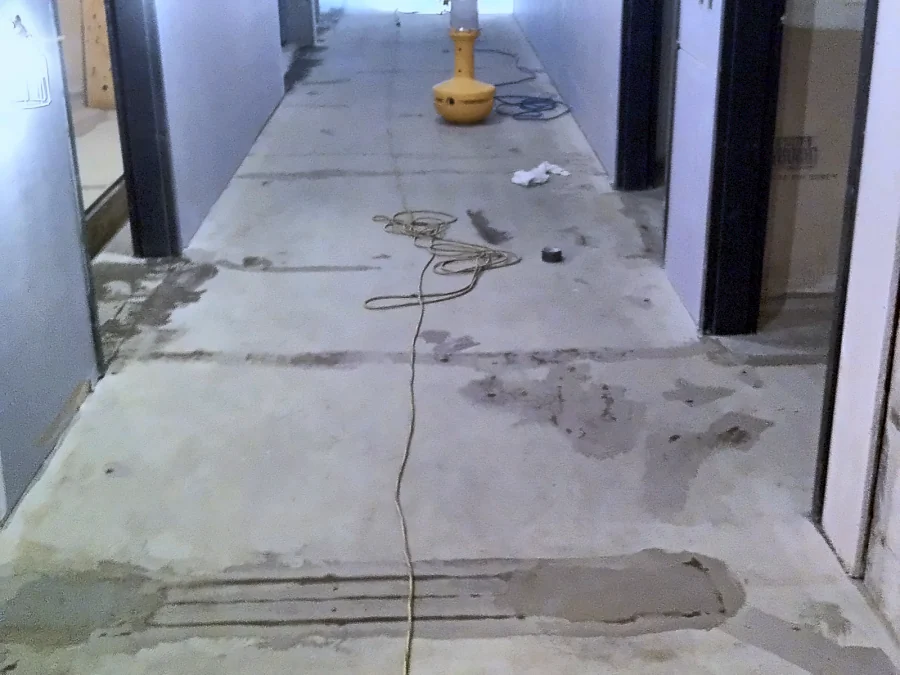
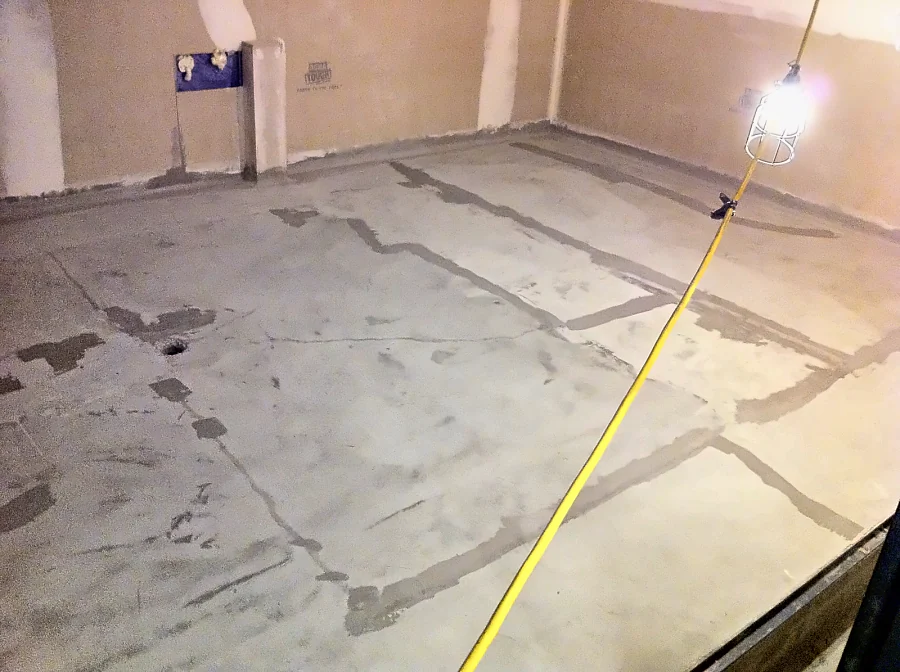
The UBC Biological Sciences Building, 2010: a corridor slab with its joints and cracks patched (left), and a laboratory with the crack and joint repairs filled before the Tennant coating system went down (right). More on our commercial floors page.
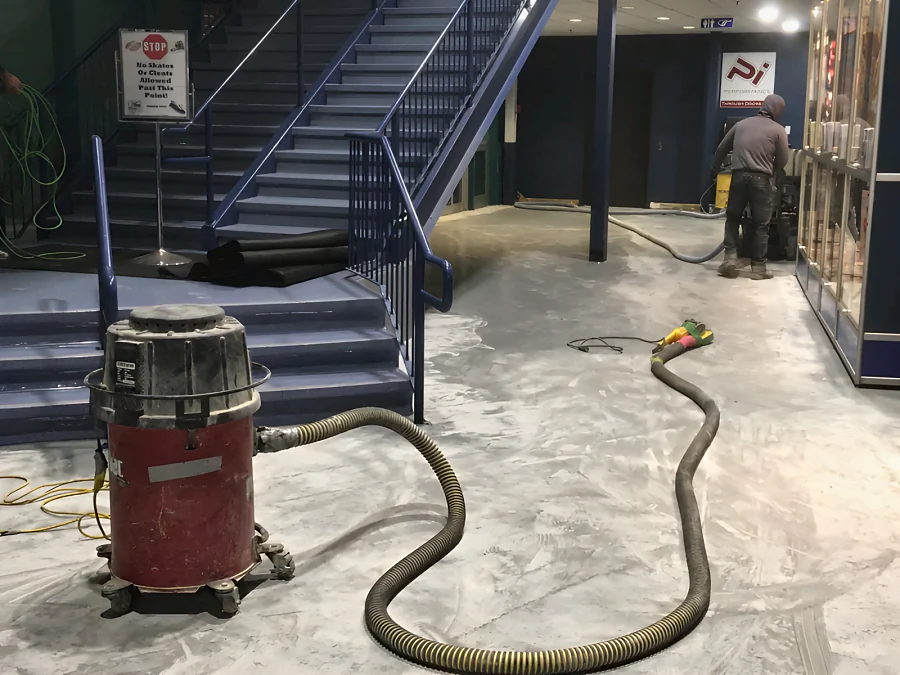
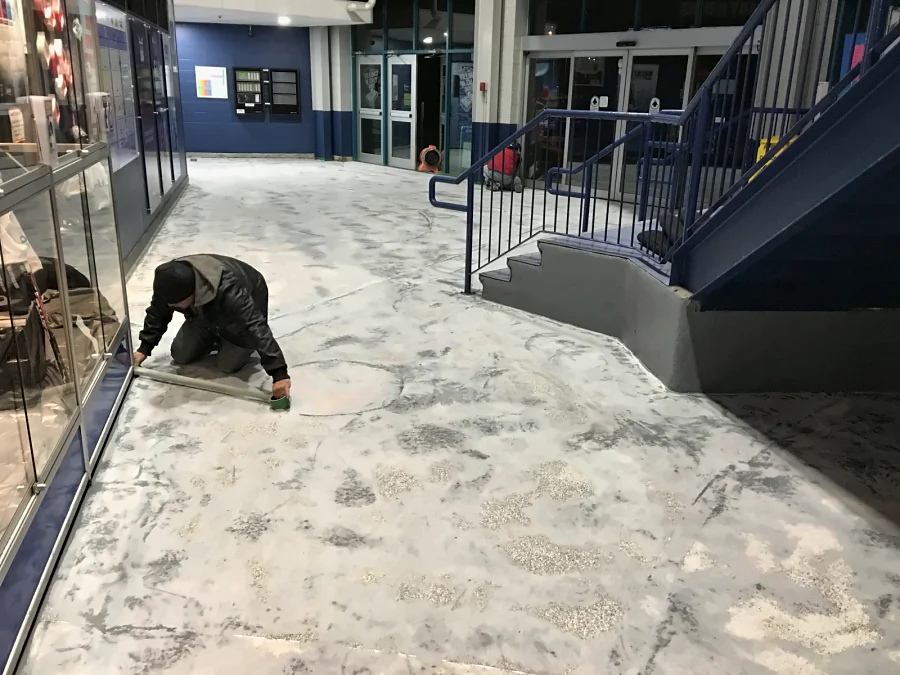
Canlan Ice Sports, Burnaby, 2015: the concourse slab ground under dust extraction (left), and the edge detailed by hand along the glazing before the epoxy (right). More on the projects page.
Detail
Moisture testing is not optional in this climate.
In the Lower Mainland, slab moisture is the single most common reason coatings fail early. We test rather than assume — relative humidity probes drilled into the slab per ASTM F2170, and calcium chloride testing where it is the more appropriate method.
The reading determines the specification. Within tolerance, a standard primer is fine. Above it, you need a moisture-tolerant primer or a vapour barrier coat, and that has to be priced before the work starts. This is exactly the number that gets skipped on cheap quotes and discovered eight months later as blisters.
Questions we get
Straight answers.
Why is preparation such a large part of the quote?
Because it is a large part of the work, and because it is the part that determines whether the rest of it lasts. A coating is only as good as its bond to the slab, and the bond is created here.
Will grinding fill our building with dust?
No. Shot blasting is a closed-loop process with integrated vacuum recovery, and our grinders run on HEPA extraction. On occupied buildings we also set up containment so nothing reaches tenants or production areas.
Can you remove an existing coating?
Yes — that is one of the main things this equipment does. Removal cost depends on how well the old coating is stuck down, which is somewhat unpredictable, so we assess a test area before quoting a large floor.
Related
You may also need:
Site assessments
Send us the slab. We'll tell you what it actually needs.
Photographs and a rough area are enough to start. We'll come out, test moisture, and scope it properly.
Main (604) 968-2040
Second (604) 230-0256
estimating@westpacificcoatings.com